
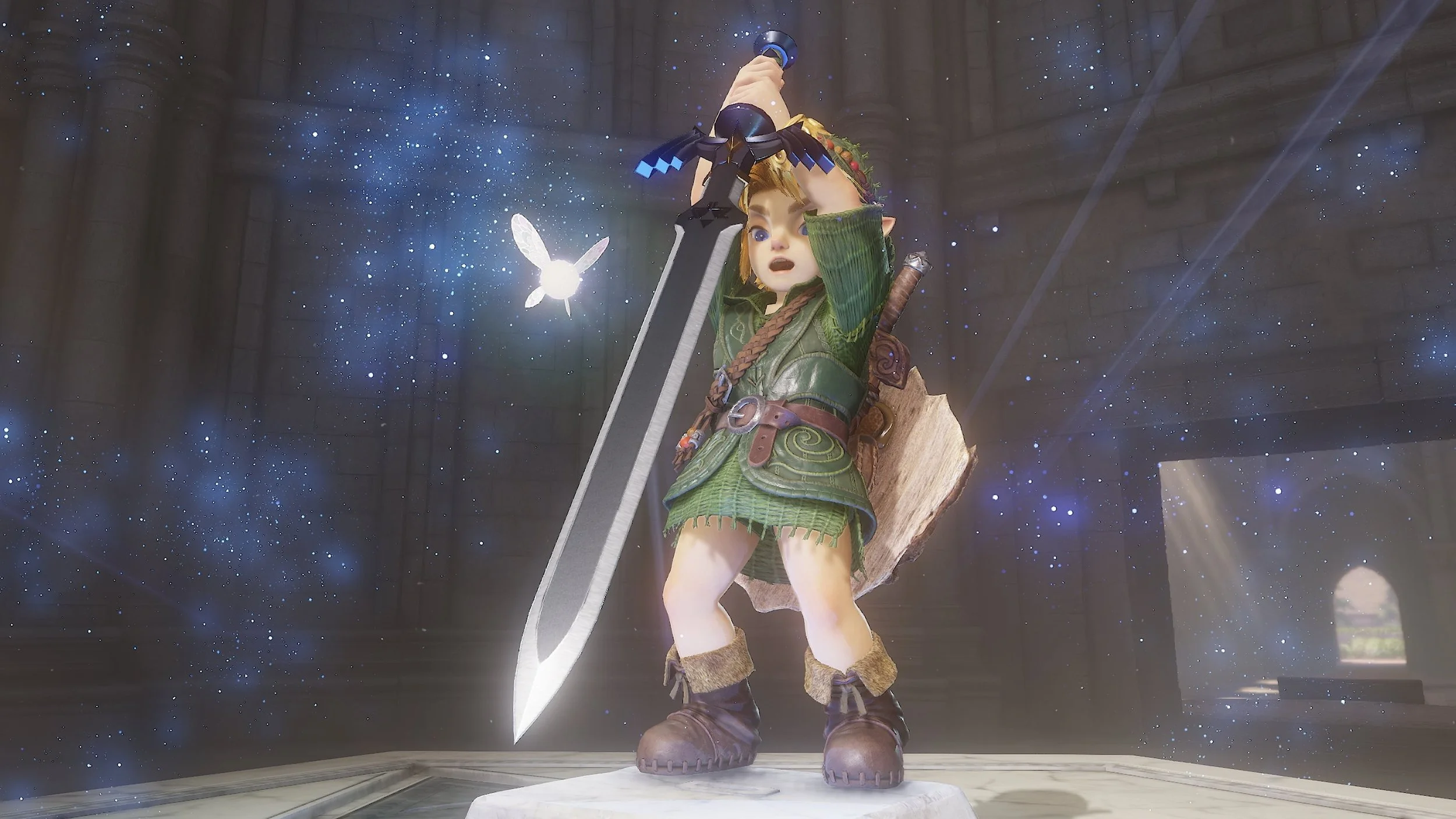
The times we live in are enough to make anyone desire to return to a past when the prospect of a family dinner out wasn’t liable to put you into anxiety over a debt spiral. One surmises that The Legend of Zelda: Ocarina of Time’s Adult Link, too, must long for a Hyrule that isn’t a monster-infested wasteland ruled by a Dark Lord who’s corrupted the free world.
Themes of both heroism and growing up helped Ocarina of Time transcend the medium of video games in its storytelling. Link’s adaptability, strength, and wit, enacted by the player at their own hands, proved to be such a powerful statement of the strength of willpower and fortitude in the face of adversity for millions of Zelda fans of every generation.
Ocarina of Time also inspired a generation of video game developers, many of whom were also experimenting with the possibilities of 3D movement and combat. Nintendo delivered by not only incorporating clear and convincing 3D vertical spaces into dungeons, but weaving challenging puzzles and trick rooms into them in a way that both evoked and departed from the excellent, and many would say peak, dungeon design of A Link to the Past. The amount of dungeons was impressive, too, rivaled only by Twilight Princess.
Without the innovations brought to the table in terms of Z-Targeting, 3D directional dodging, swapping targets by tilting the stick, directional attacks, Magic, and instant use of one of Link’s many tools, we wouldn’t have games like Dark Souls. However, for every innovation brought about by the original game, there’s also a sticking point that shows definite room for improvement.
One of the most worthy cases for a remake in existence
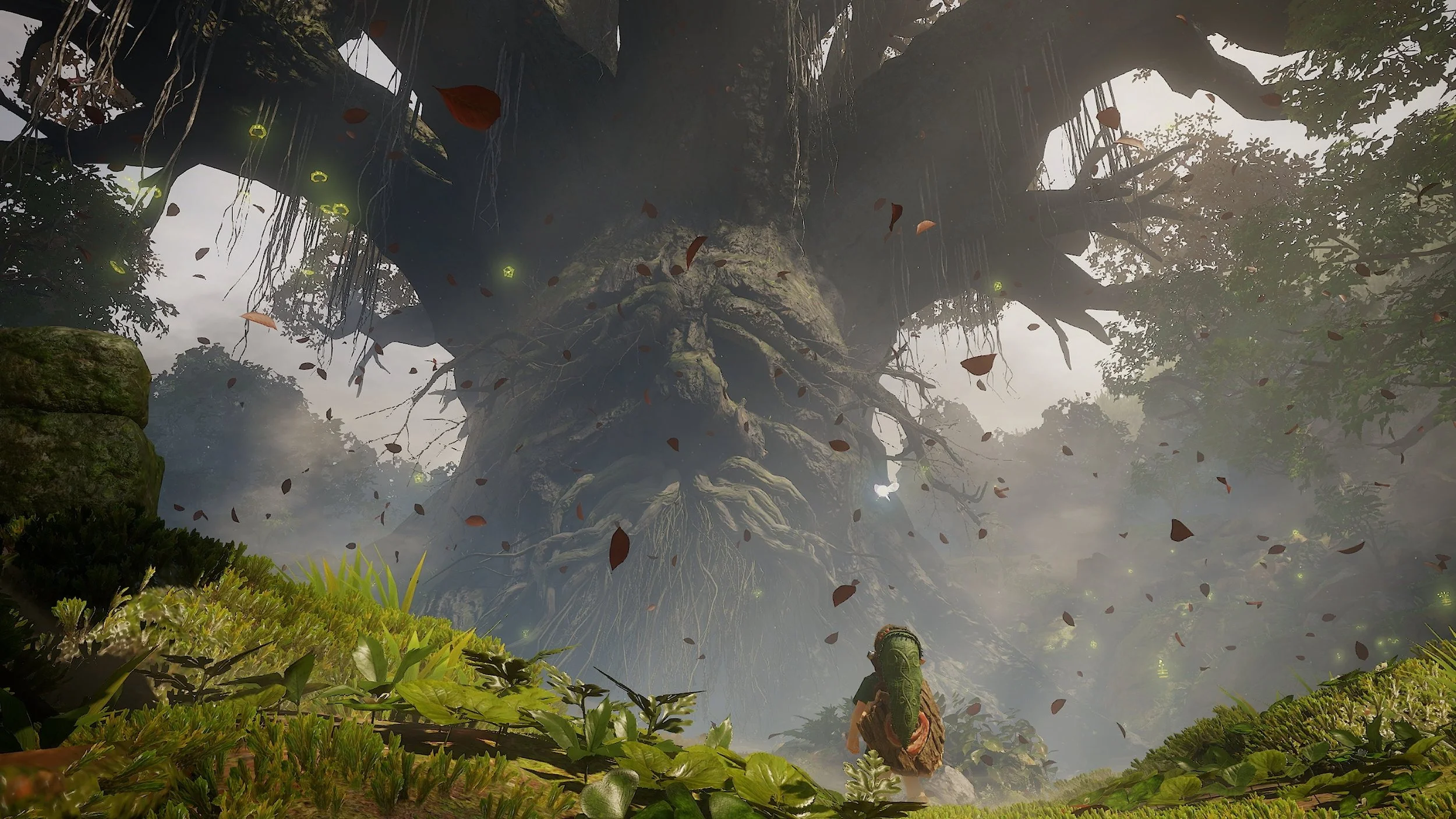
A very close friend complained to me that Ocarina of Time doesn’t need a remake, since it already had one on the 3DS. I simply had to step in and point out that not everyone considers that the definitive version of the game, despite its many conveniences. Also, Ocarina of Time is definitely feeling its age. I’m in the middle of replaying it, and on top of the obvious issues like framerate, fog, simple animations, and controls, everything feels slightly small-scale and rushed. We now know from datamining that there was cut content in the form of assets for a never-finished Light Temple, and possibly smaller areas such as the Ice Cavern were planned to be more substantial.
The ability to move the camera freely is going to be huge, let alone the option to use motion-controls to fine-tune Link’s aiming. Not having to rely on analog sticks that either aren’t meant for such precision and speed or are inferior to the N64’s accuracy in order to pull off tricky moments such as poe-hunting or the infamous rupee shooting minigame would be very welcome. Getting used to not having to tap Z to reset the camera will be a tad strange, as will having to suffer through the Wild/Kingdom/Echoes item management system, which forces players into a menu to pause the action to swap active items. Replaying the game, I’m already foreseeing how I’m going to miss the C-buttons. And I’ll probably fall off some ledges, since there’s no more automatic jumping.
One Hopes For More Improvements, Not Less
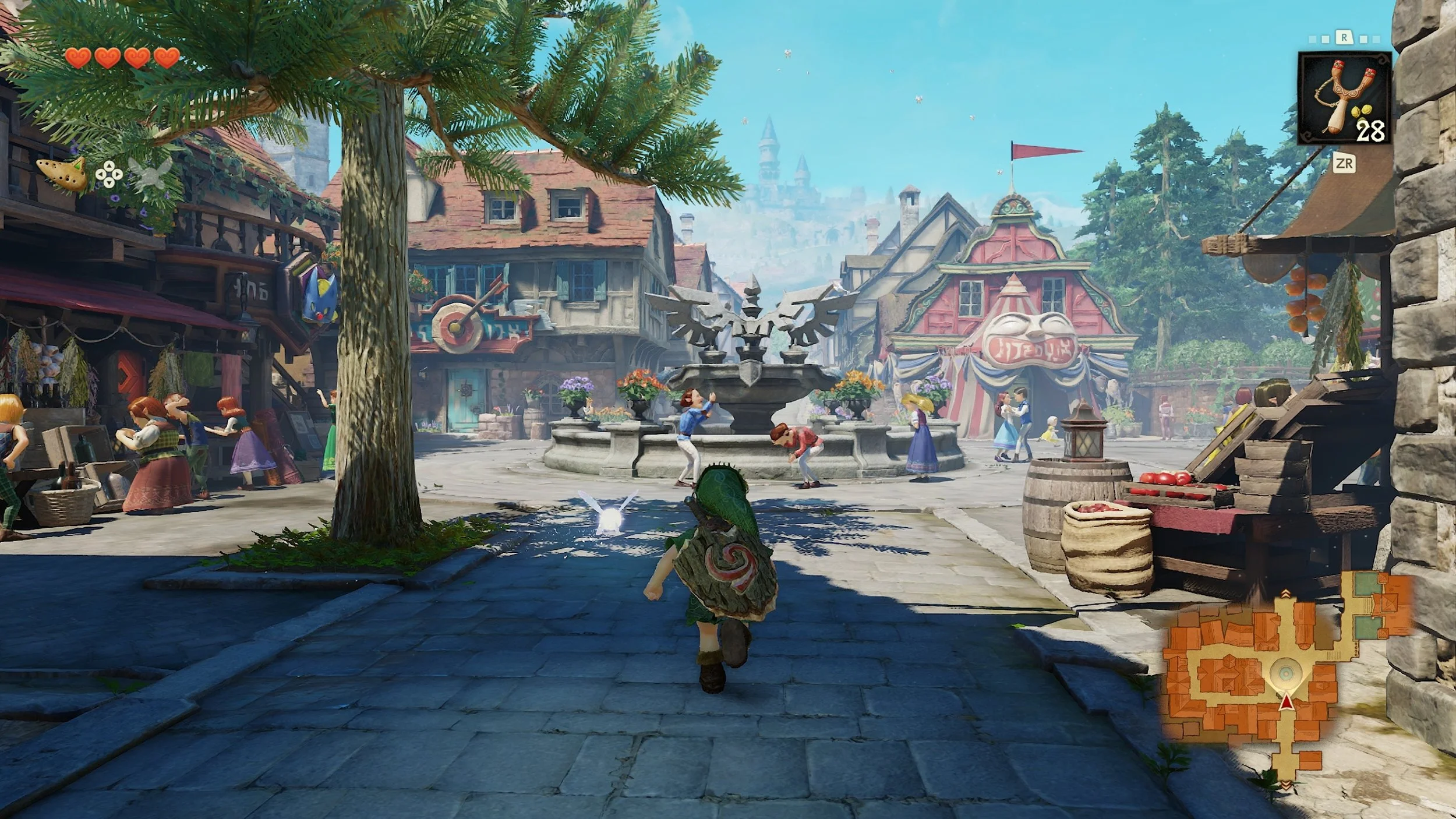
With every new trailer and gameplay video released, I have been desperately hoping for more and updated content. Future games in the series increased in ambition and scope, and they felt like they gave Link more atmosphere and side stories, plus vistas and a little room to breathe in between major events. It’s my hope that we’ll get some of that here, but as seen in a lot of clips available online, Nintendo seems largely content to keep parts of the game as-is. There are little changes, such as a fifth bottle, new enemy attacks, and new NPC dialogue, but it’s relatively minor stuff so far.
It’s a bit disappointing on the surface, but then I remember that, for many, this will be their first experience playing Ocarina of Time, and perhaps it’s fitting for the sake of preservation and a sense of progression between this and future titles that this game retains a great deal of its simplicity and charm. The adage “if it ain’t broke, don’t fix it” may apply here, and there is something to be said for the purity and leanness of the original experience, as opposed to the bloat and pomp of titles like the Final Fantasy VII Remake trilogy. But one can hope for a middle ground. At the very least, I hope for tweaks in things such as the fishing mini-game to add a little more replayability. This will be the first Zelda with proper fishing since Twilight Princess, after all.
Another consideration is that this title will need to offer an olive branch or serve as a proper entry point for the more recent Zelda fans who hopped on the train (or returned after a long hiatus) with Breath of the Wild. This more linear, guided adventure is going to be a very different experience for them, and it’ll be interesting to see what the more recent fans think of the game. I hope that fans end up enjoying the dungeons rather than dreading them, as they are far and away my favorite aspects of Zelda gameplay.
With that said, I also hope that Nintendo continues to add little things for returning fans, such as the recently announced Hall of Fallen Foes, which allows you to replay battles (even against bosses) to improve your times and test out alternative strategies. I was always a bit disappointed that we could never replay the boss fights in the original, so this is kind of huge for me. One wonders if we will get the Master Quest. Hero mode seems to be a lock, at least, but can we unlock it from the start? It remains to be seen.
Legend of Zelda: Ocarina of Time Remake Doomed to Repeat The Past?
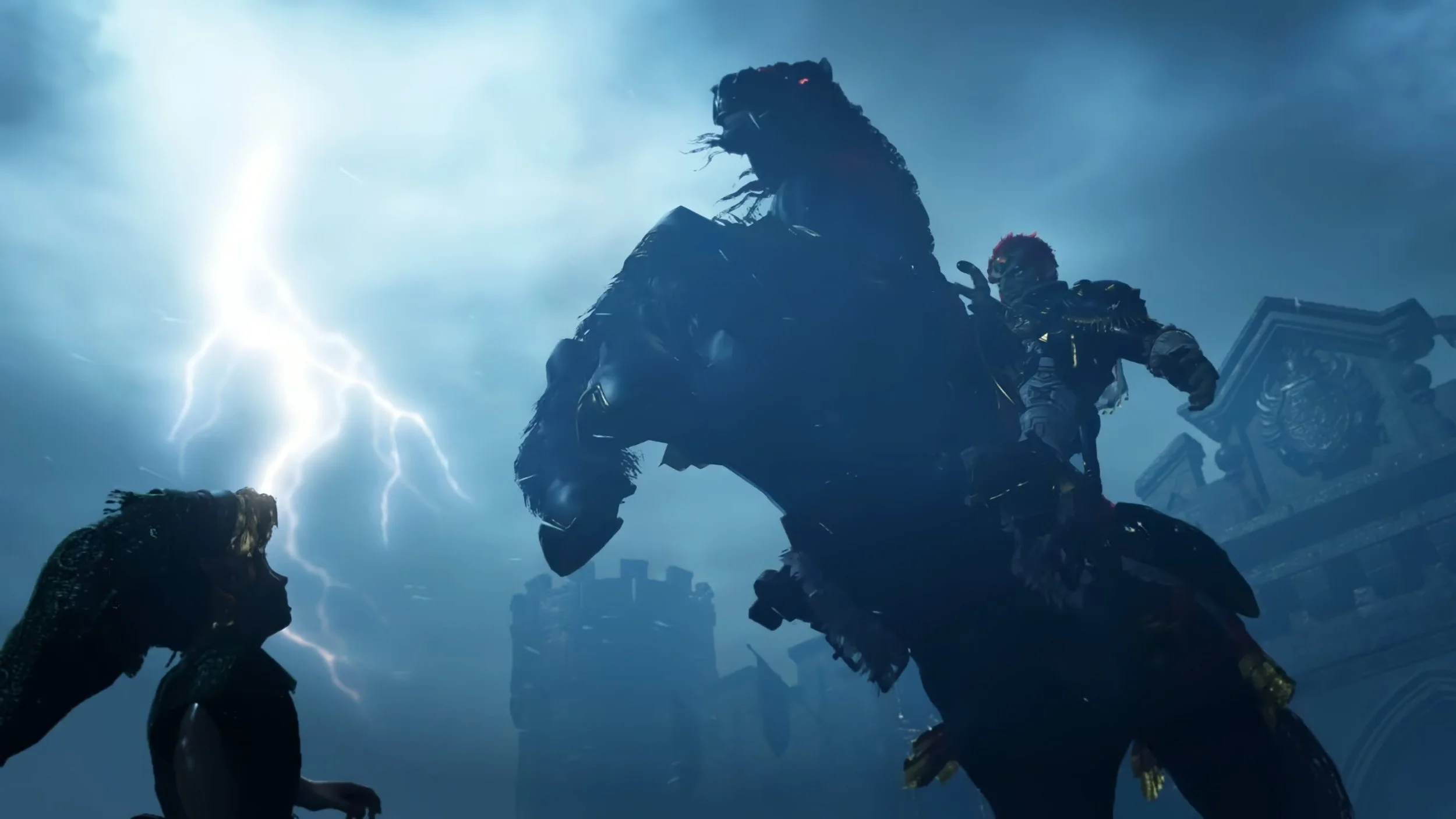
I absolutely loved Nintendo’s recent StarFox remake, But that game already had perfect gameplay. While Ocarina of Time is one of the highest-rated games ever with critics, a large part of that was because of how it pioneered 3D action-adventure gaming. In this age of endless remakes, reboots, sequels, prequels, reimaginings, and so on, it’s rare to see such a clear example of a game that, once considered impeccable, now shows its age in multiple areas unrelated to its visuals. So I welcome a new spin on this classic, although I wonder if their little tweaks will go far enough.
With that said, I have confidence that Nintendo knows what they are doing. And even if 2026’s Ocarina of Time doesn’t quite fulfill the full extent of the original’s promise for whatever reason, one thing is clear: it’s holding true to the original game’s themes of maturity, perseverance, sacrifice, good VS evil, and the need for a man to rise to the challenge of his day and age. Unlike modern girlbosses, Link doesn’t need NPCs gassing him up. The moment he talks to an NPC, they typically get right into what they need, and you can usually initiate the side-quest then and there. In other words, Ocarina delivers pure, old-fashioned hero’s journey escapism, expanded into a 30-ish-hour experience filled with challenges and collectibles (if you’re a completionist).
Perhaps the takeaway from Ocarina most relevant to our day and age is that there is always hope, no matter how bleak it may seem. Like Link’s perseverance and patience being forged by multiple tests, trials, puzzles, and combat challenges, anyone under 50 right now is being tested in the economic arena, where our paychecks evaporate the moment we step out of our doors. But Link never complains. Even though his childhood was taken from him and he’s saddled with endless odd jobs and busywork with little thanks to be had, he soldiers on and gets the job done.
Ocarina of Time is as much a reflection on man’s inevitable maturity as it is a commentary on the cyclical nature of reality. Spoilers for the game ahead, but Ganondorf’s reign is short but damaging, like our current Kali Yuga age, where evil is at its zenith. One can only hope that even if we don’t get to live to see it, our world will turn the corner into something brighter, too. And maybe, just maybe, The Legend of Zelda: Ocarina of Time will play a part in inspiring Nintendo to grant us similarly-scaled remakes of Majora’s Mask, Wind Waker, and Twilight Princess. Hey, a guy can dream.
About the Author - Joseph Choi
I am a Filipino-American gamer, professional shepherd and farmer, author, and filmmaker/videographer living in Central California. My first consoles were the Game Boy and Sega Genesis, and I've been gaming since then, with a focus on Nintendo and Sony consoles. My favorite genres include rhythm games, fighting games, racing games, puzzle games, action games, JRPGs, visual novels, and shmups. My favorite games include Super Smash Bros, Melee, Legend of Zelda: Majora's Mask, Final Fantasy VIII, Metal Gear Solid 3, Child of Eden, Diablo II, Tetris Effect, and Ikaruga.
My day job keeps me busy, but I contribute when I can, focusing most of my efforts on editing reviews written by the rest of the staff.
Our The Blood of the Dawnwalker review explores Rebel Wolves’ dark fantasy RPG, its 30-day time limit, the day and night cycle curveball, excellent side quests, and shortcomings.