
Ghost of Yotei Complete Edition Review - Most Wanted Makes It All Worth It
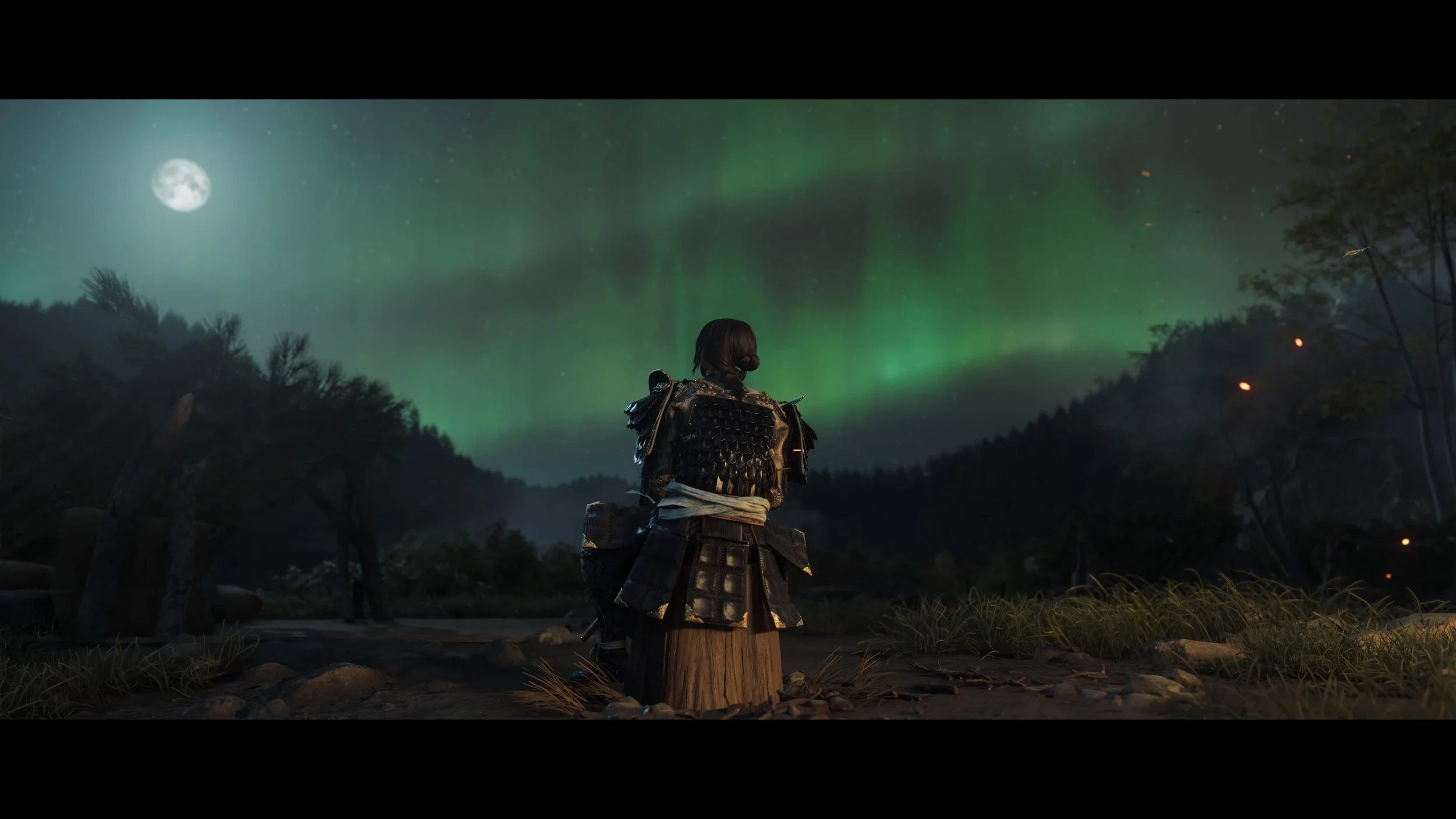
The universally-loved Ghost of Tsushima delivered on the promise of an epic set in medieval Japan, with its revenge-driven protagonist Jin Sakai swapping between katana stances to quickly adjust to deal with every scenario. The sequel, Ghost of Yotei, set 300 years later in the frosty north region of Ezo (modern-day Hokkaido), starring a female protagonist, and featuring multiple weapons instead of different katana stances, delivered multiple spins on the formula, and our fearless leader Carlos really enjoyed the base game (LINK). As for myself? It’s complicated.
One of the biggest influences developer Sucker Punch claims are the samurai epics of Akira Kurosawa. As a massive fan of that director and his body of work, the prospect of playing a game that was supposedly influenced by Kurosawa’s classic films was definitely intriguing, and the most frustrating thing is that it’s halfway there, but fumbles the execution.
Breathtaking graphics and an auditory treat
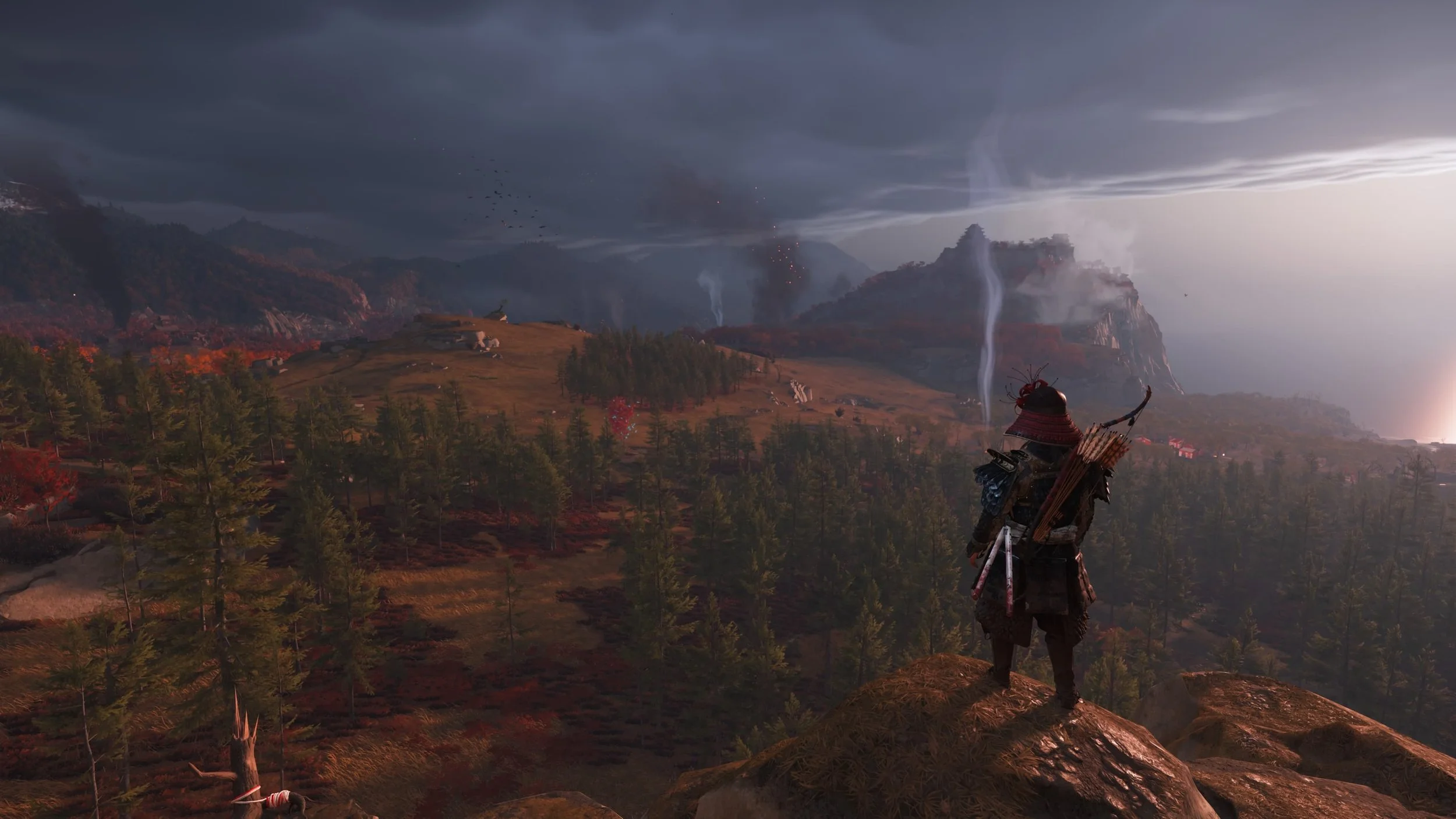
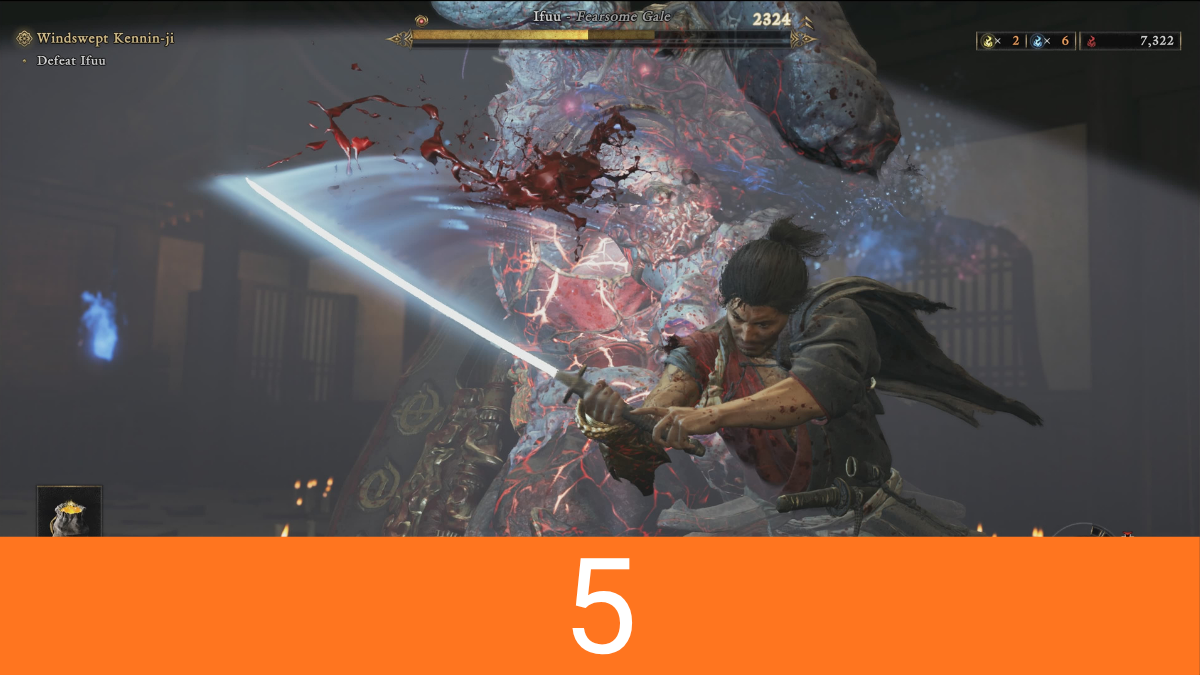
The visuals, filled with mountainous vistas and particle effects such as falling leaves and snow, are excellently-realized. The optional “Kurosawa Mode” slaps on a black-and-white filter. It doesn’t look like 35mm film by any stretch, nor does the game attempt to evoke the colors of films like Ran, but it’s a cool addition. I made sure to turn on “Takashi Miike Mode”, which turns up the blood splatters, even if I quickly grew numb to the ultraviolence. Either way, the game runs at a smooth 60fps and delivers fantastic particle effects and draw distance, all the while shining with quick load times. I enjoyed messing around in the Camera Mode a lot, too.
What’s more, whether you’re opting for the raw original score, filled with shamisen, flutes, and drums, or, as I did, perpetually leave on the “Shinichiro Watanabe mode” that occasionally plays one of several vaguely Samurai Champloo-esque trip-hop and chill electro-jazz tracks, the music is atmospheric and inviting. Protagonist Atsu occasionally plays the shamisen too, in one of many “immersive” minigames.
The English voice acting attempts to go for the old-school campy style of dubbed Asian films, and it really doesn’t work with the stilted animations of characters just standing there jabbering. Erika Ishii’s nasal voice and flat facial performance are a serious mismatch for this character, leading me to immediately switch to the Japanese dub, where she’s portrayed by the very competent seiyuu Fairouz Ai (Jojo’s Bizarre Adventure and Fate: Grand/Order, among nearly 200 credits), who elevates the material as best she can, though it’s perhaps impossible to transcend the utterly pedestrian writing.
Soap operas are better written than this
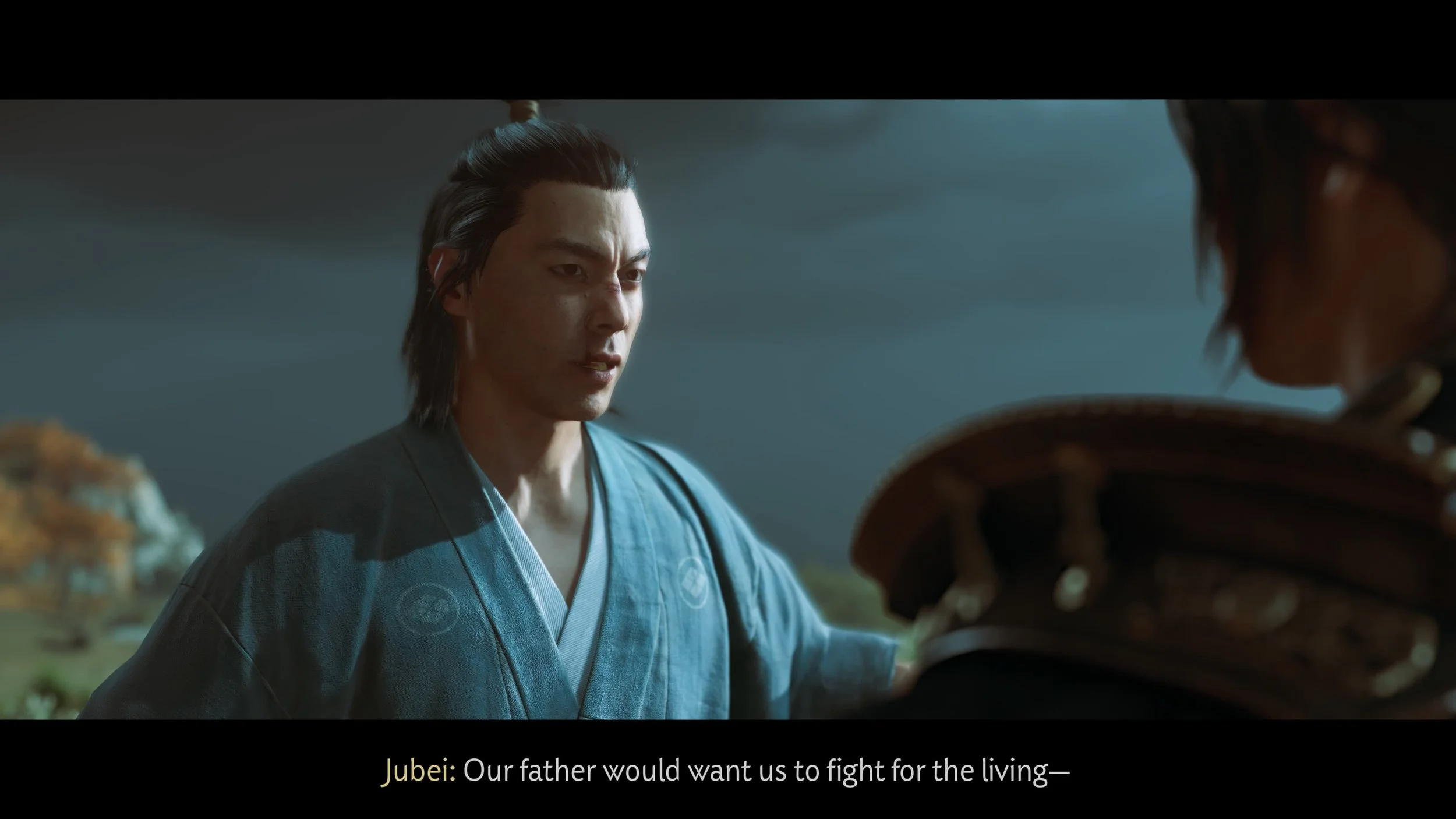
But no matter how realistic-looking or inviting a game’s presentation is, one needs to be able to either believe in the world that it presents, or else to care enough about the protagonist and their story to want to soldier on. Ghost of Yotei’s writing may have worked for a lot of people, but it doesn’t work for me at all.
Atsu is an impossible badass, which is echoed by literally dozens of character interactions she has with others constantly gassing her up, praising her inhuman ability to take countless lives of men three times her muscle mass, when one would imagine folks would be filled with fear and distrust at encountering a feared outlaw described as a onryo (vengeful spirit/wrathful demon).
Moreover, what little moral nuance there is fails to make any impact due to writing that attempts to walk a line between being historically sensitive and modernly clever, but fails at both, straight-up ignoring or waving away the narrative’s many moral qualms and contradictions. Ghost of Yotei’s writers clearly think Atsu is the coolest thing since sliced sushi rolls, but she is selfish, abrasive, and cares for nothing but her revenge quest. Her attempts to talk like a Toshiro Mifune ronin come off as silly and forced.
When a major character from Atsu’s past reenters the narrative midway through the campaign, this major moment is given none of the emotional weight that it deserves, and the ensuing arc just sucks. The writers keep this character weak, so he never successfully challenges her. In a moral inversion, Atsu’s closest relationship is with a woman who is revealed to have done some terrible things and now lives incognito, but she never truly pays the price for her murderous past.
A bloodthirsty combat gauntlet one minute, a scenic tour of Hokkaido the next
That would all be forgivable if the game wasn’t so incredibly drawn-out. Climbing sequences are simple. Wolf den bits are cinematic but empty. Sneaking around caves and camps grows old. Robbing homes for items feels dirty, but the game encourages it. The mini-games are fun the first time or two, but skippable. Encounters with the Ainu folk provided the only truly immersive story beats for me, but they are few and far-between.
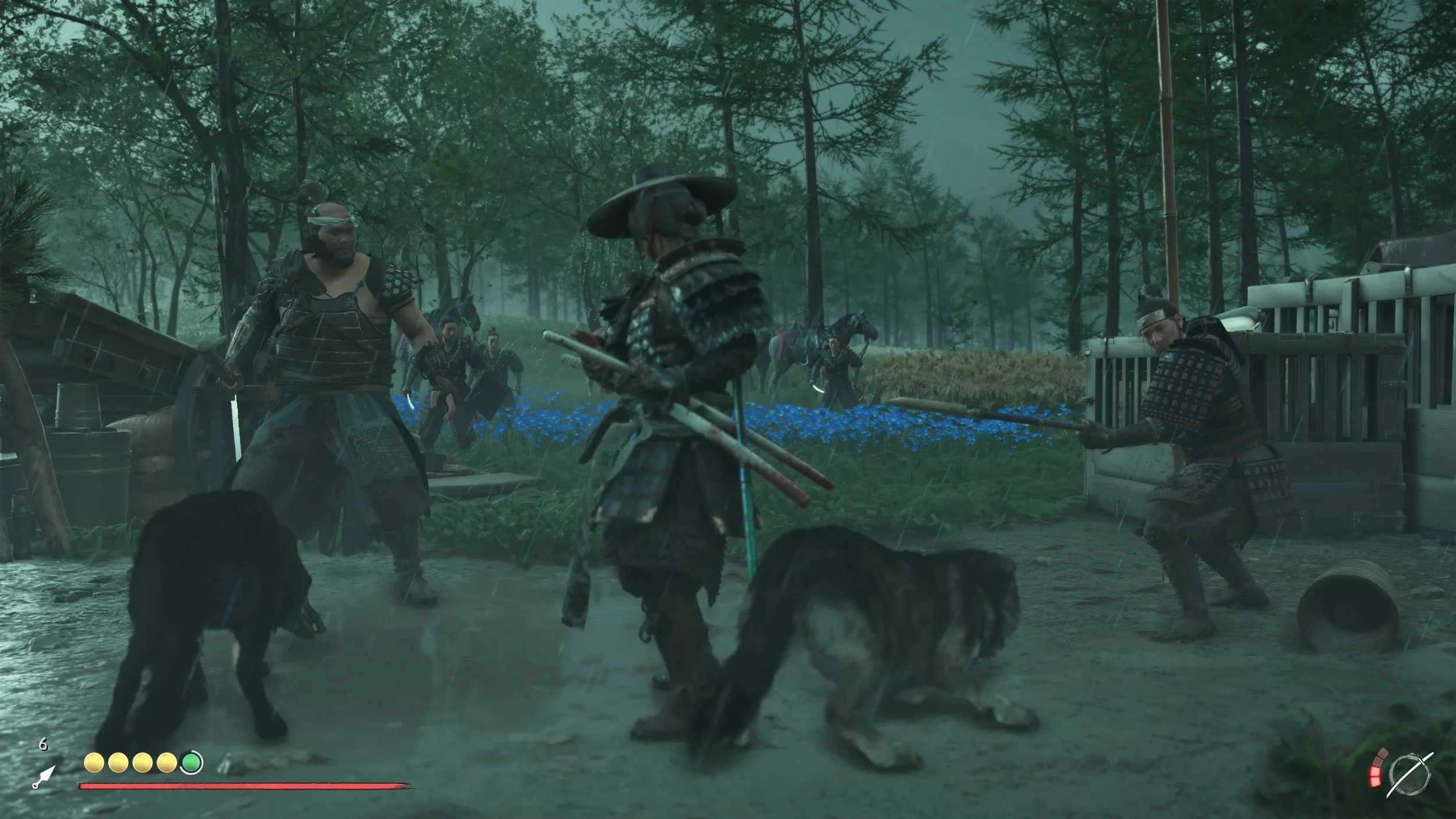
Only when the game slapped me into grueling combat arenas did I feel truly awake, let alone alive. You’ll swap between a single katana, dual katanas, odachi, yari (spear) and kusarigama (sickle and chain), but as each weapon has limited utility and you’ll also have access to not only a bow, but quickfire weapons such as kunai and firearms, you’ll be constantly switching tactics on the fly if you want to ace enemy encounters.
I’m no fan of the scissors-paper-rock forced weapon swaps the game puts you through (ala Doom Eternal), but considering Yotei doesn’t have a lock-on by default, the blocking and parrying system is pretty decent, rewarding perfect parries and featuring a stagger system that lets you wear down foes through sheer force if you’re ever caught at a disadvantage. Ghost of Yotei may fit the definition of “parry-slop”, but aside from the occasional cheap shot from behind, it’s done well. I initially felt sad when combat encounters ended, since they comparatively comprised such a small slice of the actual game. When your bounty reward is raised high enough to make you a constant target, you’ll be ambushed more, but I was strong enough at that time that I had to raise the game’s difficulty to sweat even a little.
To-who-gawa Shogunate?
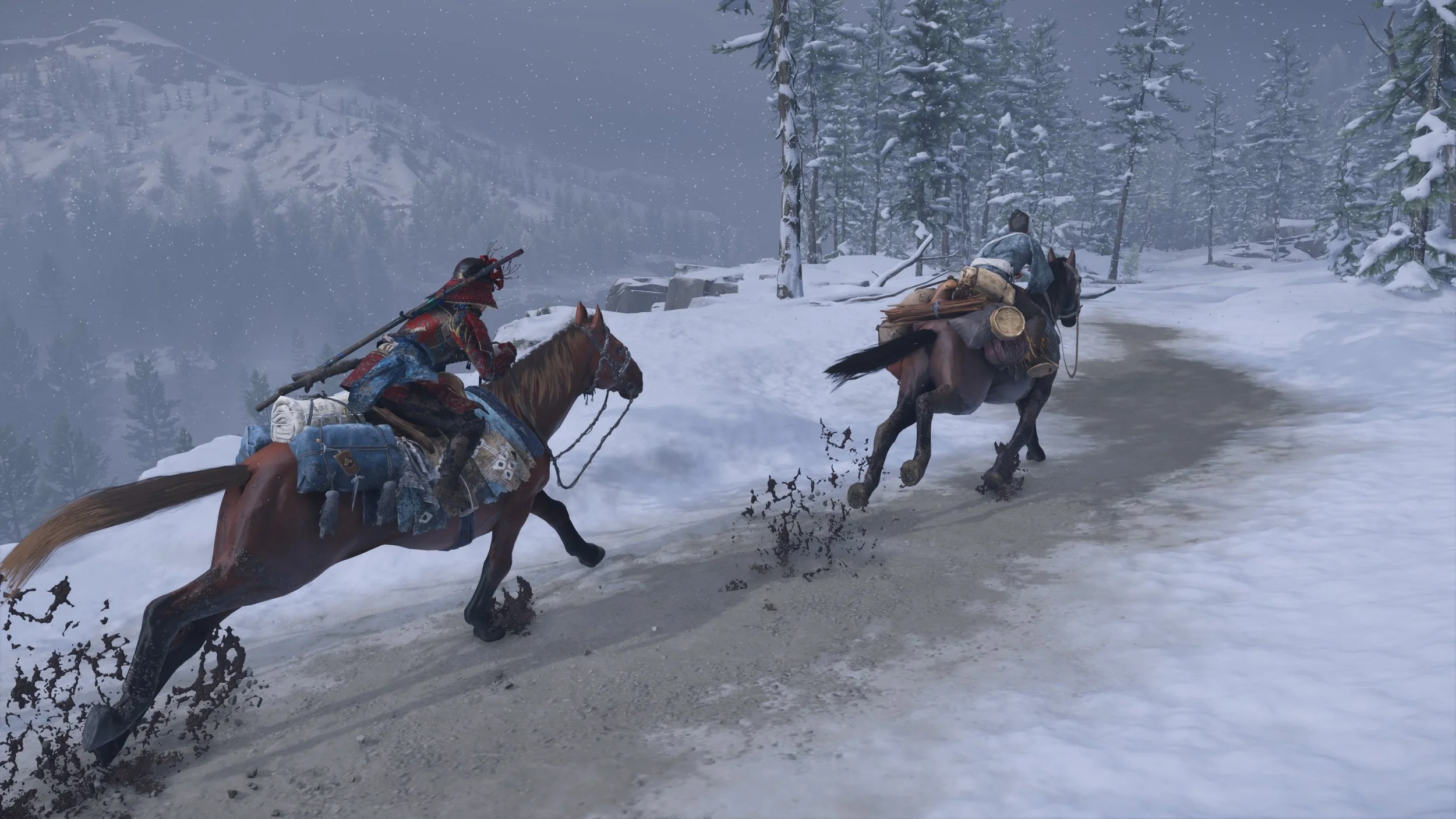
Echoes of Sekigahara, which you’ll be able to kick off about ten hours into the main campaign, had the opportunity to improve greatly on the game’s lackluster story. And for some, it might. Atsu’s mood turns when Nagato, an old flame, shows up on wanted posters. The game sprinkles in flashbacks to three years hence, when Atsu and Nagato were a “will-they, won’t they” mercenary couple just before the Battle of Sekigahara. Subverting expectations, the famed battle, arguably the most important in the history of Japan, is maddeningly not the focus of this DLC as I had expected, since it was teased multiple times in the base game.
Instead, Atsu will mostly be exploring a new area in the present day, to clear more enemy camps, take down would-be contenders for the power vacuum left by The Snake (the first of the Yotei Six she kills), liberate wolves and bears, and brashly dress down Nagato, whom she now despises. By the time we actually get to the famed Battle of Sekigahara, we’re treated to a series of cinematic corridor battles, but no major gameplay innovations. Some might say that it feels as if you’re taking part in a grand battle. To me, this was a pale imitation of the experience you’d get in a musou game, and the conclusion to the DLC’s story was rather unsatisfying.
Related | Full review of Ghost of Yotei
Most Wanted is the Reason for This Game’s Existence
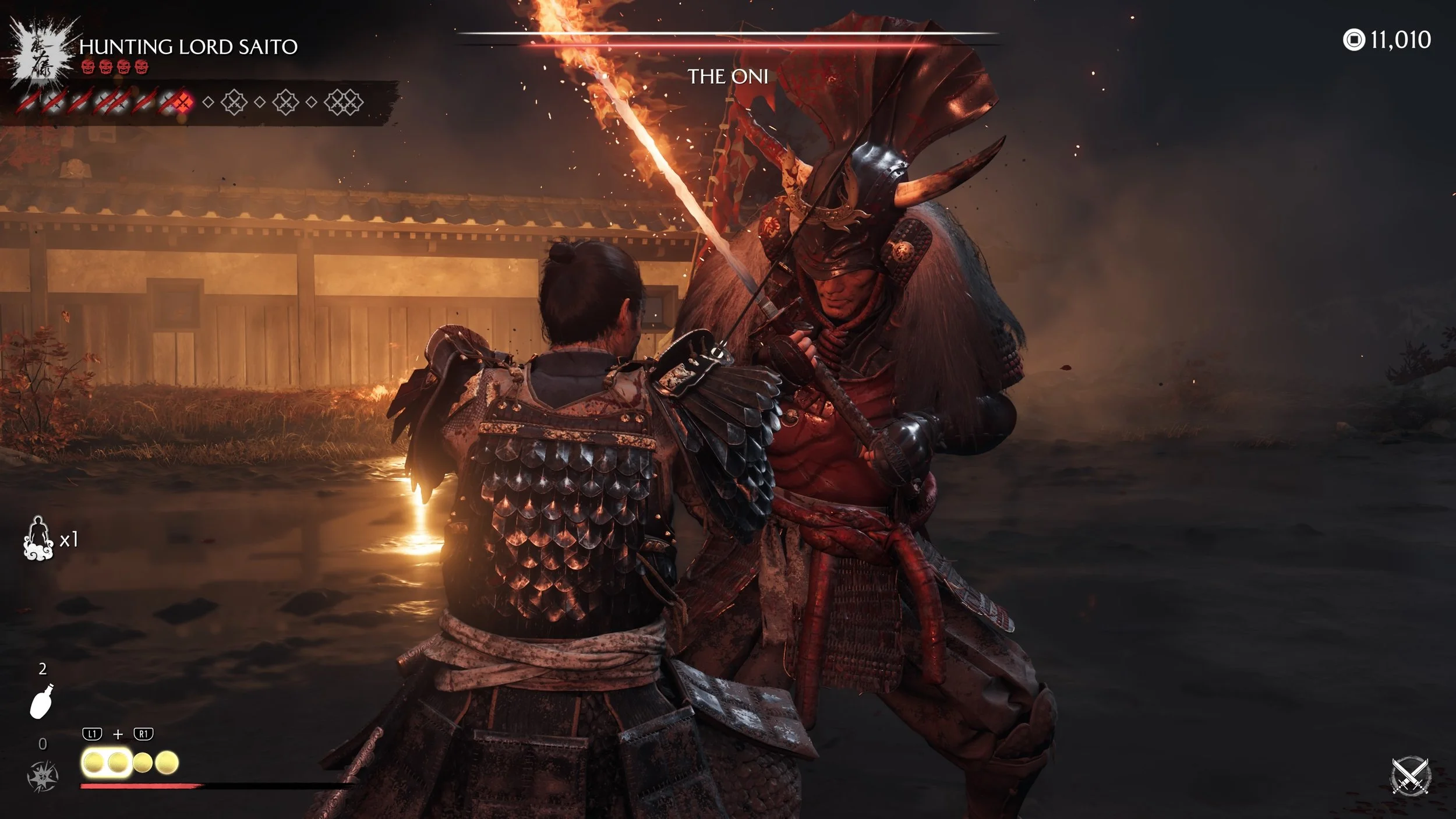
The other major addition to Ghost of Yotei: Complete Edition is Most Wanted, a rogue-lite mode which consists of a series of gauntlets where you will be tasked with taking down each member of the Yotei Six at the end of alternating mob and mini-boss fights. The arenas, vistas, enemies, and mini-bosses differ each time you embark on a run, so the challenges are always fresh. Each of the boss battles is no slouch either, as they’ll summon minions (or, in one case, munitions) to keep you on your toes. This mode not only kept me playing the game long after I felt fed up with the story; to me, it’s almost worth the price of admission alone.
You’re not just limited to playing Atsu here, either. You’ll unlock Oyuki, Nagato, and Jin Sakai, in that order. Each character goes into battle with a different arsenal, and can unlock different perks (you typically pick between three to start with after every level-up). Jin gets bonuses relating to his different katana stances, which is a cool addition.
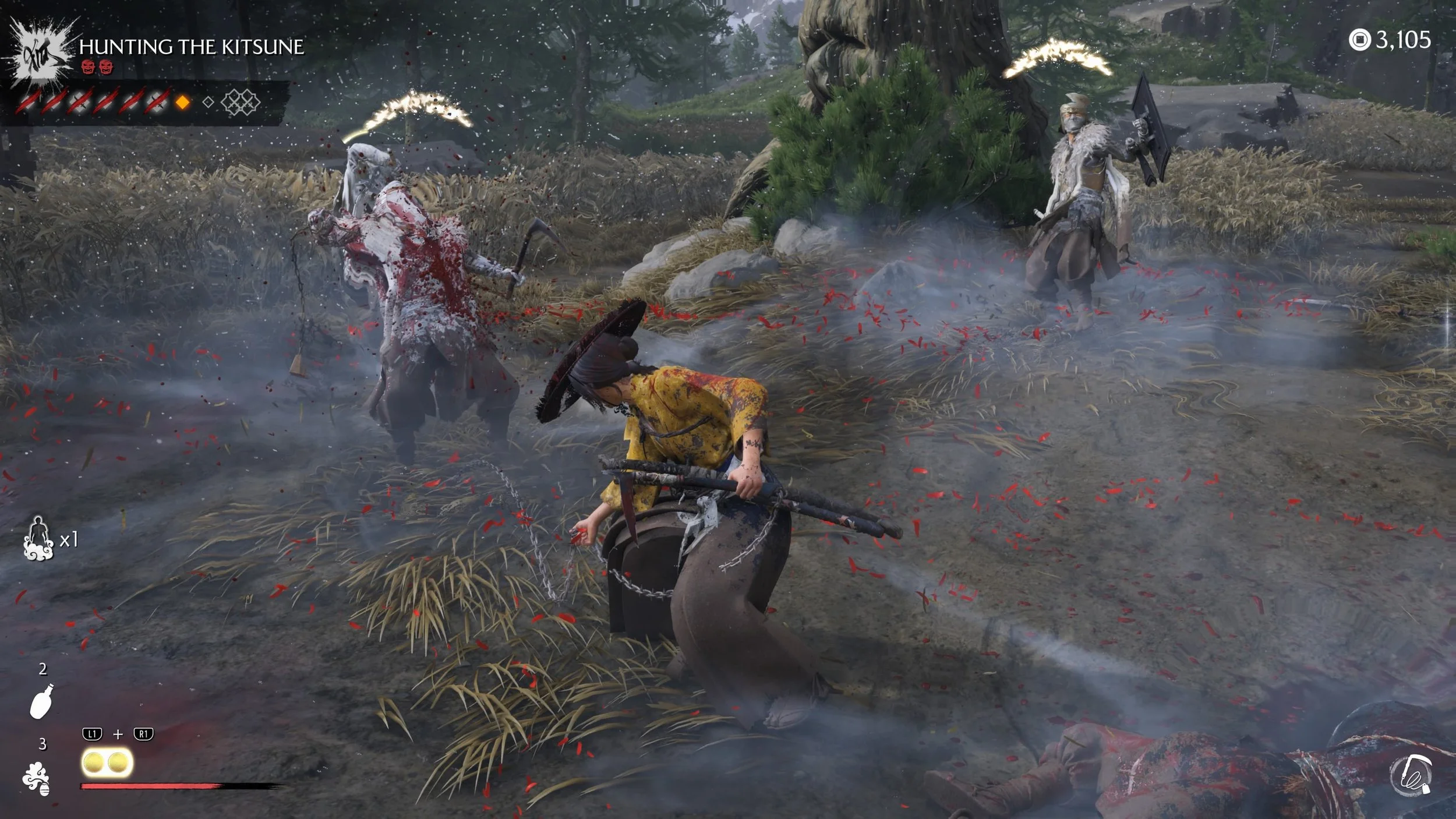
All four characters have the same basic katana, but the kits and bonuses offered during gameplay differ wildly. Each character is worthwhile, although I couldn’t find much to enjoy in Nagato’s more keep-away style, as he’s more focused on archery and ranged attacks that don’t seem to jive well with the mode’s lightning-fast pace, unless I’m missing something. Oyuki primarily uses the kusarigama (a sickle attached to a chain), which is a great mid-to-long-ranged weapon. When combined with her musket and quickfire kunai, she can play keep-away at first to thin enemy numbers down, then go in for the kill with her katana. Like in the main game, there are basic stealth options such as assassinations, the implementation of which is map-dependent.
Jin Sakai’s Gameplay is Perfectly Suited to Most Wanted
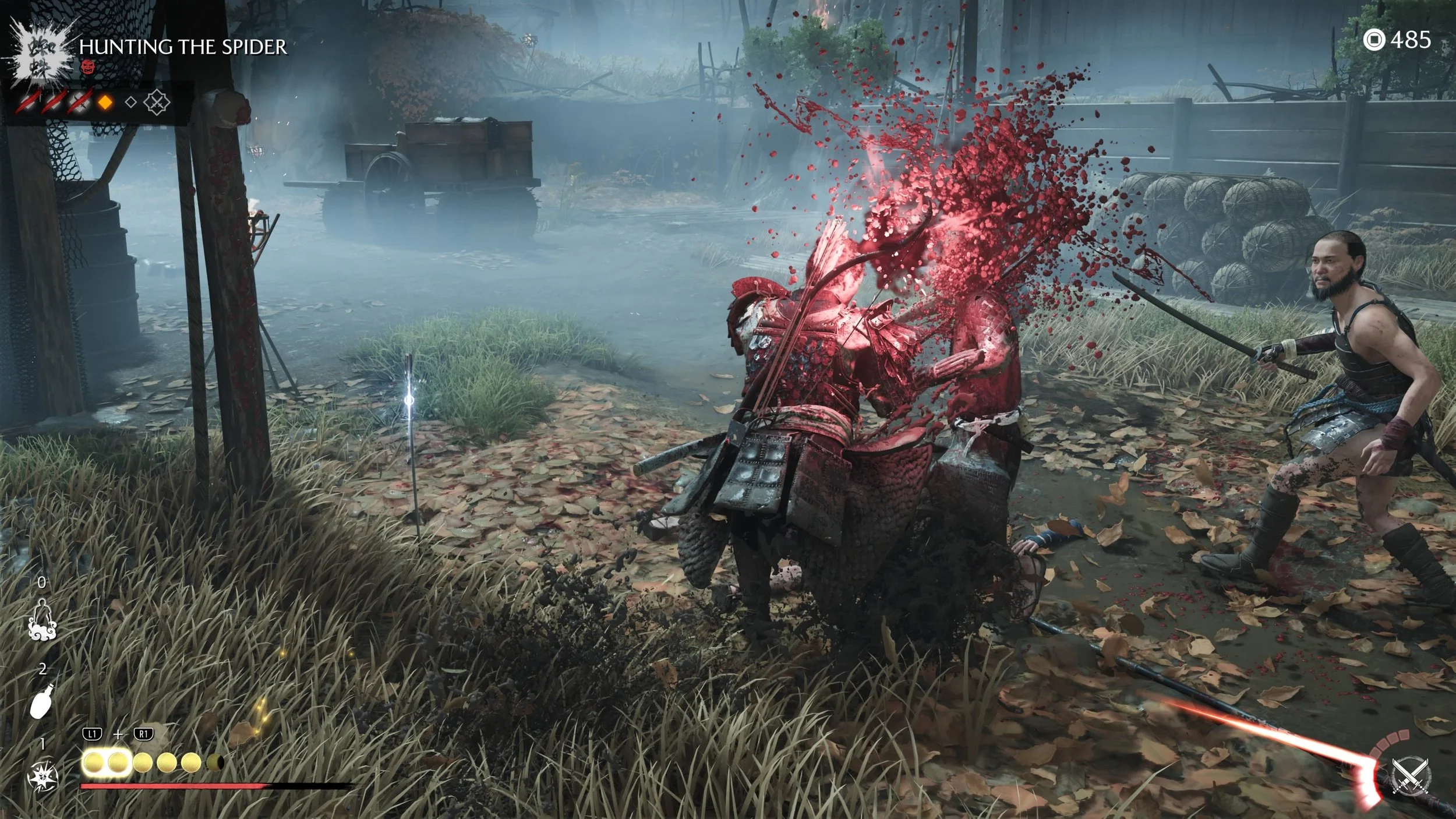
But the real MVP of this DLC is Jin Sakai. Even though I’d never played the original Ghost of Tsushima, in my youth I did study Korean kumdo, and took to Jin’s katana stances like a fish to water. Because his katana strikes have similar speed and range, spacing came naturally. His fighting style felt infinitely better to me than switching between weapons mid-combo with Atsu, which is a physical impossibility to begin with considering the game’s speed. I am now tempted to boot up my PS4 copy of Ghost of Tsushima, gifted by a friend many years ago, and play it once and for all.
As for the bonuses you gain during gameplay, you can choose between buffs to your main weapon/s, ranged weapons, unique abilities such as standoffs, stagger damage, poison/fire damage, wolf abilities, increased massive weapon or depletable weapon drops, and the like. I sometimes felt like I was lacking in options and would have to re-roll, only to be left with only slightly more desirable options and one less re-roll. But that’s all part of the challenge.
Most Wanted is extremely tough, and it becomes even tougher once you’ve beaten it and unlock the Max Threat difficulty, which turns every bounty into a 5-star one with insane amounts of enemies in every wave.
If you’re anything like me, you will die many times in Most Wanted, and maybe even lower the difficulty before even getting your first boss kill. But it’s definitely worth sticking with, because while progression may seem slow, the feeling of finally clinching each final bounty is incomparable. You’ll also be granted the satisfaction of leveling up your abilities permanently to give a boost in future runs. I spent well over ten hours in this mode, on multiple difficulties. It’s a thrilling, grueling experience and, in my opinion, shows this game at its very best.
Due to issues with my Internet speed, I didn’t try out the Legends Co-Op Mode, but I did watch a few videos. That mode seems fun enough, but for me it’s not really a major selling point.
To buy or not to buy? That is the question.
The way that I feel about Ghost of Yotei: Complete Edition is simple. The Most Wanted mode is an excellent rogue-lite combat experience that stands great on its own, but it’s held back by the drawn-out, joyless slog of a main campaign that drip-feeds mostly excellent gameplay in between a tedious, one-note soapy girlboss simulation that fails to capture the energy of Kill Bill nor the thematic depth of the classic Kurosawa and Miike samurai films it claims inspiration from.
On the other hand, if you, like many others, like Sony’s brand of cinematic walk-and-talk simulators with hours of leisurely exploration, horse rides over rivers, tons of dialogue, Ubisoft-like world-building elements that reward seeking out conspicuous points and engaging with seemingly endless filler content, then you’ll probably enjoy this maximalist game. As a father with limited time on my hands, I found myself falling asleep while tackling the campaign, but staying up late and really having a blast playing Most Wanted, which respected not only my time, but my patience. Personally, I would wait for a sale or price drop. And definitely play it with the Japanese audio.
Verdict: 4 / 5 (Fantastic)
PROS
The combat-focused Most Wanted roguelite mode takes this series’ combat to its absolute zenith, especially while playing as Jin Sakai
Beautiful graphics bolstered by cinematic presentation, vibrant colors, and particle effects
Excellent performance stays consistent at 60fps with very short load times
Japanese dub far exceeds the original English dub
CONS
The story and scenario writing is dull, trope-filled, uninspired, and reeks of western Millennial writing despite evoking traditional Japanese storytelling
Repetitive, predictable gameplay outside of combat paired with far too much walking and talking
The English dub is offensive to my ears
What I’ve Played
Spent 53 hours total on the game, mostly on Medium difficulty for speed’s sake
Over 10 hours in Most Wanted mode, completed all skill trees
Completed Echoes of Sekigahara DLC
*This review is based on a PS5 review copy provided to the reviewer
About the Author - Joseph Choi
Filipino-American gamer, professional shepherd and farmer, author, and filmmaker/videographer living in Central California. First consoles were the Game Boy and Sega Genesis, and I've been gaming since then, with a focus on Nintendo and Sony consoles.
Ghost of Yotei: Complete Edition bundles the base game with Echoes of Sekigahara, Most Wanted, and Legends co-op. While the main campaign drags, Most Wanted delivers an excellent roguelite combat experience, especially with Jin Sakai.