

If you did a double-take and could swear that this game was called Tales of Destiny 2, you’re not wrong. Tales of Eternia was the original name for this entry in the Tales Of series and is now available to play on modern systems thanks to the Tales of Series 30th Anniversary Remastered Project started by Bandai Namco back in 2024, Tales of Eternia Remastered can be found on the Nintendo Switch and Switch 2, Xbox Series X/S, PlayStation 4 and PlayStation 5. Does this new coat of paint add anything substantial to the experience of this original PlayStation classic? Or is this just nostalgia bait with a pair of rose-tinted glasses?
Let’s be honest here. If you’ve played either the original release on the PS1, the port on the PSP, or even an older 2D Tales Of game, this remaster is for the most part the same type of game it was all those years ago, a JPRG populated by a ragtag group of characters given the sudden task of saving the world, with the novelty of action combat that the series has labelled the Aggressive Linear Motion Battle System (A-LMBS), as opposed to the more prominent turn-based JRPGs of its generation.
Old, but not obsolete
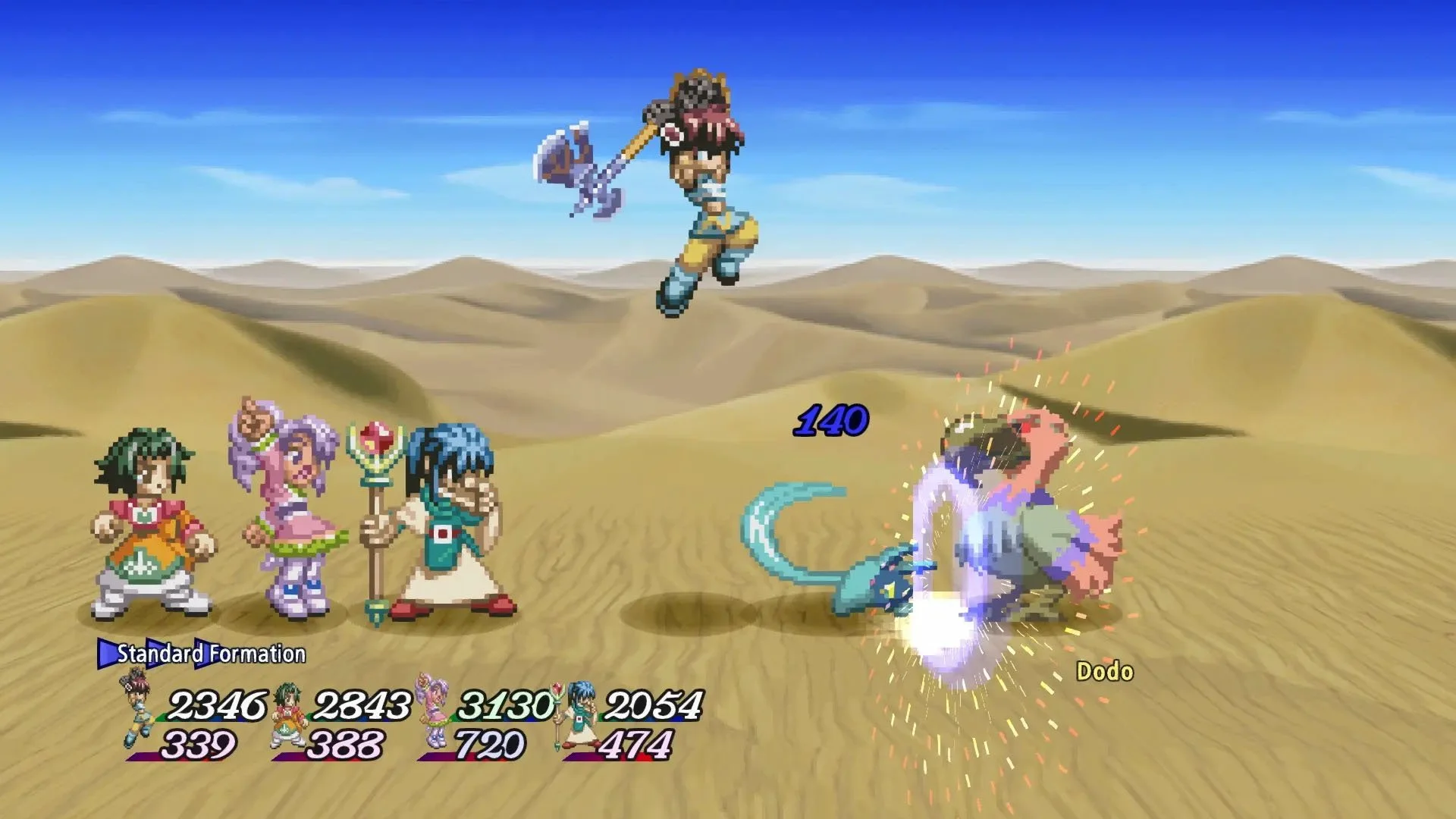
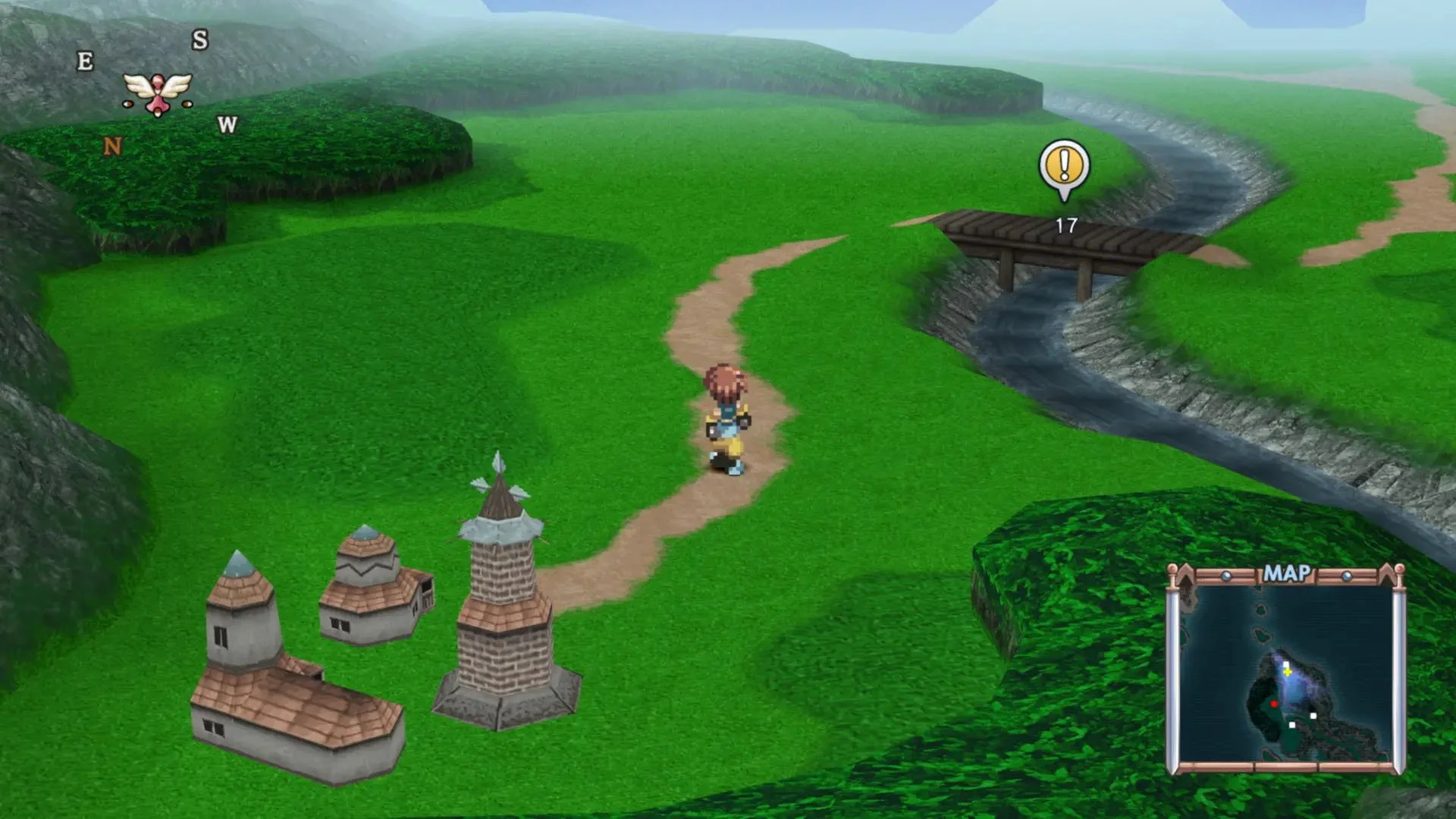
Jumping straight to what this remaster has to offer, it’s a surprising amount of very well-appreciated options. From the more obvious inclusions of boosters that increase your item and experience gain to more subtle ones such as the ability to toggle the default movement from walk to run and a slight increase in overworld traversal speed. Tales of Eternia Remastered also allows you to toggle between different music options, as well as choose between enhanced visuals or the original but upscaled pixel environment art.
The differences between the music and visuals aren’t too substantial, but are nuanced enough to warrant appreciation. The enhanced visuals still maintain a very PS1 pixelated look, but are far more than the typical filter you’d expect from a remaster of this nature. Details abound, such as flowers being picked out in detail for the enhanced mode, while in the original graphics mode they’re blocky colored squares in vague flower shapes. This enhancement seems to only apply to the background detail and environmental textures. The character sprites don’t appear to change in quality between modes. And while looking like reasonably clean upscaled sprites, you can very much see that they were intended for a much smaller CRT screen. For the music, it’s honestly a lot harder to tell the differences, but it is there. The newer soundtrack feels a lot richer, while the original soundtrack is actually more akin to the PSP version, which was probably the base for this remaster. And speaking of music, we finally get access to the original opening theme song, flying by GARNET CROW, which was only available in the Japanese releases of this game.
To Grind, or Not to Grind?
Now, old JRPGs can be riddled with tedious moments of oftentimes mandatory level grinding, as was the design trend back in the day to artificially pad out game length. Tales of Eternia Remastered claims to maintain the same nostalgic and moving experience while making the game easier to play with a plethora of new quality-of-life features. I mentioned a few of them earlier, but let’s go over the new boosters that the remaster offers. Experience, Gald (the series’ currency), Damage, Attack and Cooking Proficiency can all be toggled to different multiplies: x0, x1, x2 and x4. These can make it so you can earn and increase character levels and skills learned significantly faster than you would back in the older releases. The frequency of enemy encounters can also be toggled and even turned off. While these might sound like outright cheating, they can drastically cut down the time it takes for the player to simply meet the level and strength requirements to power through certain enemies and bosses, and also make it so that it isn’t a slog to traverse long walks on the overworld or finicky dungeons with some questionable puzzle designs. I’d say the biggest booster is the ability to recover TP when camping. It’s a game-changer for those who have played different Tales Of games before.
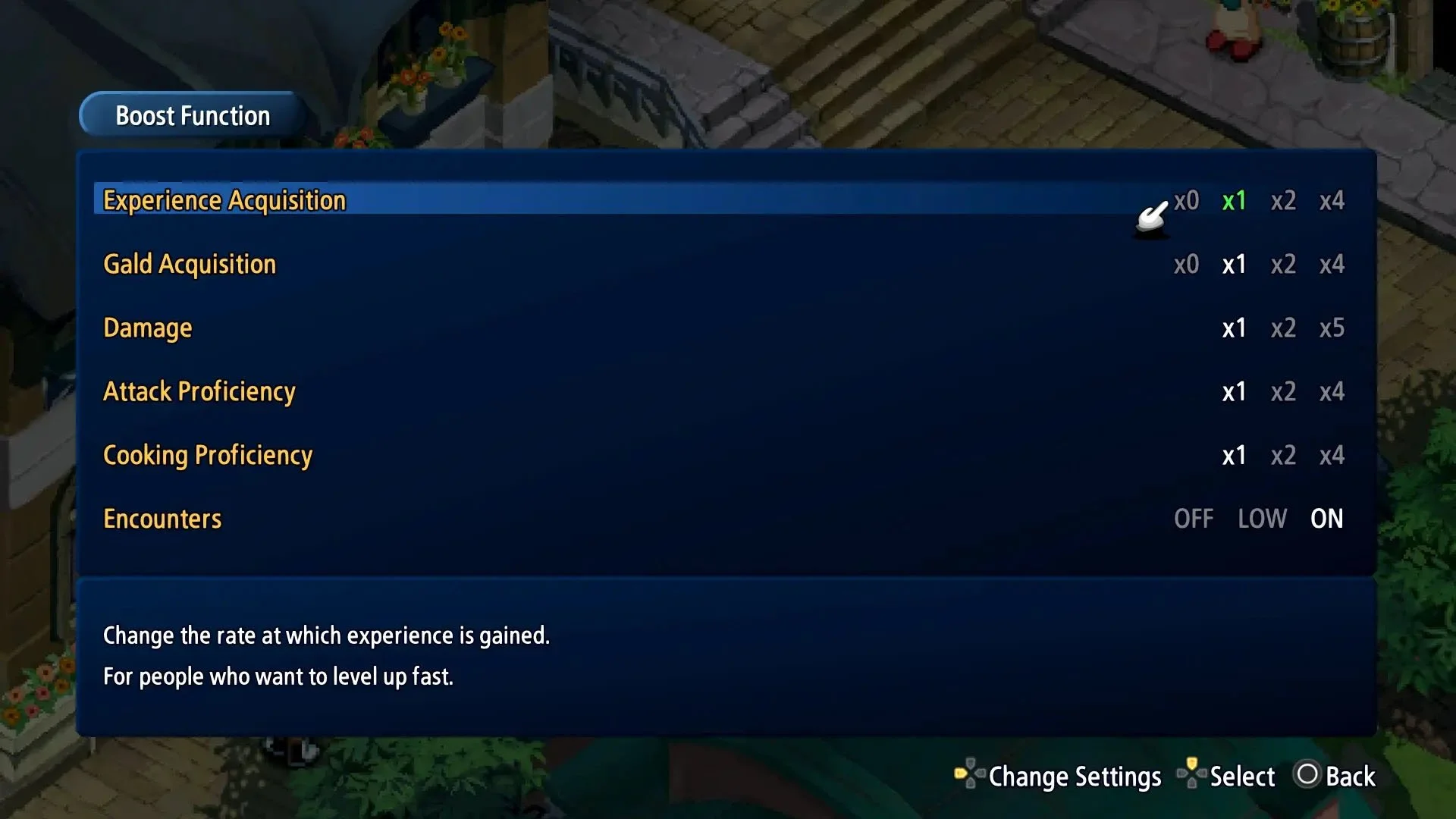
All of these boosters can be toggled back and forth during your playthrough, but do be aware that toggling the item inventory limit increase cannot be disabled once changed during that particular run. It can only be reset when a new game has been started. For those wondering, it changes the inventory cap from a maximum of only 15 pieces per item held to 99. I personally wouldn’t consider it cheating, more so you are just cutting the time needed to do the same task of fighting enemies over and over again to reach the same result. And again, sans the inventory limit, you have full control whether to enable or disable these boosters to customize your experience in however way you want. To make grinding even less of an issue, the remaster has a high-speed auto-battle feature which also gives you partial control as to how your characters’ CPU performs, specifically the frequency with which they use special moves and physical attacks during auto-battle.
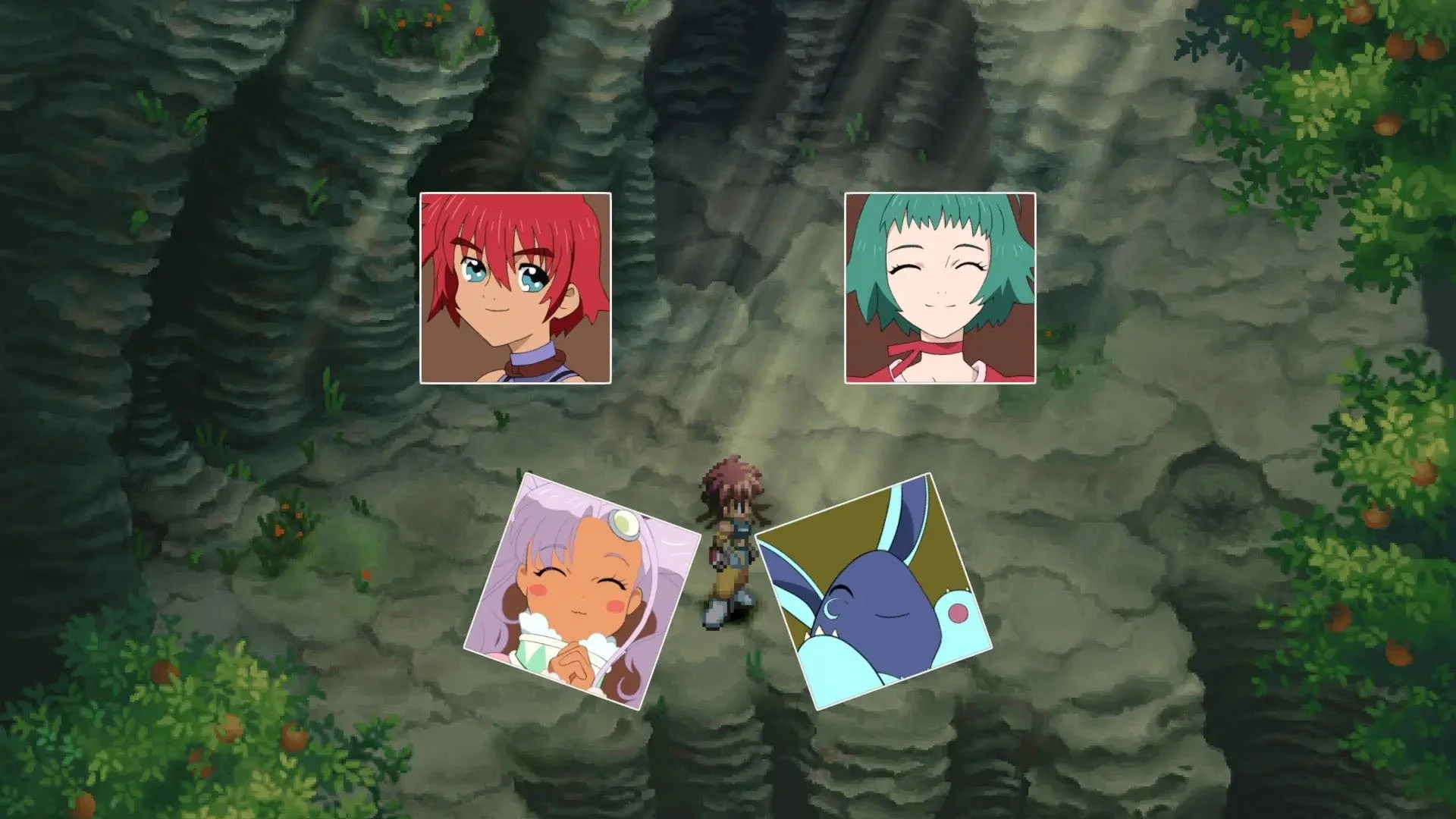
Another new feature is the inclusion of quest markers that can point you where to go, with a distinction between main quests (yellow) and side quests (green). The remaster also includes a new voice cast and a new localized script. I’d say the new cast does a great job with their delivery of the retranslation, though it’s a shame there’s no way to switch back to the original dub. That’s probably due to the inclusion of camp skits, which were absent in all localized versions of the game outside of Japan prior to this remaster. They’re very well-animated, given the presentation of talking anime heads in square boxes. The camp skits add a lot of personality to the characters, which was very much lost to us way back when. Camp skits that you’ve encountered can be rewatched in the menu, letting you know which ones you’ve missed in case you want to collect them all.
Fun and accommodating for JRPG fans
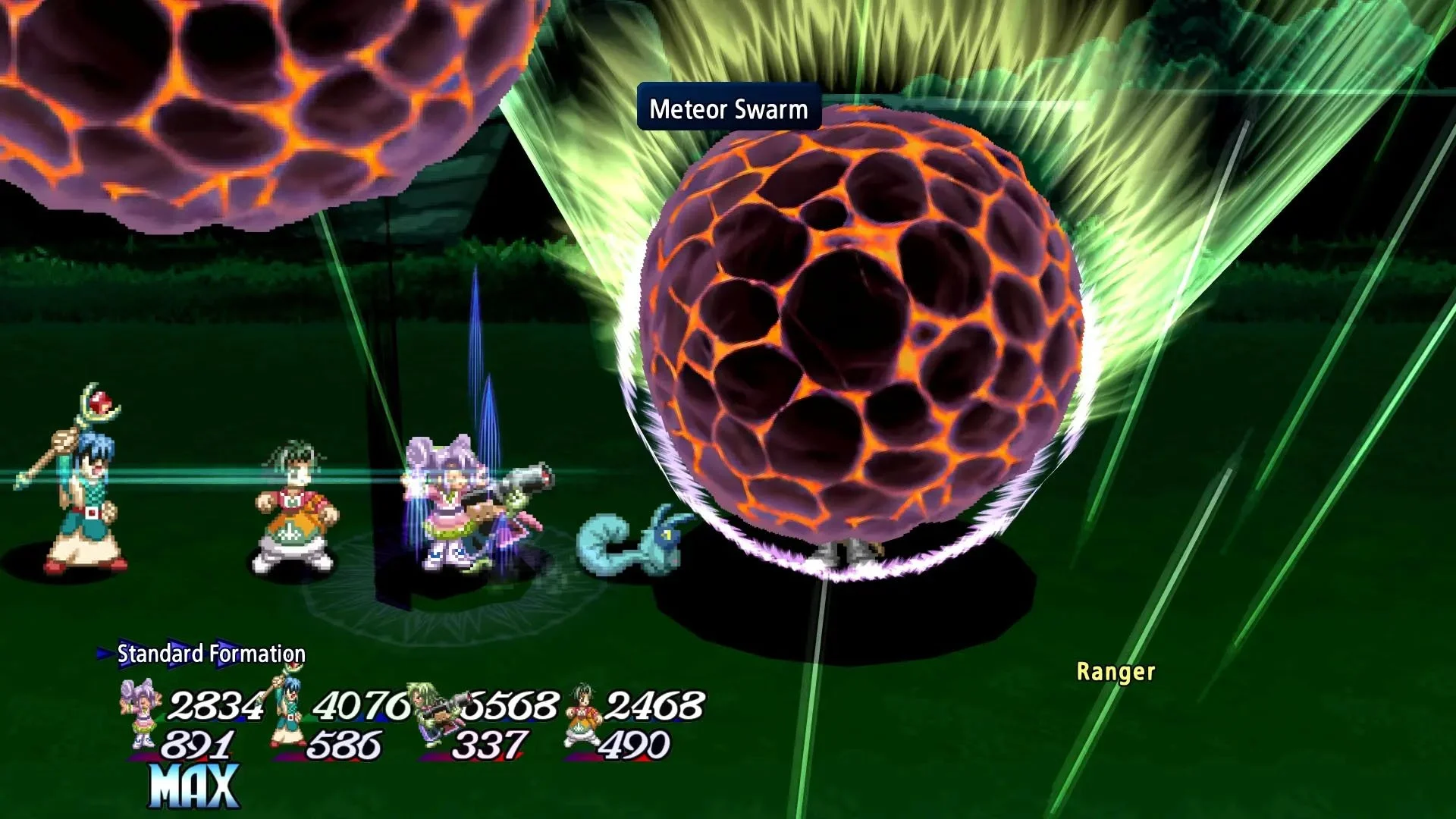
As far as the base gameplay experience goes, it’s still pretty much the same game you love. The remaster does what it claims, which is to preserve the experience while making it accessible to players of all kinds. If I had any real complaints about Tales of Eternia Remastered, it’d be how the upscaled opening intro FMV can look like a globby mess at certain moments, the fact that they changed Farah’s catch phase from a simple “no problem” to “easy breezy!”, and how awkward the diagonal inputs on the movement can feel when running around the map. Other than those, if you haven’t experienced Tales of Eternia and would like to do so, the remaster is the best way to play it.
Verdict: 3 / 5 (Good)
PROS
New voice cast and completely retranslated script and dialogue
Inclusion of camp skits
Faster walk speed and auto battle is very appreciated
Customizable Boosters
CONS
Sometimes smudgy and globby looking FMV upscales
Waypoint quest markers could’ve been better executed
Diagonal movement feels a little unresponsive at times
What I’ve Played
9 hours of gameplay
Obtained 3 Greater Craymels
Only applied boosters after the Undine boss fight
Still can’t beat Craymel Ball after all these years
*This review is based on a Steam review copy provided to the reviewer
About the Author - Miguel Mendoza
Primarily known for creating and managing video content for TMG, Migoy can also be found writing a review and/or article here and there. Has a great fondness for giant robots and masked superheroes. He is commonly seen yelling at a microphone while playing videogames.
Tales of Eternia Remastered brings the classic PS1 JRPG to modern platforms with enhanced visuals, a new voice cast, camp skits, and plenty of quality-of-life improvements that make revisiting this adventure much easier.