
Onimusha: Way of the Sword Review: The Best Way to Return
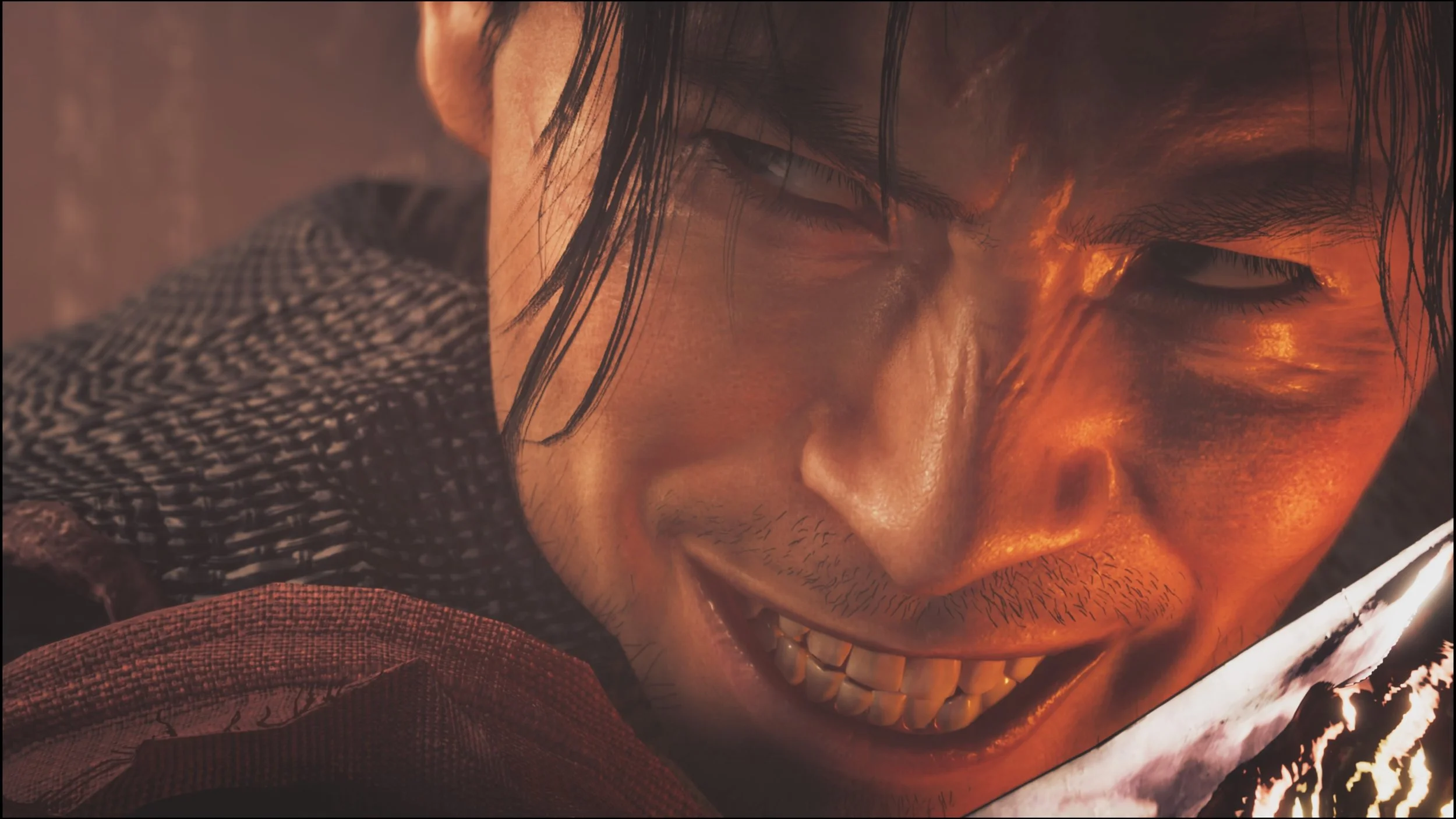
Capcom is currently on this generational run where it feels like everything they release turns to gold. Resident Evil: Requiem I heard is fantastic, Street Fighter 6’s Year 4 started strong with the release of Yasmine, and their newest IP Pragmata is one of 2026’s must-play games of the year. We then have Onimusha: Way of the Sword, the latest title of the once dormant classic franchise coming back in the best way possible as it very well might be my game of the year contender.
Capcom could have taken the easy route, delivering their take on the soulslike formula by riding the Onimusha name as it felt fitting considering that Nioh found some form of success during the Soulslike craze. Instead, they delivered an action game that befits the Onimusha name, a game that knows what it wants to be, and sticks with it as it treads carefully to not lean too heavily into familiar systems where other games dominate, as it has combat that lets you feel like you are part of the choreography, where each successful or failed attempt is slightly more emphasised when it occurs on the screen.
A perfectly timed parry results in a spectacle on the screen with sparkles between two blades clashing, a dodge done at the right time slows down time to allow you to do significant damage, and the proper use of resources from the player can make or break an encounter.
Each time I get into a fight, I feel like I'm building momentum, as a successful parry gives a certain amount of confidence that makes me think I can take on the remaining demons currently on the screen. But at the same time, repeated hits and missed dodges give a snowball effect that eventually leads to the game over screen. It’s rewarding and challenging, something best found in From Software games, but Onimusha: Way of the Sword reminded me that Soulslike doesn’t own these risk and reward momentum swings.
A Battle of Patience
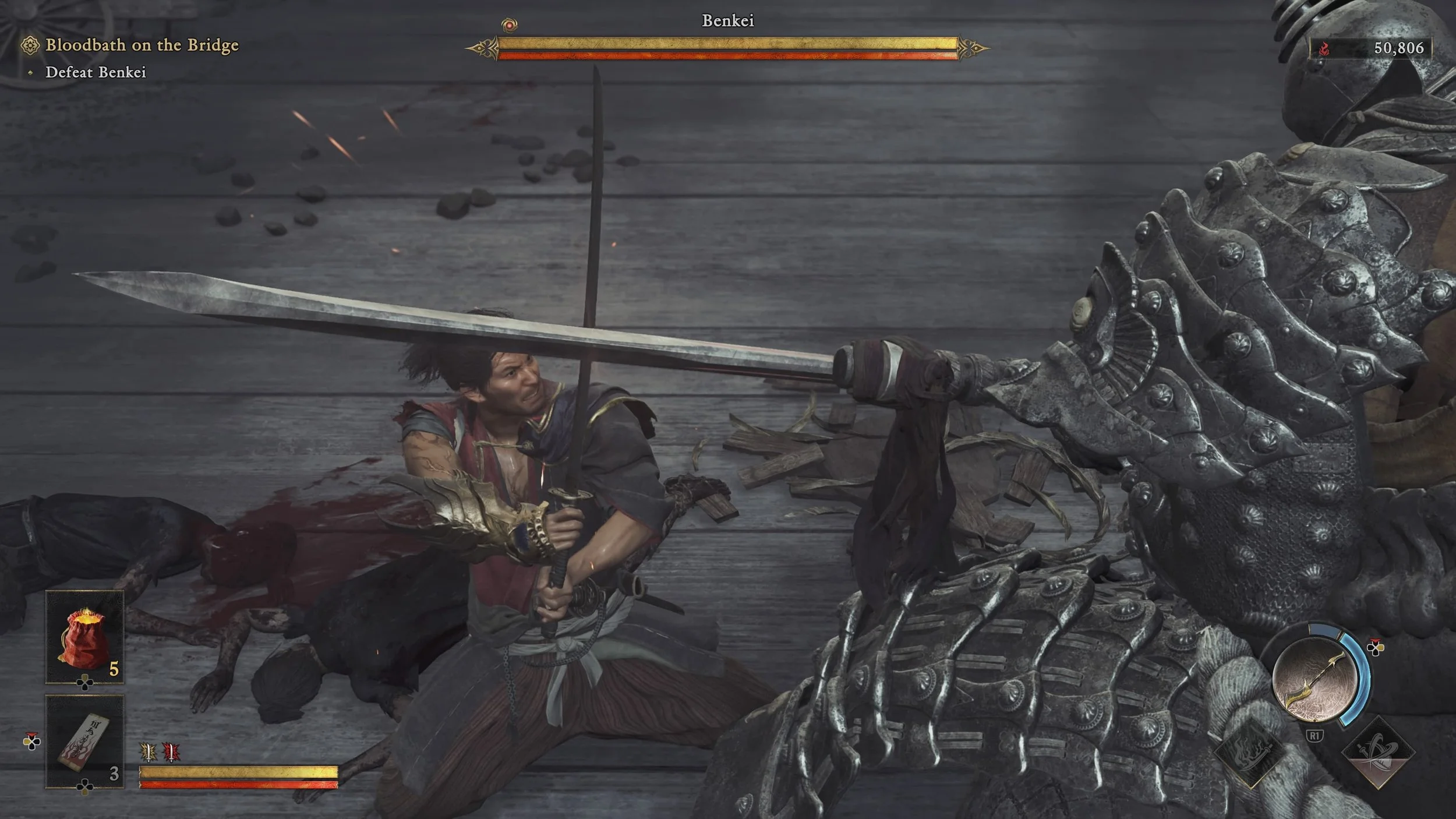
There’s nothing overly flashy or complicated in the combat as you have a fast attack, a heavy attack, dodge, block, parry, and abilities that aren’t always about dealing damage. You are not looking for the best possible playstyle or finding the best possible attack combination when you juggle the enemy in the air, or doing certain combo strings once you see an opening. It’s all about using the right tool that fits that particular moment, a bit of patience, and a reasonable understanding of the enemy in front of you.
It’s a game that leans heavily on the old saying “a good defense is a strong offense”, as each parry or dodge gives Musashi an opening. Depending on execution, you can dish out more effective versions of these defenses, like a deflect to really hurt an enemy’s posture, a bar that, when depleted, allows you to execute a normal enemy, or severely damage a boss with a unique choreographed animation for that particular fight.
Breaking a boss’s stamina gauge involves some decision making, as before you execute the move, you can choose either a move that deals a significant amount of damage, one that breaks a part of the boss (to make it somewhat easier), or damage them to absorb spirits from them, which effectively gives you life and other resources.
It’s fantastic that breaking one’s stamina bar isn’t just one-note as I found myself choosing what I needed in the heat of the fight. And that also goes for the Oni Armaments you gather during the game. These are special weapons Musashi can wield that don’t outright replace his katana but serves as a special move that can be used when you absorb enough of the blue souls floating in the air.
They all have their own uses as they are not for the sake of doing damage. The daggers can serve as a way to gain a good chunk of life back, the Earth-Shaker hammers acting like the perfect stamina bar breaker due to how much damage it does, the double-bladed naginata does area-of-affect damage, perfect for dealing with multiple enemies, and so on. I found myself using each one depending on the situation.
With how Musashi’s arsenal is structured, the game is all about choice and how much confidence you have when committing to a specific approach. You can dodge, but get a better payoff if you parry, or commit to deflecting an attack when you are confident you understand an attack’s timing, specifically an unlockable move coming your way. This resulted in satisfying boss encounters, which are the true highlights of the game.
Each Boss Fight Is as Good as the Last
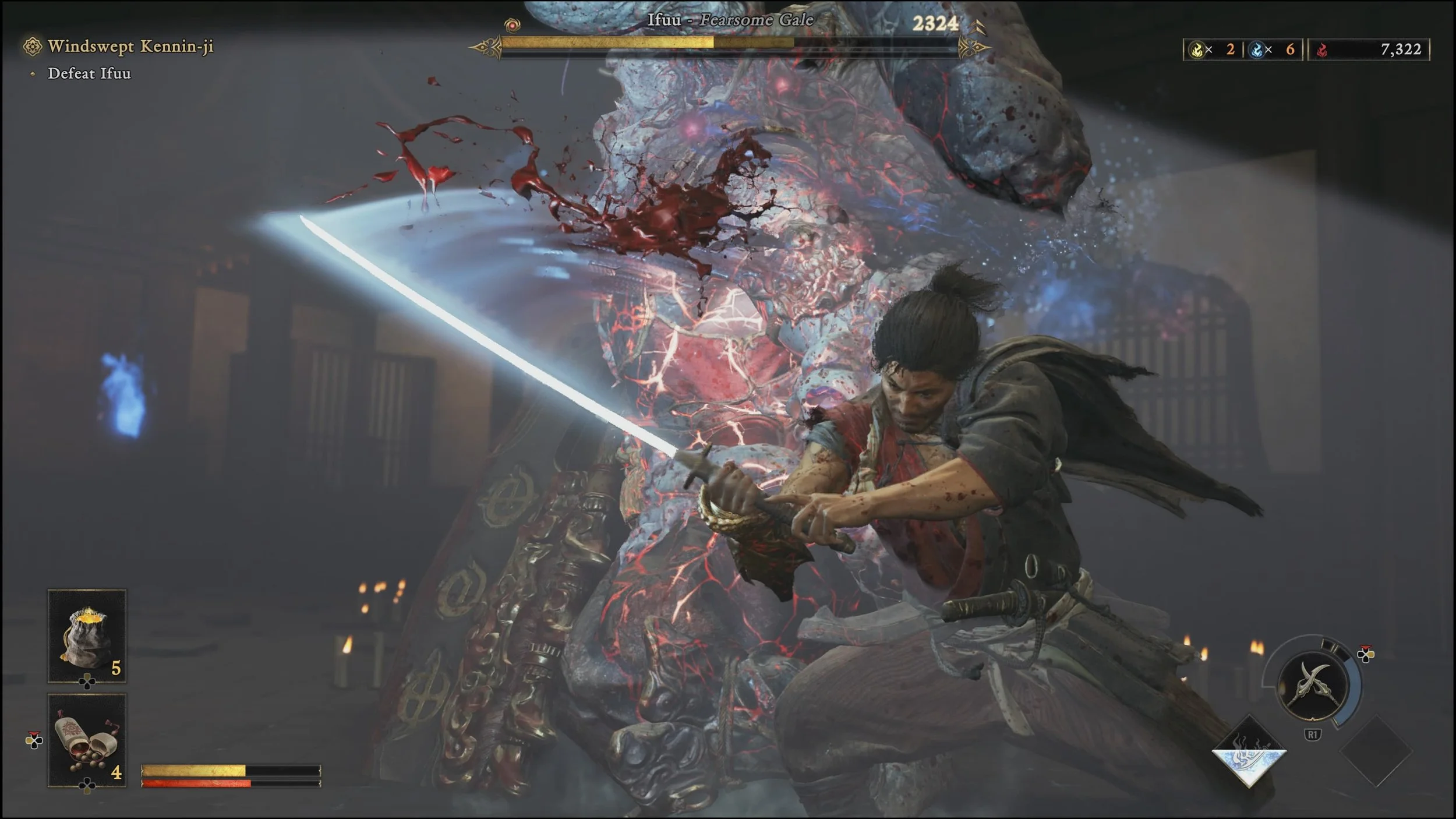
Each boss fight was fun to learn and master and is a treat to engage with thanks to all the systems mentioned, and topping it off with blade lock and blade barrage, where one has you spamming the attack to overpower this arm wrestling mini game to deal a good amount of stamina damage, then blade barrage, a series of blade clashes that only stops if you press a different attack type. All of these beat the lazy quick-time events we see in action games that give the illusion that you are part of the cutscene as each encounter feels like an actual cutscene when watching from afar.
For upgrades, I messed up this portion of my time with the game, as when you progress, you are given basic and advanced skills that essentially expand Musashi’s skill set. You eventually have the ability to teleport to an enemy archer when doing a successful arrow deflect or charge one of the attack buttons to deal a big blow. The Oni armaments can be improved as well. But most of these upgrades are pretty straightforward as you need the resources you find and the red souls you collected to unlock them
I realized pretty late that to get access to more skills to unlock, you need to complete Oni Portals found in Eastern Kyoto, the game’s area where most of the side quests and side activities reside.
I thought these skills naturally became available to unlock when playing the campaign, I wasn’t aware that most of them are unlocked on the side, so I essentially played the game with just tier 2 of unlockable skills, essentially making the game a bit more challenging for me.
This is an oversight on my part, but it made me realize how effective the game’s basic mechanics are because I never felt completely underpowered at all. I understood why I died and adjusted. I never felt cheated, despite spending at least 2 hours in one boss fight. Maybe this is the soulslike nature in me being a bit stubborn, but the wins in the game’s most difficult encounters rival the feeling of beating an Elden Ring boss.
The Many Facial Expressions of Musashi
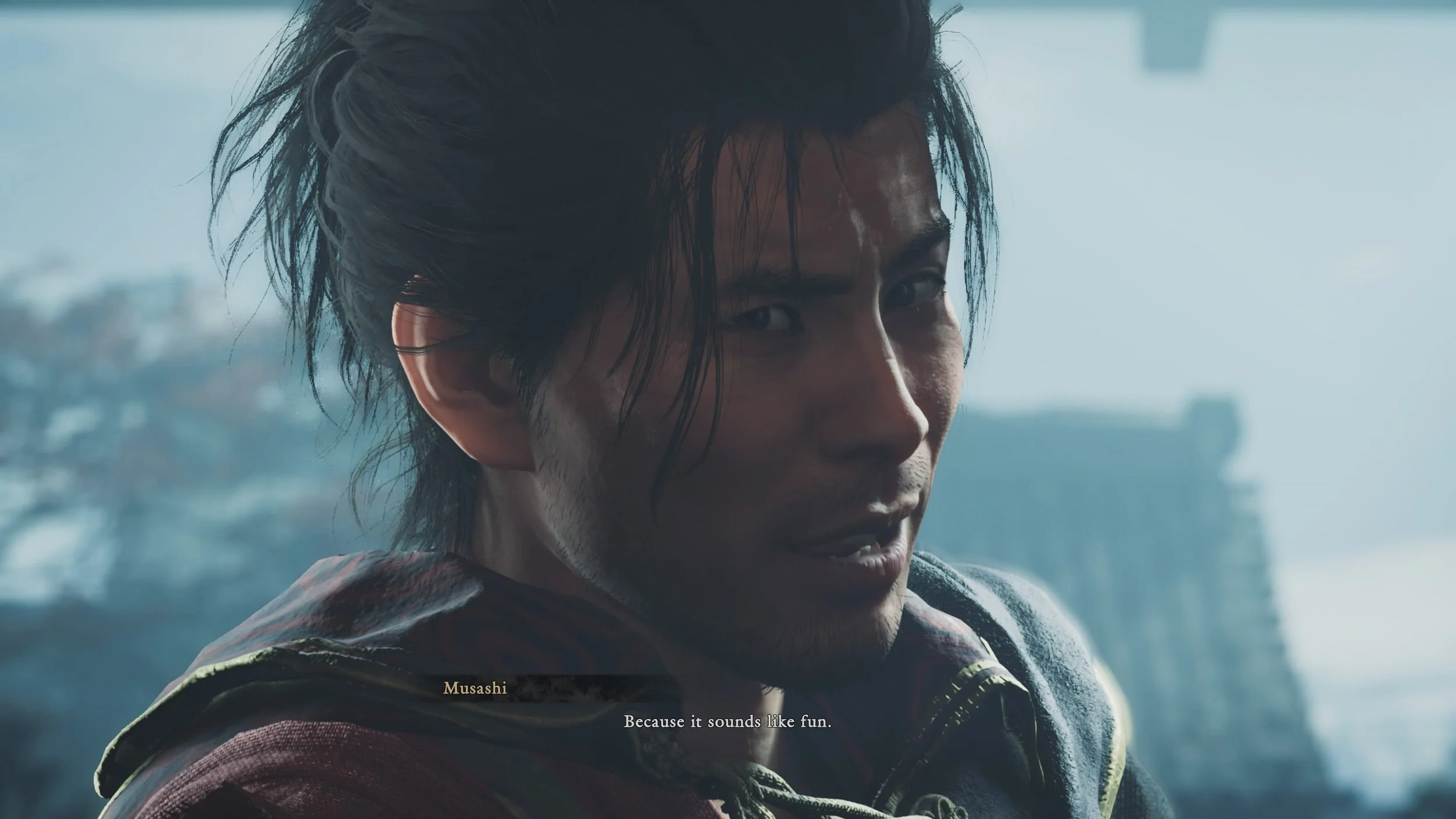
What ties the combat together is Musashi himself, as he was animated in both face and body, emitting this likeable personality that it was hard to ignore. Capcom injected this character with a series of mannerisms that keep him from looking stiff or boring to watch as he struggles to face these demonic enemies. When blades clash, you see his struggles in his face, when he slices an enemy in half vertically, you see him slightly losing balance after performing the execution. Before some fights, you see him blowing his dominant hand holding his katana. Small details like that do a lot to make it easy to enjoy spending over 30 hours with a character.
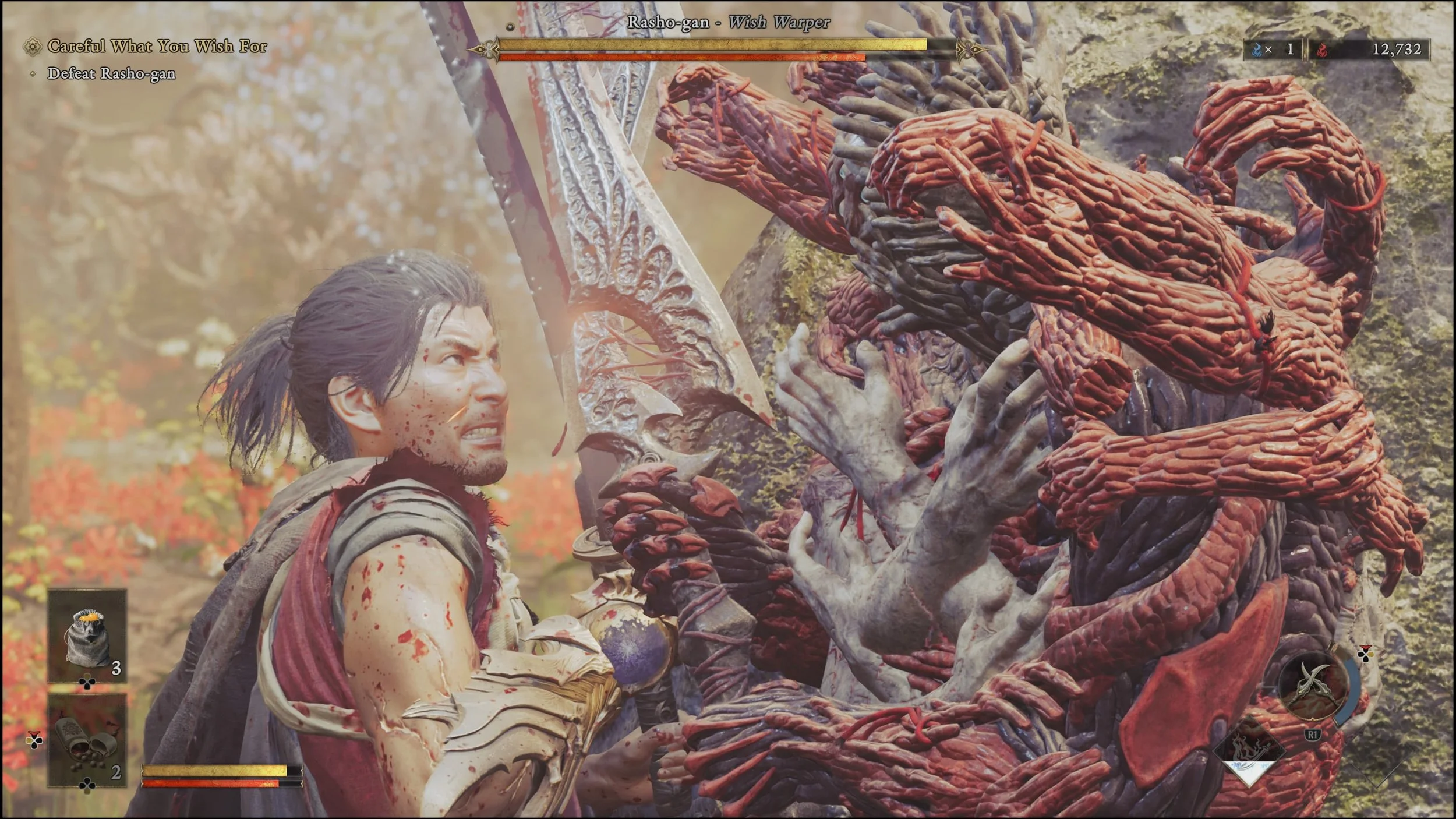
Some segments see him doing more unconventional approaches to attacks, which is fitting considering he’s fighting hulk-like monstrosities. But how he acts never crosses the line of being goofy. He’s clearly having a hard time but his expertise with a blade is still at the forefront as there are multiple instances where they showcase his expertise with the katana.
His drive was purely to face the strongest opponents, and that never really changed throughout the course of the game. At first, it felt like he was building towards being an anti-hero who could sway in any direction, but he clearly became a typical hero protagonist that loves a challenge, big or small, and has a heart as he shows sympathy to those affected by Genma attacks.
The Journey of an Onimusha
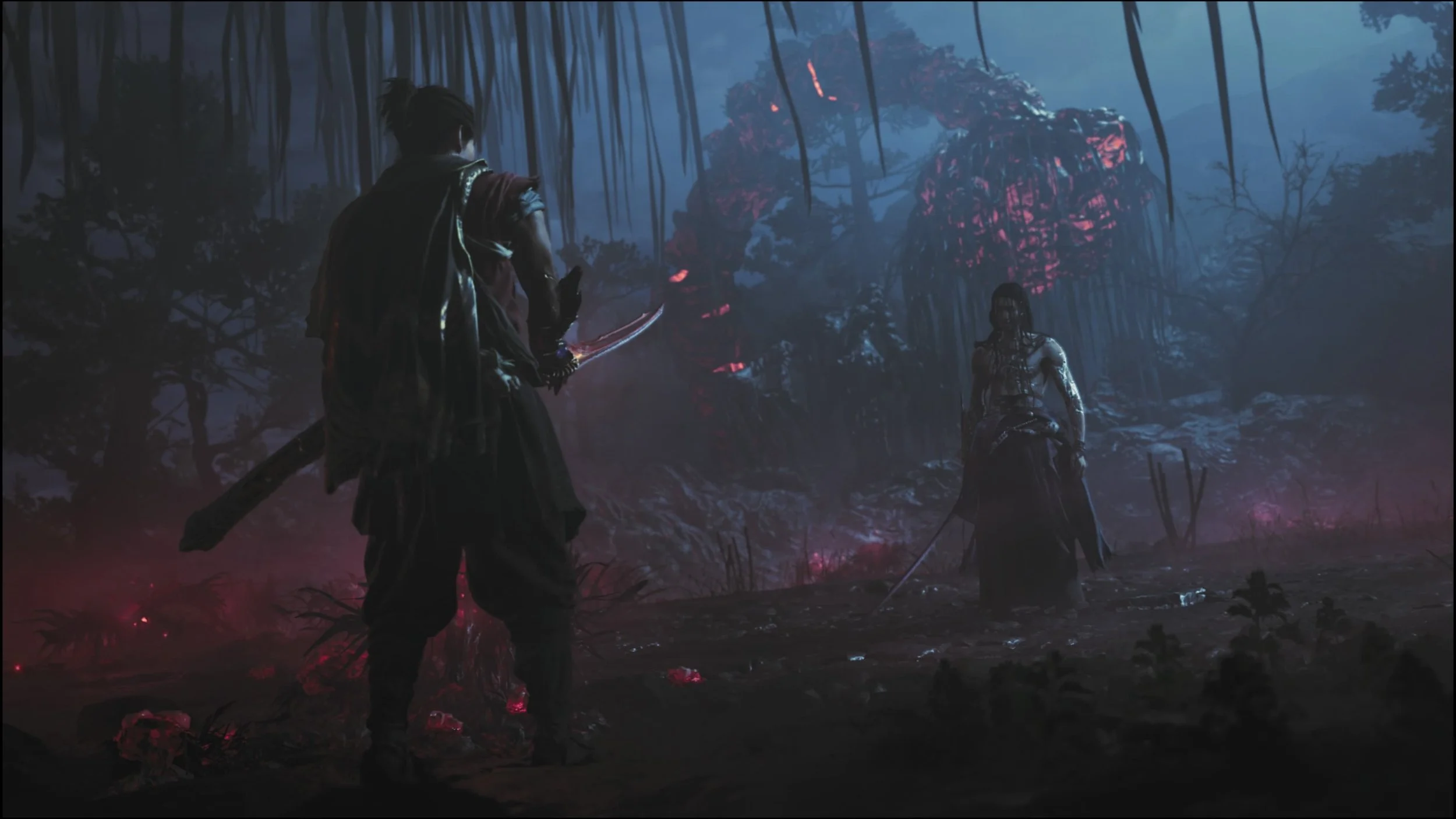
While the rest of the cast that joins Musashi are forgettable, the antagonists do shine in Onimusha Way of the Sword. Ganryu, Musashi’s rival, is a constant thorn throughout the game, being the polar opposite as he too has the same goal of being the best swordsman, but has a sadistic approach to it compared to Musashi. The other antagonist, the man in white is also a treat when he’s on the screen as he grows from a mystery to a threat that feels increasingly dangerous despite his nonchalant attitude, which he turns off to become sinister at the best possible times.
A Few Rough Edges
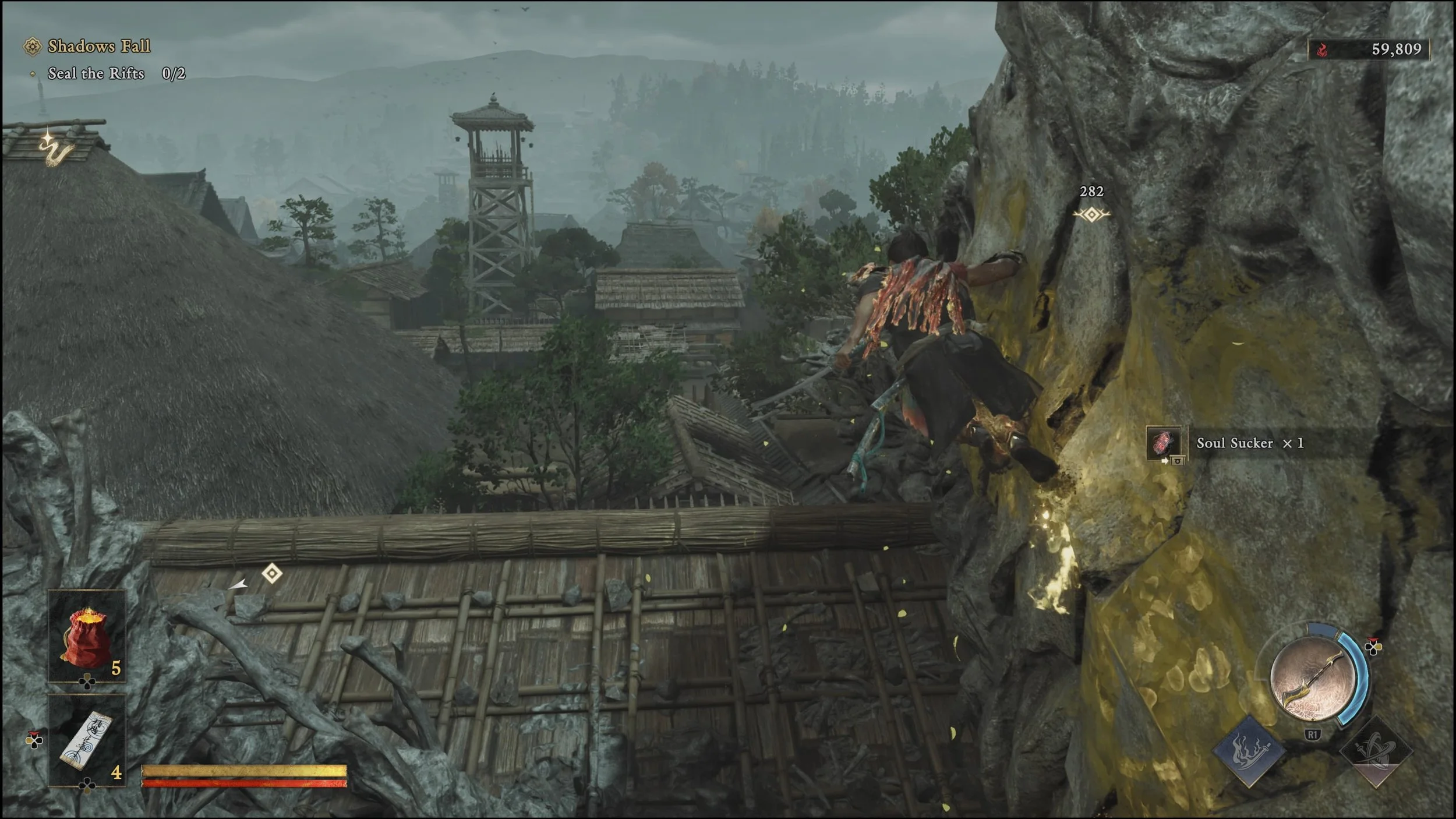
Some side quests are usually to kill enemies, but there are quests called Mysteries of Kyoto that act like a separate episode not related to the main plot. It acts like a side episode where Musashi investigates strange events happening in the city. These are fun activities as there’s some thought put into these quests, but there’s only a handful of them as other sides act like fodder quests and collectibles like finding Lion Dogs are still the brunt of the side activities in Way of the Sword.
It’s a rather long game to my surprise as while most of the side content is stationed in one location, Musashi goes through a series of different locations to reduce the presence of Genma in certain parts of Kyoto. Way of the Sword is another game that greatly highlights the best side of Capcom’s in-house game engine, the RE Engine, as performance and visual quality were never in question here. The game looks fantastic but isn’t big in scope in terms of the location a player gets to explore as the game is isolated in one location, so there isn’t much change in scenery that goes beyond dense forest and mountainous terrain.
Eastern Kyoto in particular was an interesting location as they were able to populate this section with many different closed off areas for each side activity, making it a pool of secrets and unlockables hidden in plain sight. If you didn’t pick up the side quest, you wouldn’t know a certain house had a prompt to crawl under to enter, or there’s a path that leads to narrow pathways to Genma defending chests containing resources for upgrades.
The amount of bosses and enemy types felt varied but the game did have a tendency of reusing certain bosses. While it was fun to revisit them as they are one of the many tough encounters, redundancy can creep in for some, especially those looking to do side content.
A New Era for Onimusha
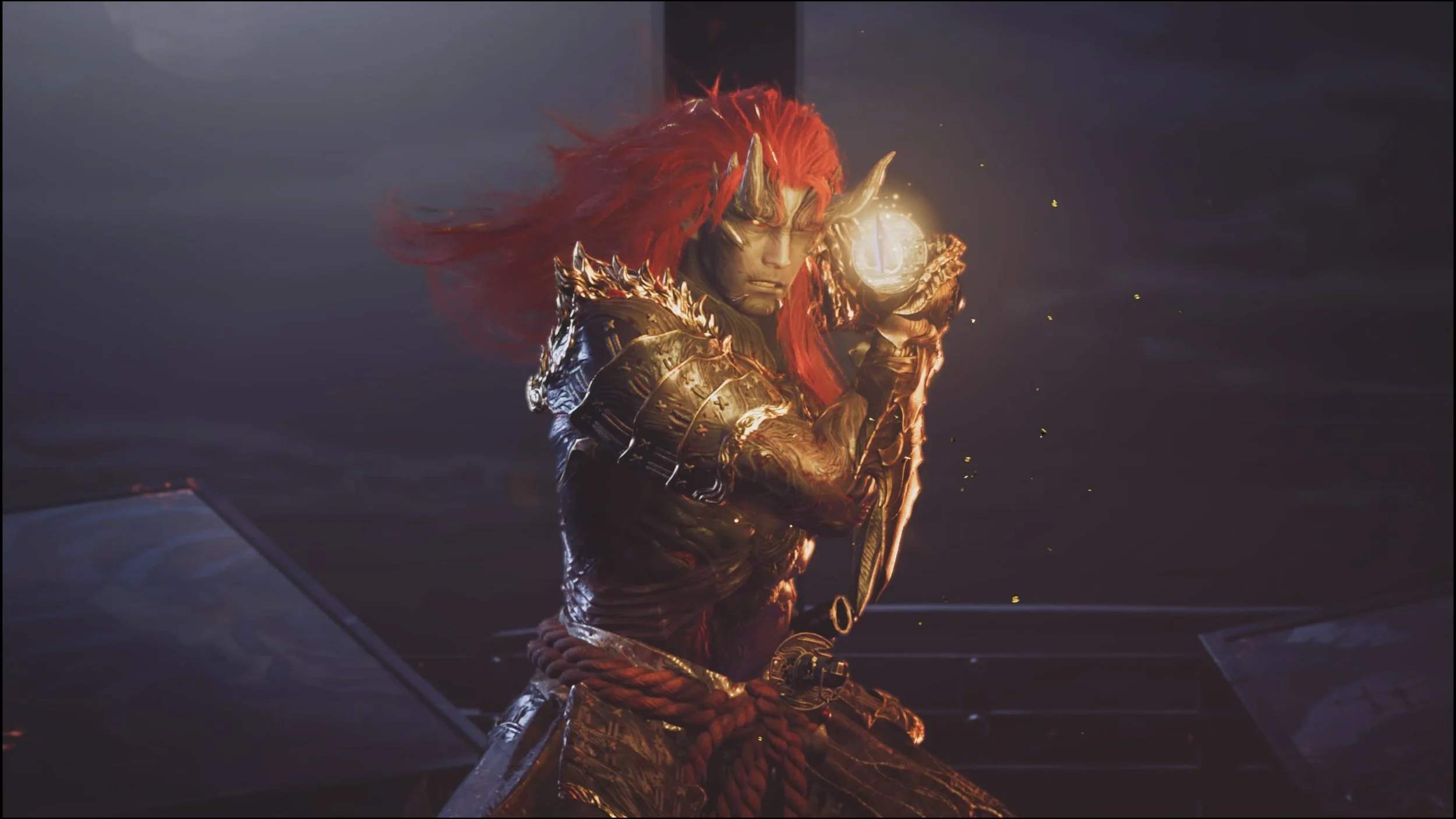
The amount of effort seen here gives me hope for Capcom’s future attempts at reviving classic titles. This could have been a one and done deal before the franchise goes back into the vault, but no. Onimusha: Way of the Sword is proof that the franchise didn’t need to be benched for so long as all it needed was the opportunity to embrace the kind of game it wants to be without following obvious trends, and simplicity can do so much as long as there’s enough effort to make each action have weight backing it up.
Verdict: 5 / 5 (Exceptional)
PROS
Stellar boss fights that are entertaining to watch and fun to conquer
Musashi is packed with personality and mannerisms
Despite its simplicity, the defensive mechanics make each fight more satisfying
Challenging without feeling unfair, with a surprisingly lengthy campaign
CONS
Some bosses are reused in certain sections
Most side content feels like fodder for the most part
What I’ve Played
Completed the game after 30 hours
Completed the game on Action difficulty
Completed a good amount of the Mysteries of Kyoto side quests and other side activities
Upgraded a good amount of healing pouches and charms, and reached tier 3 of the available skills
Currently exploring New Game+
*This review is based on a PS5 review copy provided to the reviewer
About the Author - Carlos Hernandez
Carlos Hernandez is the founder and Editor-in-Chief of Too Much Gaming, where he writes about video games, reviews, and industry news. A lifelong gamer, he would do anything to experience Final Fantasy Tactics for the first time again and has a love/hate relationship with games that require hunting for new gear to improve your character.
The amount of effort seen here gives me hope for Capcom’s future attempts at reviving classic titles, as Onimusha: Way of the Sword, the latest title of the once dormant classic franchise, comes back in the best way possible as it very well might be my game of the year contender.