
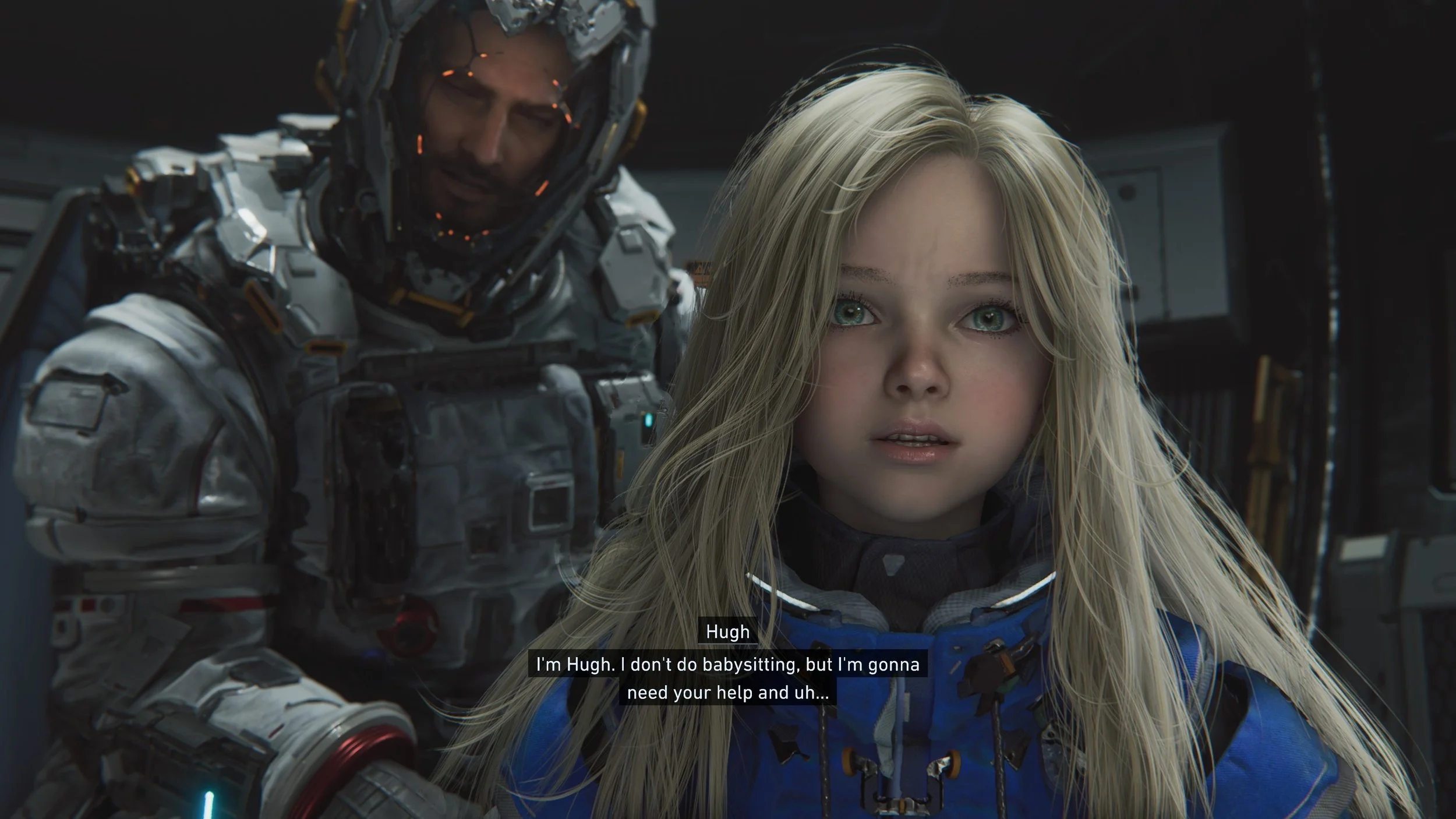
Sometimes making it out of a six-plus-year development hell is worth it. Here to continue Capcom’s winning streak is the stylish, unique, and yet familiar Pragmata, the kind of bold new IP that we used to come to expect from big developers back when dev costs weren’t in the hundreds of millions and we didn’t know how good we had it. It’s a game that, despite its unique hacking mechanic, should feel instantly familiar to seasoned gamers to the point where everything about its design, from levels to character interactions to enemies, flows completely naturally despite its being obviously forged over many years into a nearly-flawless gem. This is a game that feels like a completely realized vision from top to bottom, which is a rarity in this modern age, and even more so for a brand new IP.
Capcom continues its generational run of quality
While playing Pragmata, I was reminded of a time two console generations ago when we would get banger after banger of third-person character action games, each with their own twists and gimmicks. I’m thinking of games like Vanquish, Metal Gear Rising Revengeance, Uncharted 1-3, El Shaddai: Ascension of the Metatron, and Lost Planet, among others. This game in particular feels inspired by multi-tasking concepts introduced in more recent titles, namely Platinum Games’ Astral Chain and The Wonderful 101, where combat is bolstered by a unique secondary gameplay element. Progression in all of the above games is straightforward and carefully curated, with difficulty ramping up gradually throughout, along with the stakes of the story.
Take Your Precocious Android Daughter To Work Day
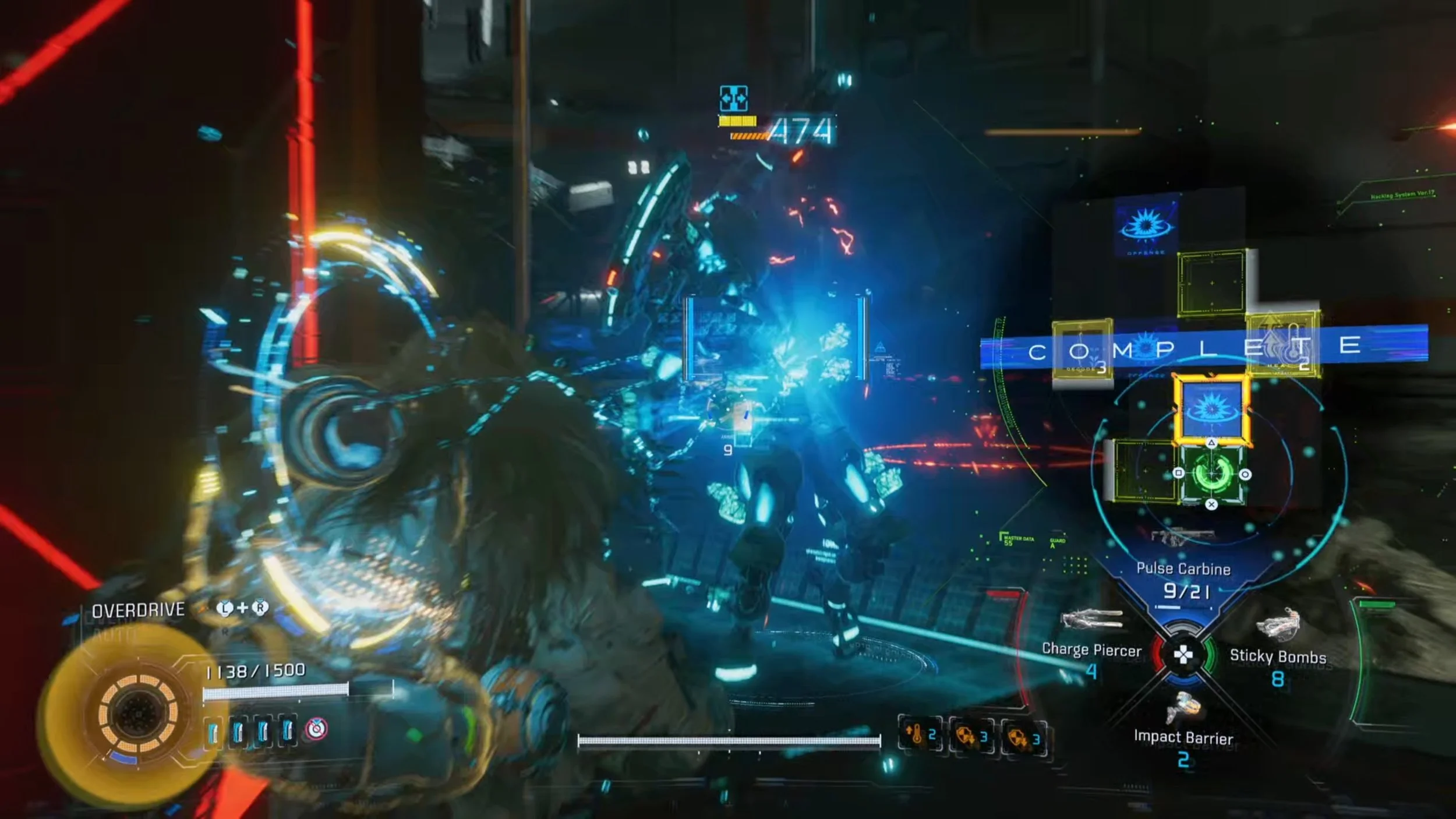
Pragmata delivers on all of that and a little more, as its wholly unique hacking mechanic sees your protagonists, moonbound engineer Hugh and Pragmata-class android Diana, stunning and opening up weak points on enemies so that your otherwise ineffective weaponry can actually deal damage to them. You’ll also be navigating a massive moon base, utilizing platforming, electronic lockpicking, and basic puzzle-solving skills within various (and often unexpected) environments, most of which are crafted with Lunafiliment, a highly-adaptable substance refined from material harvested from the moon.
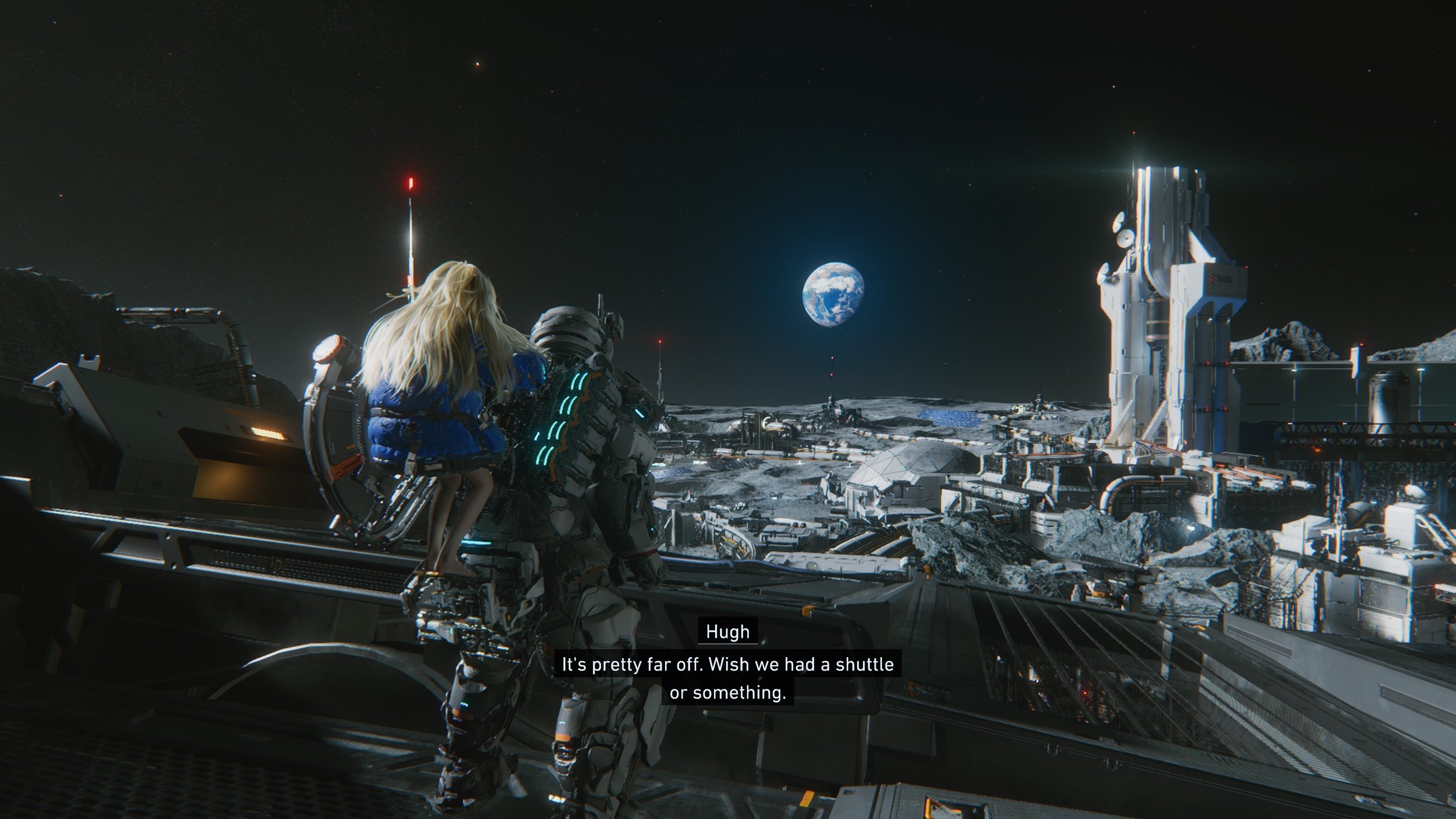
The story begins with Hugh and his team investigating a massive research station on the moon that’s gone silent. As their spacecraft begins to dock, disaster immediately strikes, and Hugh is separated from everyone else. He wakes up in captivity, where an android in the form of an eight-year-old girl helps mend his wounds. Hugh names the innocent, childlike robot Diana, and together they endeavor to investigate what happened to the station while fending off a hostile AI system called IDUS, which has weaponized the station’s robotic workforce against them.
Thankfully, Pragmata bucks the trend in many modern games of having a grizzled, cynical, or otherwise antisocial protagonist. Hugh Williams is a far cry from “sad dads” like Joel or Kratos in that he’s pretty open with Diana about his past and thoughts, and tries to keep a fairly positive and even-keeled attitude for her sake, even though they’re in the middle of a hellish situation. Your average person would barely be holding it together after losing their entire team, but Hugh toughs it out, both for the greater good and for the innocent childlike consciousness that seems trapped in a robotic body. Sometimes you see Hugh having to patch the cracks, and that makes him even more compelling. He’s a grounded, realistic badass.
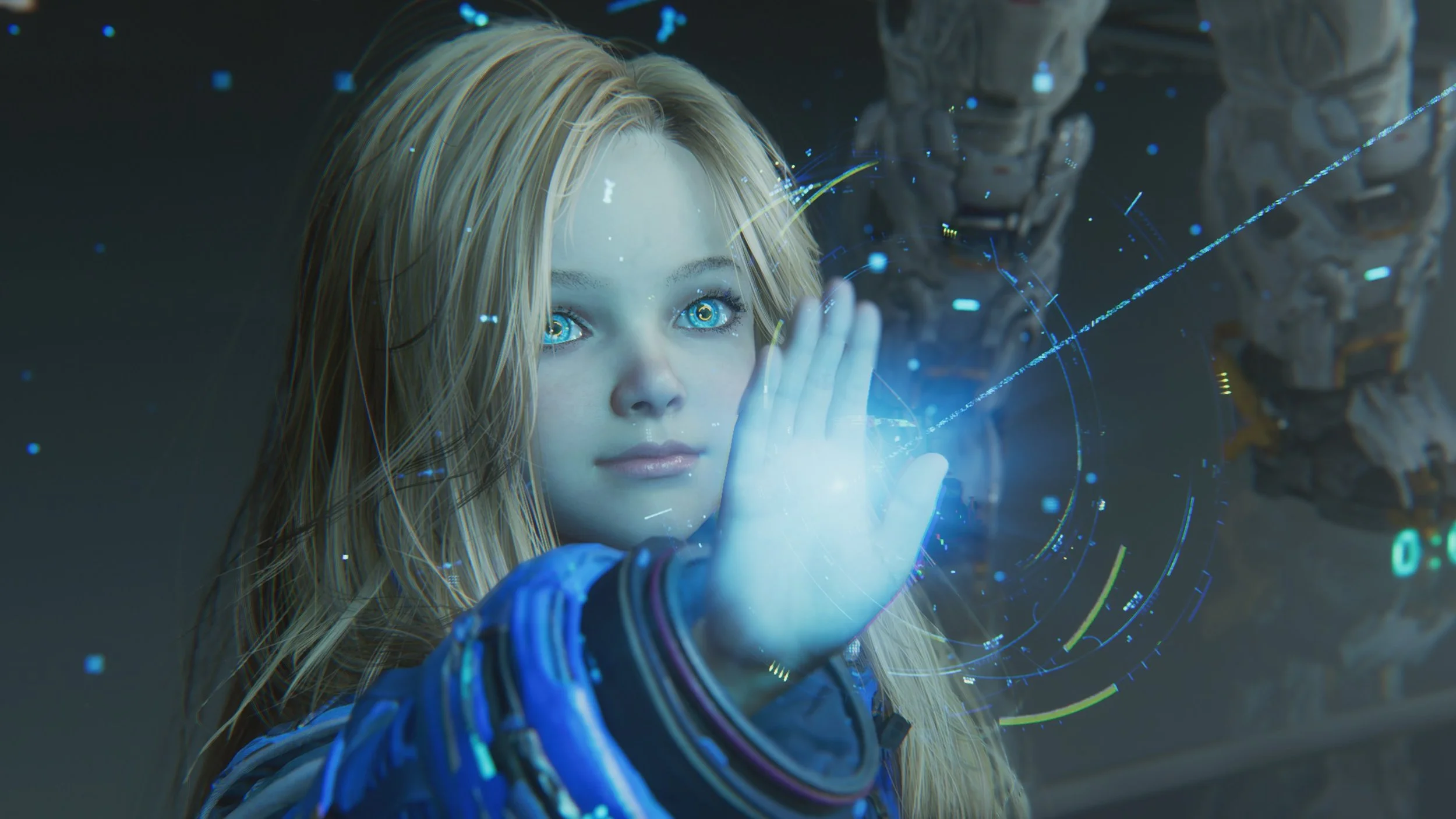
Diana, of course, is exceptionally realized. She’s become the Internet’s surrogate daughter and an instant fan favorite character, with her wide-eyed innocence combined with a curiosity unique to a mysteriously-created AI with amnesia. In the game’s Shelter room, you can materialize acquired objects from Earth to give her various toys to play with, and whether or not you’re a parent, her interactions are just the best.
The writing, vocal performances, and motion-capture animation bring these two central characters to life in a way that really carries the game and provides a strong emotional hook, even if the story is straightforward. It also helps your motivation that you’re fighting a single artificially-intelligent being rather than real people, so you never feel bad about dispatching the bots and uncovering the truth. There are some twists in the narrative, but most NPCs appear as simple holograms or text logs to be discovered.
Giant Bots Are What You’ll Fight, Walking on the Moon
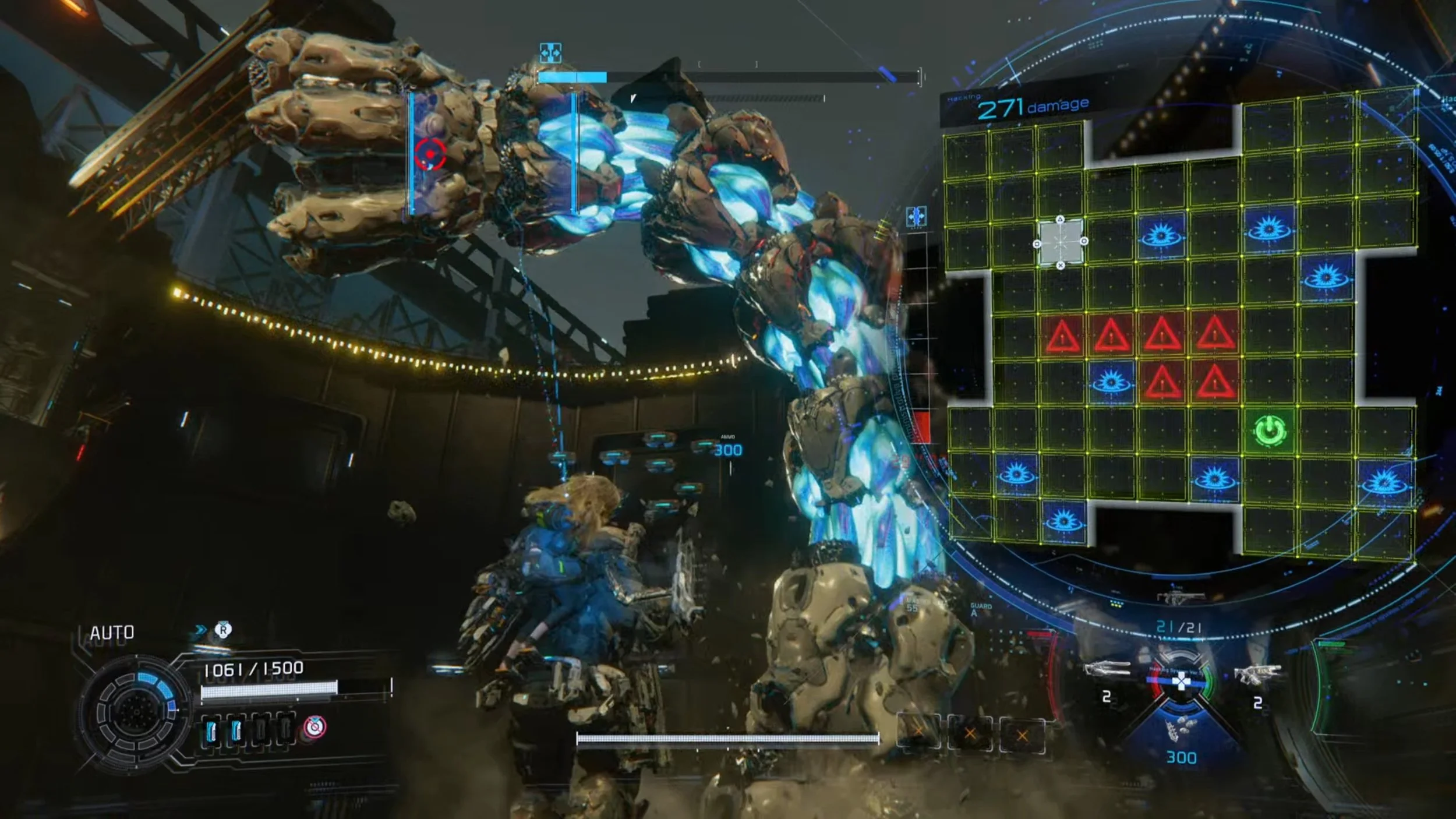
The fact that the robots are mostly workers on the station explains why so few you encounter initially have guns or missiles, and overall the pace of the combat is manageable even for those without lightning-fast reflexes, provided one keeps their cool and doesn’t panic. Holding the left trigger brings up a hacking menu on the right-hand side of the screen. Hacking is accomplished with the four face buttons, so you can shoot and dash away while hacking, if you’re motivated enough. There’ll be a lot of travel between the right stick and the face buttons, unless you’re playing with a mouse and keyboard. You might think that this would be quite stressful, and it does get very intense later on, but enemies are fairly predictable in their movements, so you can kite around them to create space for yourself, pop off a few shots, and then get out.
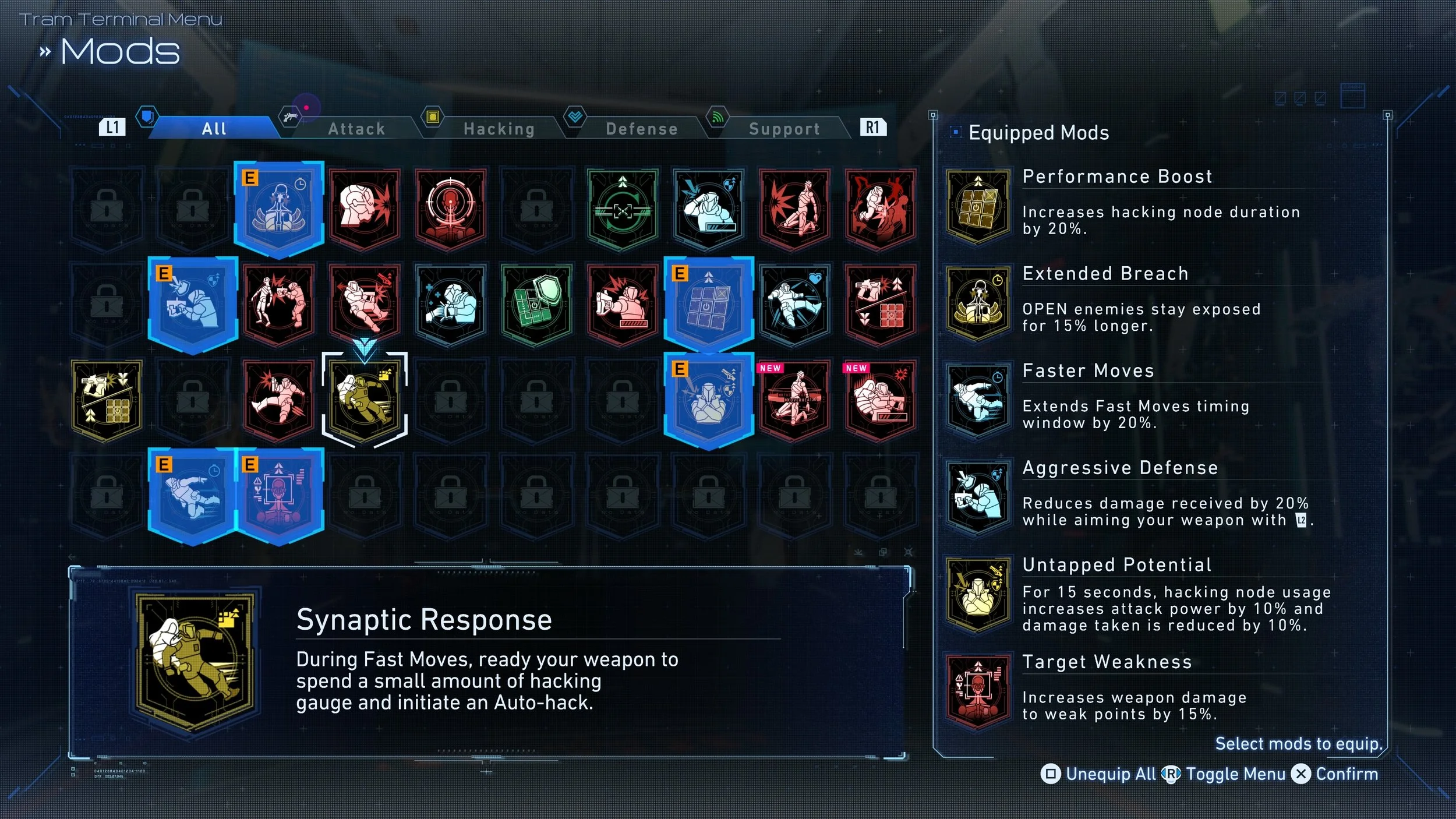
While the gameplay starts out pretty straightforward, you’ll unlock new weapons and hacking nodes that allow you to thoroughly customize your loadout and gunplay to your liking. You’ll also be able to upgrade your main weapon, suit, and hacking abilities, as well as increase your aptitude with individual weapons. There are also mods Hugh and Diana can equip to modify damage, timing windows, etc. You can prioritize stunning enemies, overheat them for increased damage output, damage them via repeated hacking, group them into mobs and increase critical and splash damage, or even turn them against one another with the Confuse node.
The gunplay is crunchy and satisfying. In addition to the mainstays like a shotgun, a chargeable sniper rifle, and an explosive launcher, there’s a variety of options to tackle bots, making for a total of 16 weapons spread across three categories. You can reduce the hacking matrix with Sticky Bombs, trap a small group of enemies in place with the Stasis Net, stun and damage a group with the late-game Hacking Mines, summon Drones to deal damage, and even create a temporary shield to hide in. All of the offerings are fun to use and you’ll be forced to swap often, but you’ll have your favorites. Ammo is limited, so you’ll need to play it smart and ration big guns for the big threats. I tried to challenge myself by using the default weapons as much as possible.
Pragmata also throws a fairly wide variety of bots at you and keeps things fresh by mixing up the rooms and arenas quite a bit. Towards the end of the game, you’ll be fighting off larger mobs that would have felt impossible just hours before, and that’ll be a testament to both your skill in adapting to the game’s multi-tasking and the game’s excellent design philosophy, where even in the midst of the most chaotic situation, you’ll feel like it isn’t out of the question to do a no-hit run… at least until the final levels.
Postgame challenges and tough side missions are the cherry on top
The game doesn’t end after the story concludes, either. Once you beat it, you have the option of diving into a curated New Game+ right off the bat, tackling Lunatic difficulty, or delving into the Unknown Signal postgame. Either way, you’ll unlock the juggernaut of a melee weapon, the Jackhammer. I’ve just started to dive into the Unknown Signal postgame, since completing this last gauntlet also requires you to tackle Mk. II versions of prior bosses and explore older areas to 100%. You’ll also be filling out 5 stamp cards for rewards, which include lore from a reporter who snuck onto the station, various outfits, bot data, hacking nodes, and mods. I enjoyed the sweet art gallery that’s unlocked from the get-go. I haven’t yet sunk my teeth into Lunatic.
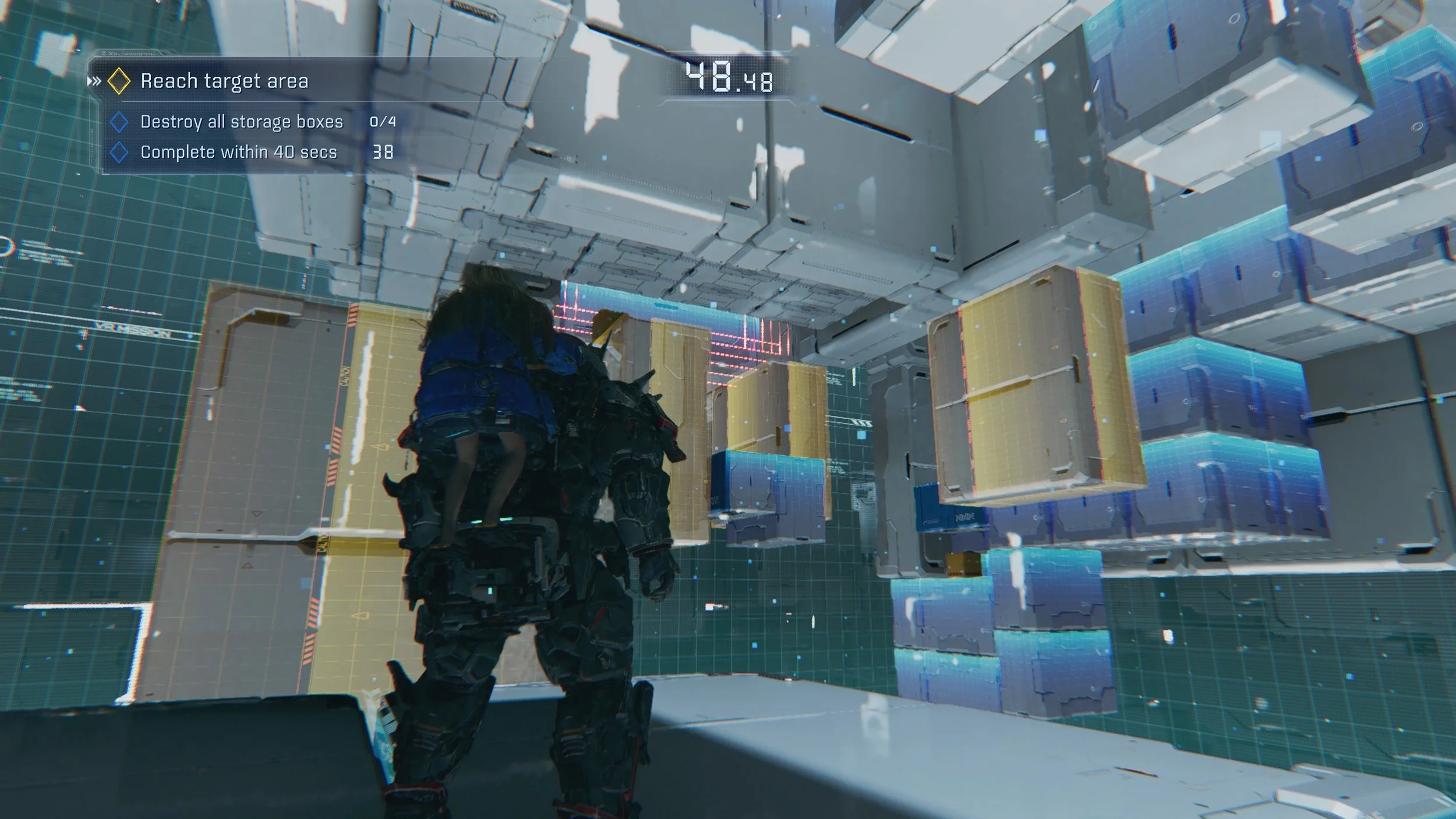
There are also 30 ‘training’ missions to unlock, which will test your movement speed, reflexes, aptitude with certain weapons, and hacking and locksmithing skills. Each of the training missions has three objectives, and some of them are frustratingly difficult to pull off and will take a lot of skill and patience to 100%. All things considered, you can rush through this game in probably 10 hours, but given how intensely I was playing through the training missions and exploring each level, my playthrough took me well over 15 hours.
Stunning visuals and soundtrack never get old
In terms of presentation, Pragmata runs excellently on the PlayStation 5 even on Resolution mode, which I ran it on exclusively. Though groups like Digital Foundry have done tests and seen frame drops in intense scenarios, the performance never felt noticeably slow or bothered me, although I’ll admit I’m not the most sensitive to frame drops. There’s also a Frame Rate mode that locks the game to 60fps with minor visual cutbacks, such as Diana’s hair, shimmer effects, and some textures. Apparently it’s recommended for users with VRR-compatible displays to smooth out the frame pacing. PS5 Pro uses PSSR upscaling to achieve even more fidelity. If you’re intent on getting Pragmata on a console, you’ll get the best experience with the PS5 or PS5 Pro versions, which really bring out the game’s inherent beauty.
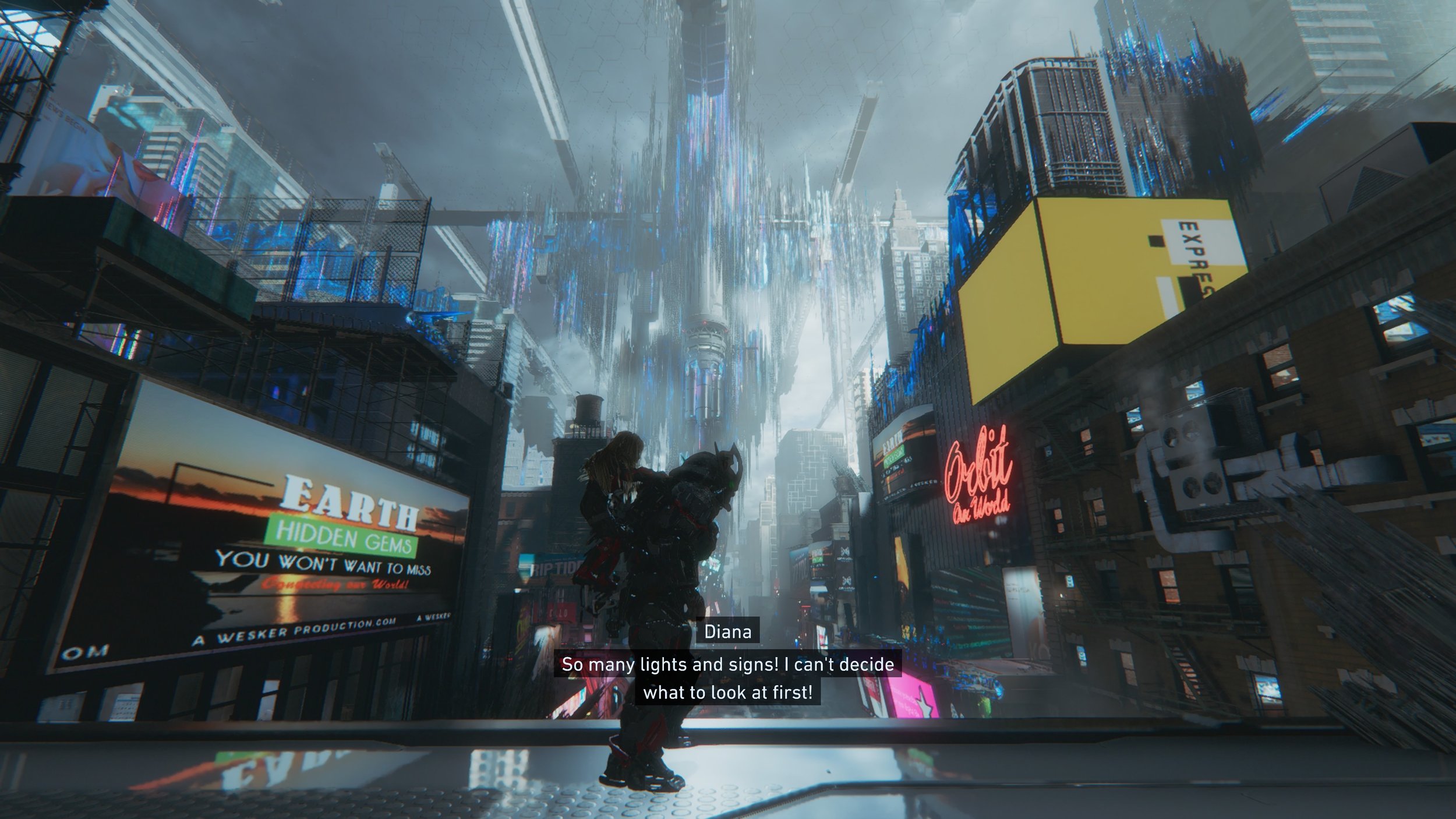
Visually and aurally, Pragmata delivers quite the spectacle, with designs that can leave you feeling claustrophobic one minute, then wow you with wide vistas the next, before plunging you into more nightmare corridors. There’s a bit of the Starfield-esque NASA-punk aesthetic here, but also some unique touches. Director Cho Younghee was an artist for games like Nier: Automata, and the aforementioned Metal Gear Rising Revengeance, and his influence shows in the cool weapon and enemy designs, as well as Hugh’s many outfits. The soundtrack has exceptional range, as it’ll transition from quiet moments to quite intense electronic beats during combat and training missions.
Is the game perfect? It’s close, but I have several minor gripes. First off, there’s no Photo mode. Seems like a no-brainer for a future patch. Hugh’s movement is intentionally a little slippery, and he’s floaty in mid-air. This pays off in certain outdoor sections, and allows for mid-air combat, but some may wish for more options for weightiness in subsequent playthroughs or speedruns. Also, there’s no quick-turn or pivot function, which would have been useful in the quicker battles.
Most importantly, Hugh’s face only appears during certain cutscenes, so for most of the game, you’ll be seeing him with his helmet on. There’s also no way of crouching to talk to Diana. Most of the time when you talk to her in the Shelter, you’re looking down at her. It’d feel more natural if Hugh could crouch down to engage with Diana closer to eye level. Also, there are times when the game feels almost too straightforward, like you’re just progressing through a labyrinth of corridors and arenas without much of a breather.
The most touching, engaging, and unique game I’ve played in years
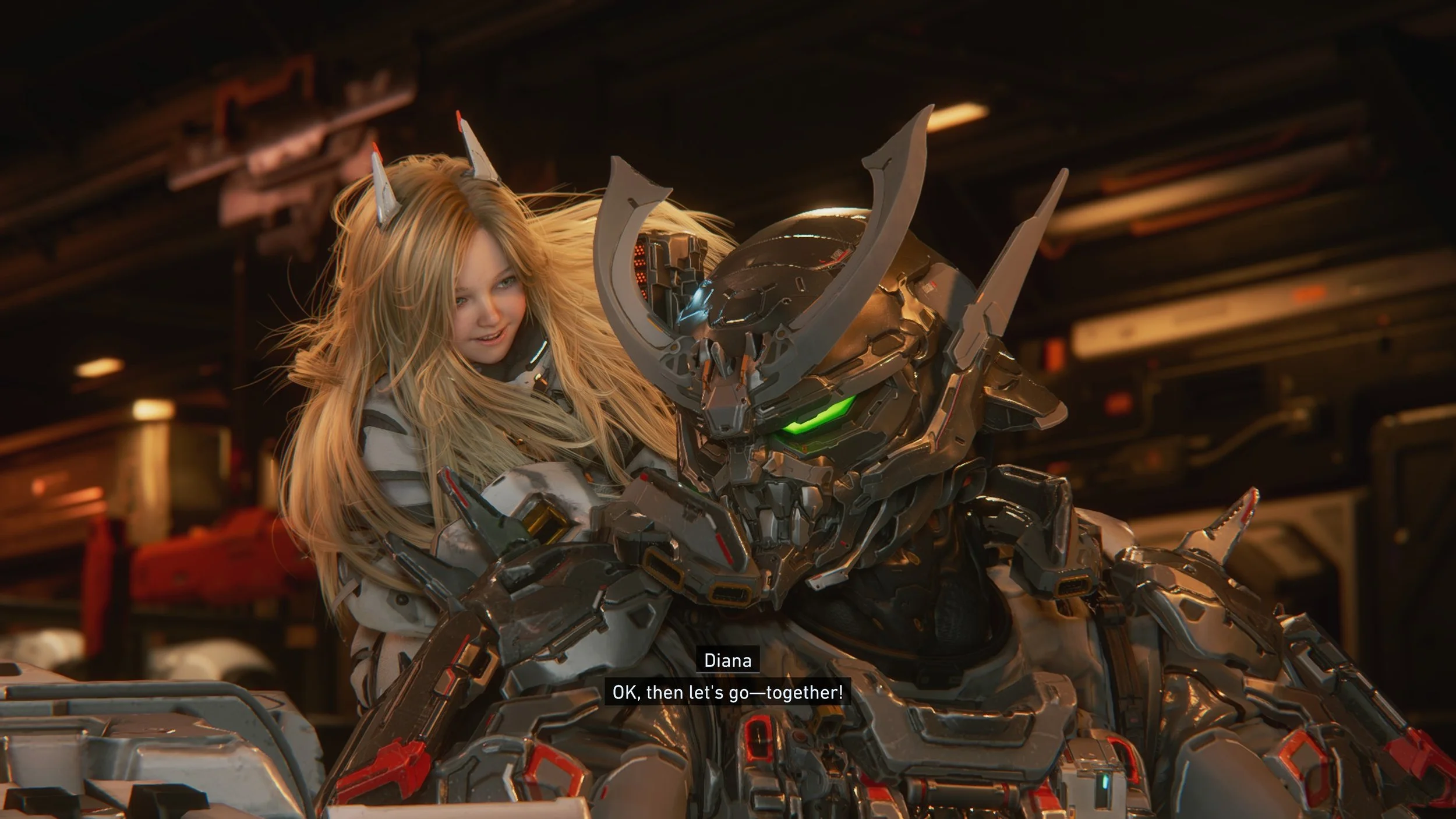
I really cannot recommend Pragmata enough. As far as I’m concerned, this is a $70 game being offered at the price of $60. Capcom has once again outdone themselves by delivering an exceptionally-polished brand new IP with lovable characters and a wholly unique take on dual-character combat, pairing excellent enemy and level designs with heavily customizable loadouts for an intense and addictive experience. The excellent team of Hugh and Diana are tested time and again by inhuman robotic renegades, but the gameplay feels so good that you’ll never tire of taking on these electronic Eldritch horrors.
Verdict: 5/5 (Exceptional)
PROS
Unique, intense and addictive hacking and shooting gameplay
Highly customizable loadouts combined with a fairly large enemy variety
Excellent and unforgettable character relationships bolster a straightforward story
Beautifully crafted art assets and soundtrack
Plenty of replay value including postgame and New Game+ baked in
CONS
Some may find it too linear
No Photo Mode
What I’ve Played
Rolled credits after nearly 16 hours
2/10ths of the way through Unknown Signal
Completed 3 out of 5 Stamp Boards
Unlocked and beat (not completed) all training missions
*This review is based on a PS5 review copy
About the Author - Joseph Choi
Filipino-American gamer, professional shepherd and farmer, author, and filmmaker/videographer living in Central California. First consoles were the Game Boy and Sega Genesis, and I've been gaming since then, with a focus on Nintendo and Sony consoles.
Our The Blood of the Dawnwalker review explores Rebel Wolves’ dark fantasy RPG, its 30-day time limit, the day and night cycle curveball, excellent side quests, and shortcomings.