
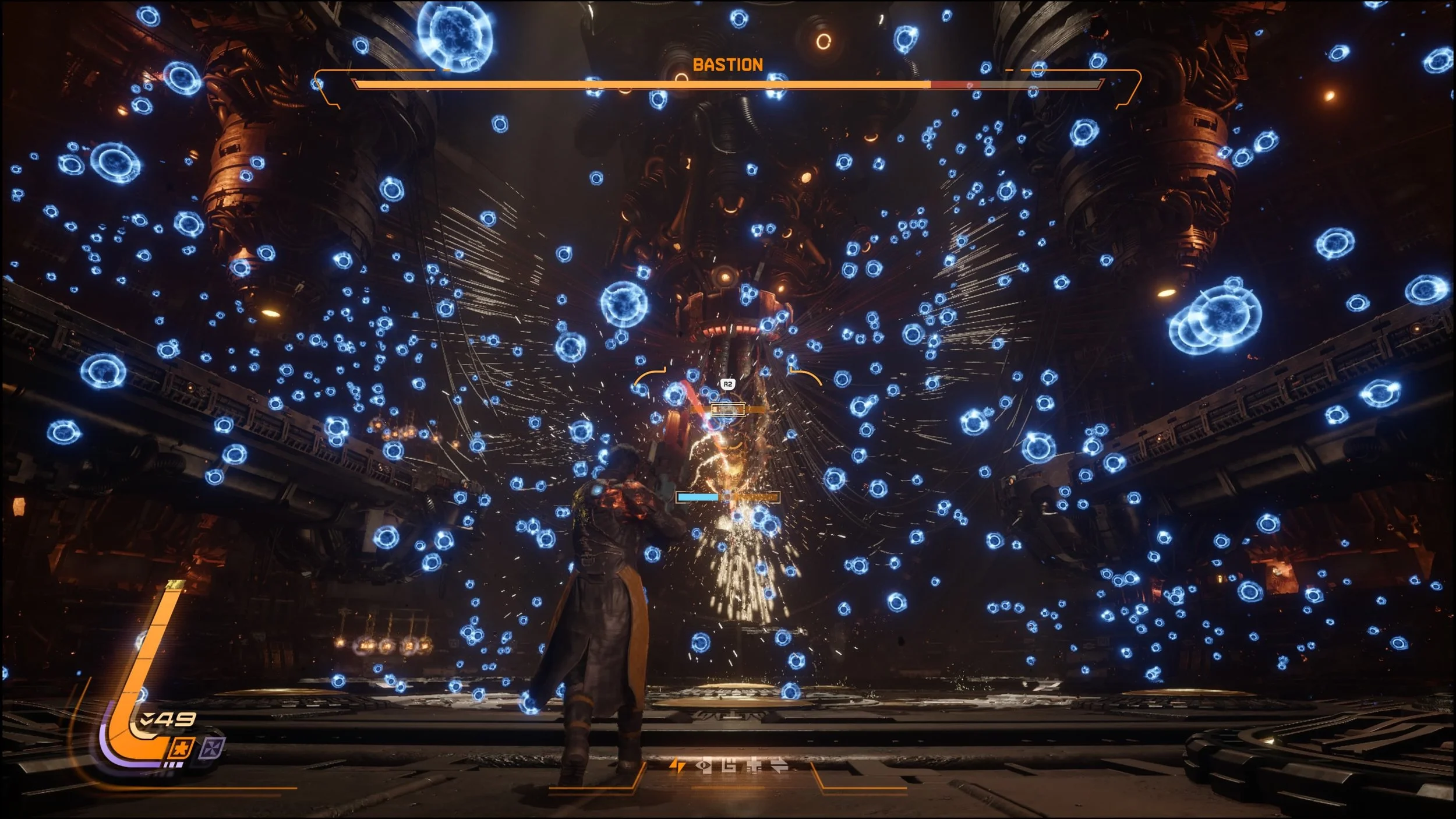
Housemarque is a special studio in Finland that I’ve been a fan of for years due to their titles Resogun, Alienation, and most recently, Returnal. Their latest effort, Saros, stems from their previous work, as this is an action bullet hell game with a hint of roguelike elements that kept me glued to the screen and laser-focused at dodging and weaving through all the chaos. It’s a game that felt like a culmination of what they’ve learned from Returnal, as they found what I think is a proper balance of challenge, accessibility, and showcasing why they are one of the top studios that can deliver a bullet hell experience like no other in 2026.
You play as Arjun, a Soltari enforcer and crewmember of the Echelon IV. His crew was tasked to reconnect with prior Echelon crews who’ve ventured to the planet Carcosa in hopes of making it habitable for humanity, but have now gone silent. This game didn’t waste any time, as Arjun is immediately met with hostility, both from machines and beast-like monstrosities. You eventually experience your first death, and for some reason Arjun is brought back to life in their base of operations called The Passage.
It’s mystery after mystery as you explore the rest of the planet and make contact with other members of previous crews, but you’ll start to realize that the planet’s sun is affecting people, and time passes differently, especially after your death. The game explores Arjun’s personal demons with other characters, but they’re kind of an afterthought and come off more like footnotes than actual character development that grows and helps the plot move forward.
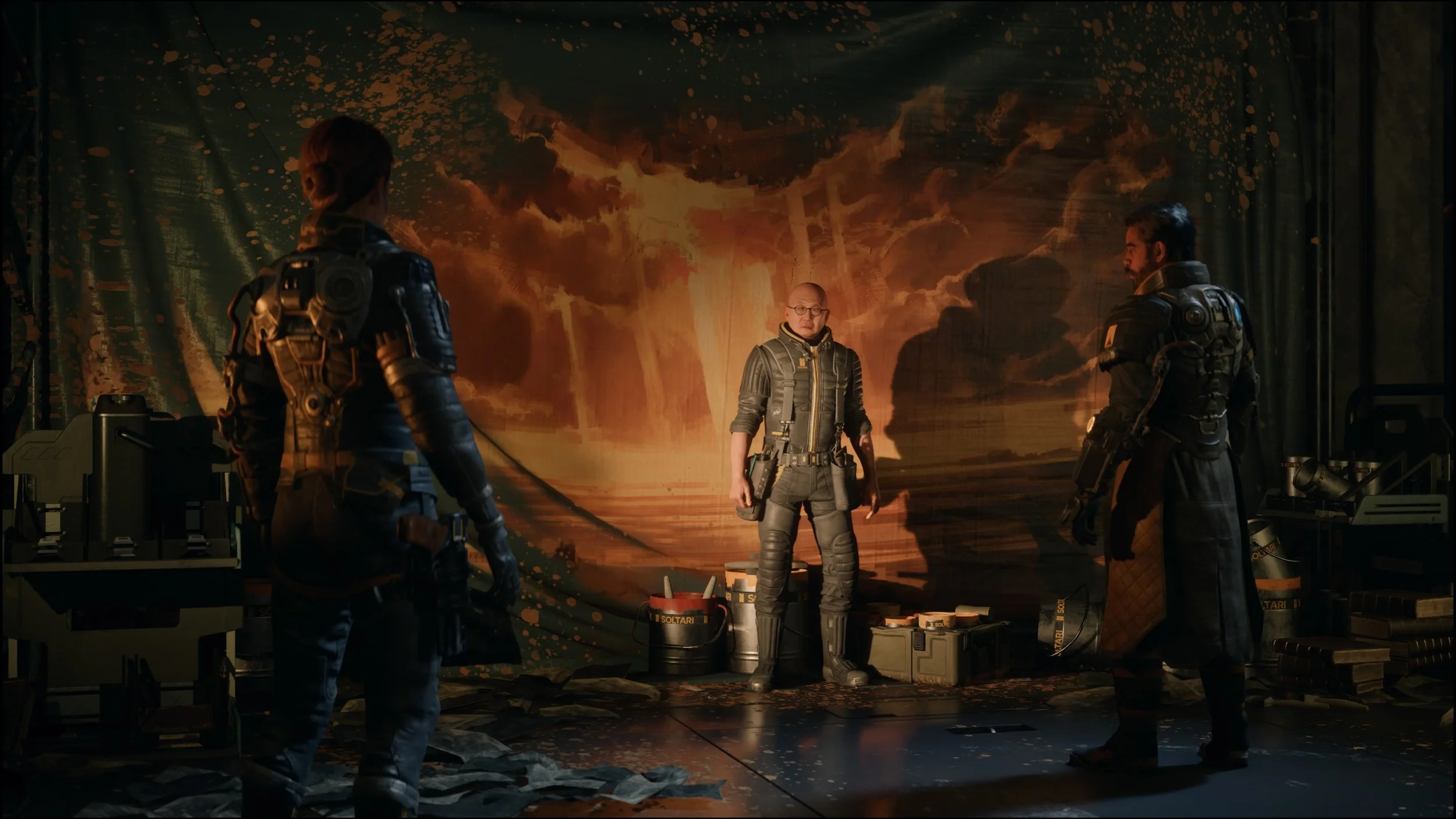
No one besides Arjun and Nitya had any bearing or entry points for me to care to discover more about them. Mostly, the characters are a means to an end, as they’re apparently here to show you how this world affects humans, making this the weakest element in Saros, as towards the end I was left confused but not entirely frustrated by its story beats; all that I wanted was to overcome whatever the game threw at me, as it’s fun to move and shoot in this game.
It's a blink-and-you'll-miss-it situation with the side characters. There’s more dialogue and interactions than previous Housemarque games. From initial interactions, I’ll uncover something new or unique about a character, but it soon devolves to repetition that gradually disincentives me to talk to them any further. By the end of it all, at least three characters matter, and there’s really no true antagonist in the game, as it’s you VS the world, really.
Actor Rahul Kohli portrays Arjun and does a decent job, but he can only do so much with source material that struggles to go anywhere cohesive and meaningful. The CG cutscenes in the game are visually striking and greatly show the bleak and surreal situation they are in.
You can get more context about the game’s lore through various audio logs and text, and it’s easier to digest when compared to the narrative in Returnal, but honestly, I'm all about the gameplay with Housemarque, and they did a solid job with this title.
Mastering the Bullet Ballet
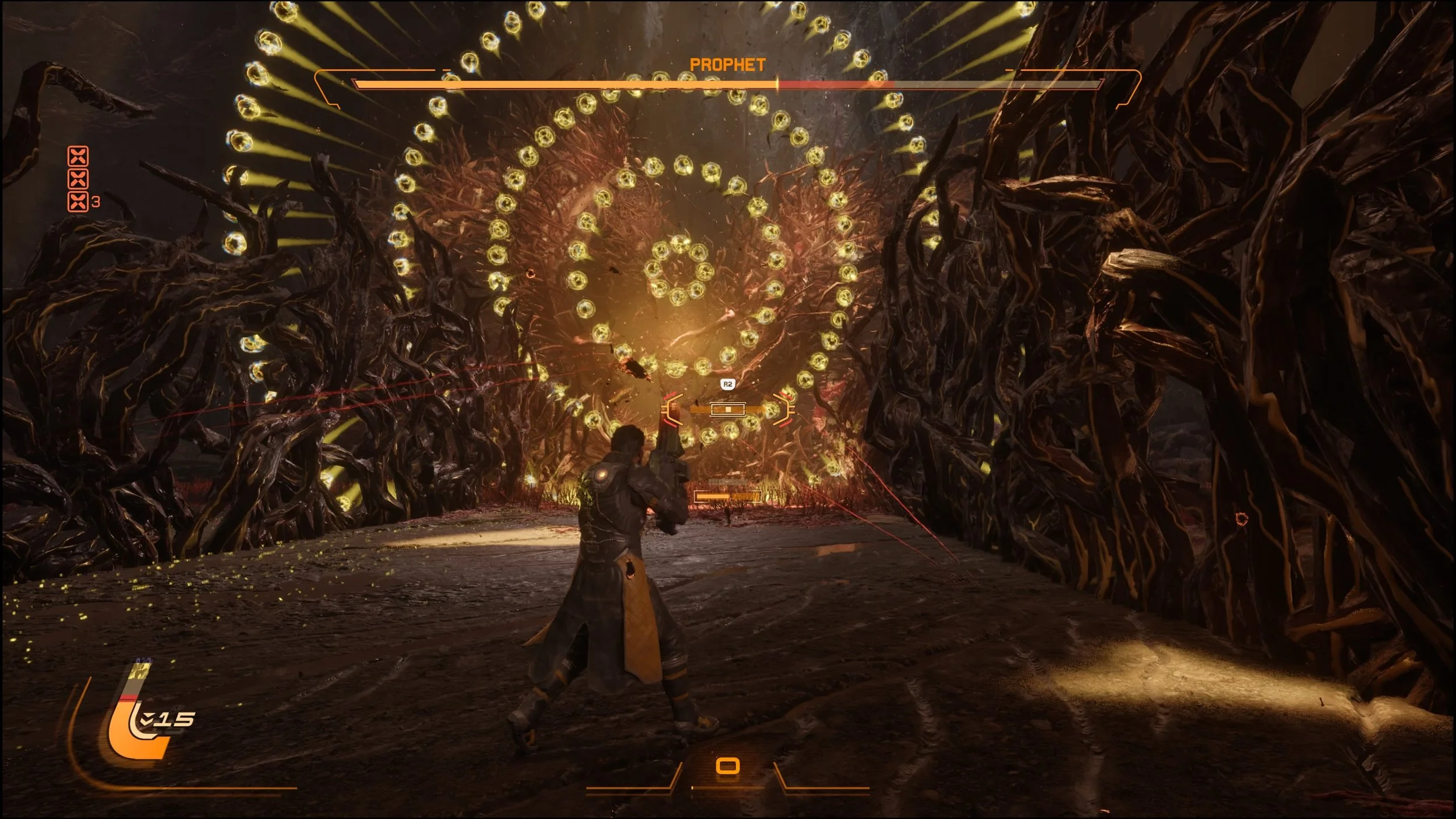
The moment you are given full control of Arjun, everything feels natural after the first encounter. The controls are tight and easy to understand, and how you attack and defend is more than just aiming, shooting or dodging.
Just like in Returnal, the alternate fire and your power attack are attached to one trigger, once again utilizing the sensitivity of the DualSense controller - slightly pressing the trigger lets you fire your gun’s alternate fire, while fully pressing it allows you to do one of the four available power moves.
For Returnal players, the first hours feel nostalgic and familiar, but then you’ll realize the implementation of a shield to block specific projectiles changes the game completely. You feel more in control of the fight, as you have a shield that absorbs certain projectiles. You won’t feel as lost when a rain of balls are slowly going towards you. Thanks to the shield mechanic, you clearly see a path forward. It’s no longer intimidating as the bullets in front of you paint a picture as to how one should engage.
You’ll get the full picture once you encounter your first boss, as Saros’ bosses are frantic battles that see you weaving through insane projectiles that never let up. I enjoyed the challenge from each boss, as they felt like puzzles to solve, with each one having multiple phases that add more to the encounter the closer you are to victory. You have to air dash, dodge, shield at certain times, and sometimes parry for a better result, all while shooting at the boss, which is relatively easy as you can hip fire, but also can go for weak points for more damage.
Each boss is a spectacle, and I wouldn’t be surprised if a good amount of players might struggle with them, as there were a few fights that required multiple tries from me. The last encounter specifically took me the whole night to figure out. It’s such a highlight for the game, as even my wife was genuinely surprised at what was going on the screen, and how I was able to handle all of those moving pieces.
I love how the game doesn’t feel like a frantic panic to survive despite so many things happening at once. When the chaos begins and attempts to overwhelm you, I instantly know what needs to be done, when to dodge, when to raise my shield, the benefits of grappling, and who to target.
There’s a decent amount of enemy variety on the many biomes available in the game, and it really pushes me to never stay still. There’s always a new element that forces me to prioritize one after the other, from some enemies shielding others to stationary ones adding projectiles to further pressure the player as they try to get distance from the hordes of enemies. There’s also a system where you can trigger an eclipse that changes the enemy behaviour, essentially making it harder for the player as it also affects pick-ups.
I sort of get why Housemarque wanted to rename bullet hell to bullet ballet, as it does feel like there’s a rhythm to it, a set of steps that need to be done to get a smooth flow to coming out alive with the least amount of resources spent. This is where the musical score shines, as it ramps up at the right time. The sounds accompanying the most chaotic encounters mirror the intensity of the battle in a way that made me think of Doom at certain points.
Death isn’t all that painful
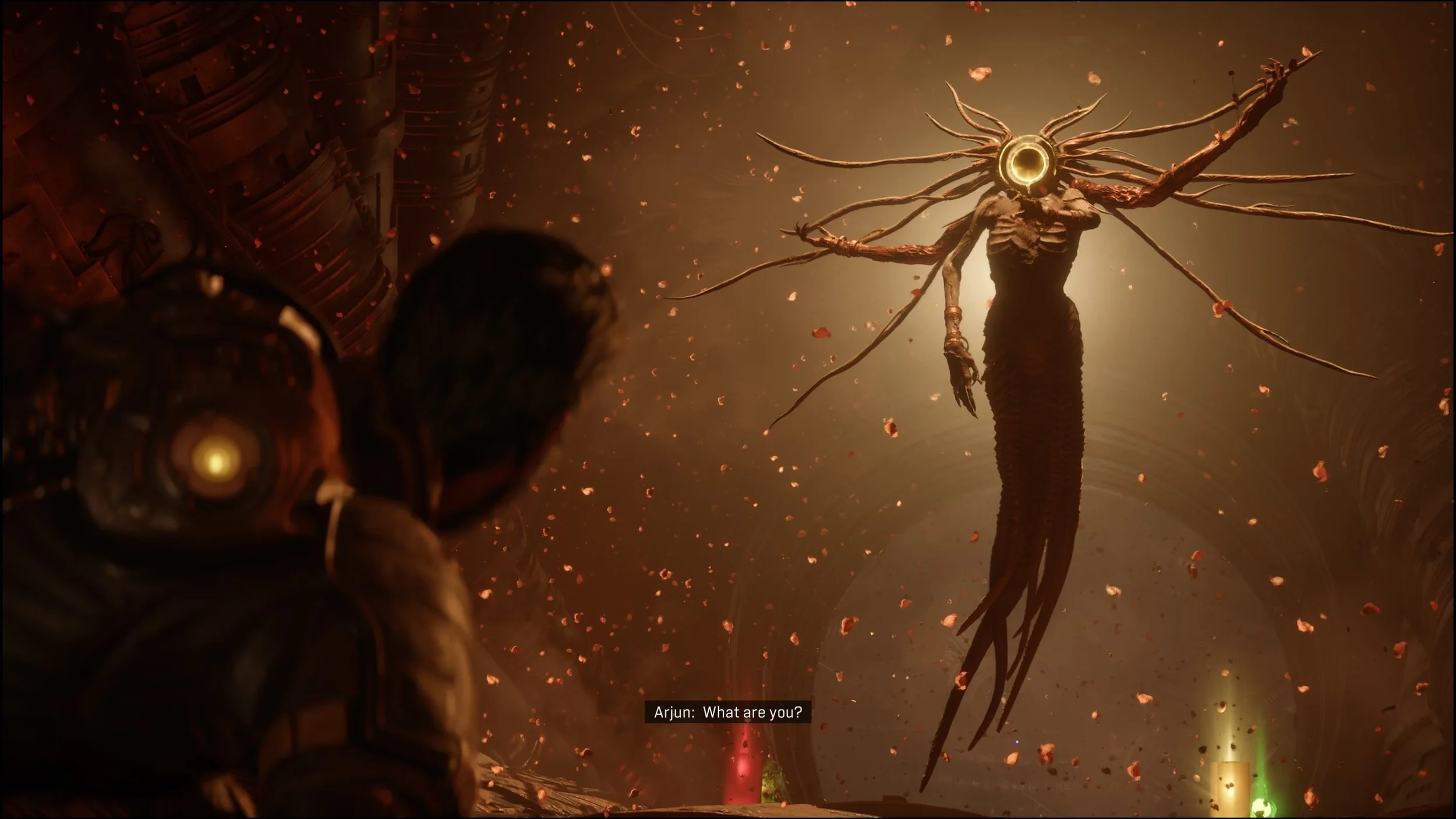
Don’t let the word ‘ballet’ throw you. The challenge is very much there as I had my fair share of deaths that set me back. With Saros having roguelike elements, a death brings you back to the game’s hub, and you have to go through the start of a biome all over again until you reach that area’s boss. Upgrades you pick up are lost, and some of the resources used to permanently upgrade Arjun are also lost.
But each death never felt like it halted my progress. A death still resulted in my progressing in permanently upgrading Arjun, and at times, I’d even move the story forward. It’s not as punishing as true roguelikes, as the inherent randomness each time you revisit each biome feels minimal.
The only essence of it being a roguelike is dying, losing what you picked up, and starting from the beginning, but it’s no longer a steep climb, as Saros’ main hub allows you to teleport to any biome, so don’t expect needing to do three biomes in one go to reach biome 4. You can just do a location at your leisure, beat a boss, and even leave before starting the next section of the game.
This makes each run much shorter than for example runs in Returnal, which get relatively longer the more you progress into the game. On average, a run in Saros takes only around thirty minutes. The longest run I’ve done was over an hour and ten minutes, but that’s only because I did a run when I started in biome 1 and went all the way to biome 3 without ever stopping. The player can control the pace, as you don’t have to commit so much time with the game, and death isn’t so painful.
This is significant, as I missed the point that Returnal can be a visual overload for players, so multiple runs can be tiring. Saros is in the same boat, so it’s great to see that this game can be taken in bite-sizes, if needed.
The randomness of each biome is also to a bare minimum, as you are not left with the possibility of getting an insanely difficult first encounter at the beginning of the run that may leave you feeling like you were cheated out of a run. Each run does go through the same biome layout. What you find in chests and the encounters can differ between each run, but it feels like two to three iterations of a room rather than a random pool of possibilities.
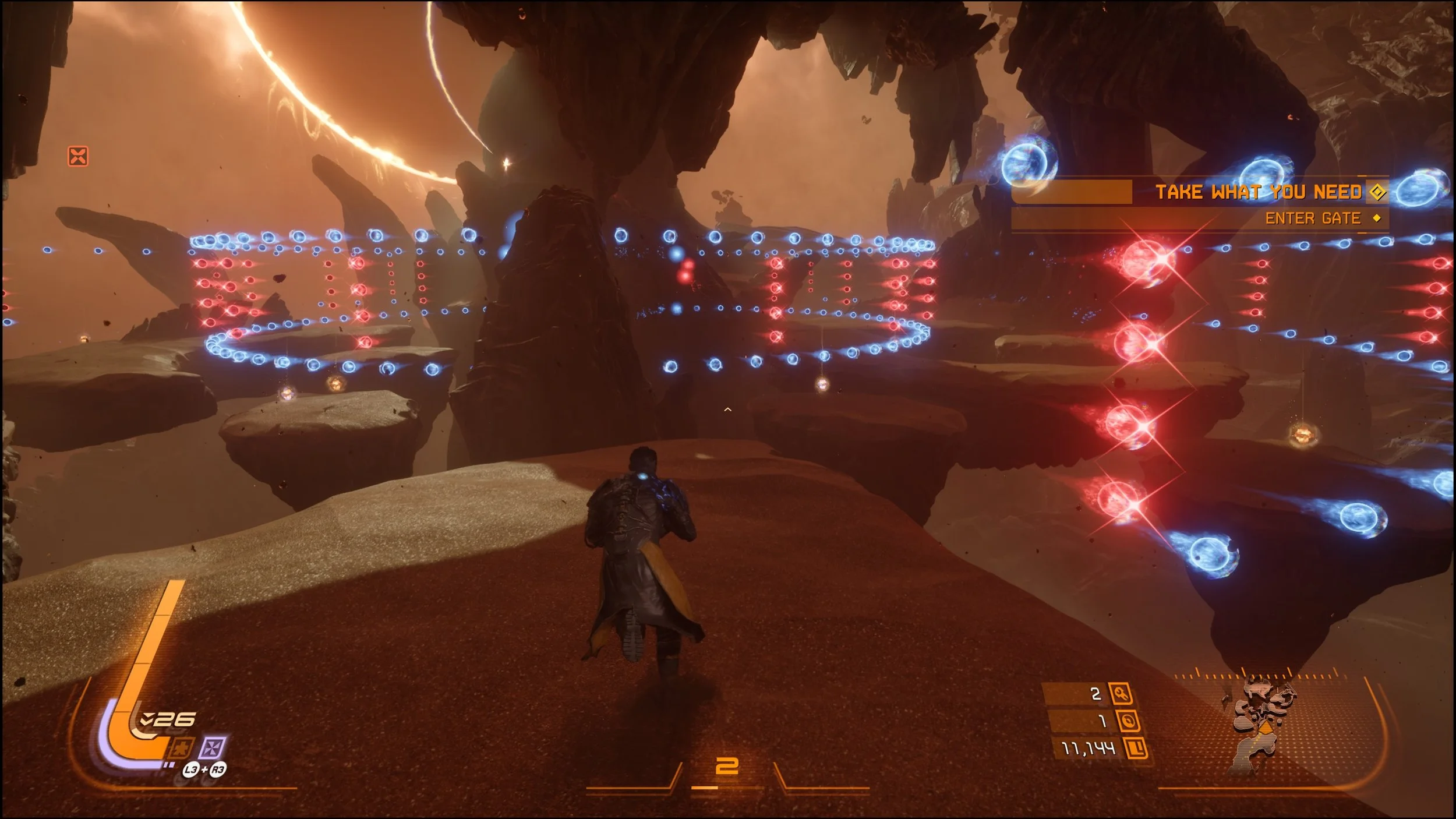
It’s hard to sell this to fans of roguelike games, as I would treat this more of a Doom: The Dark Ages kind of experience where you are pitted against waves of enemies stuck with you. Each run doesn’t mean the chance of creating a unique loadout as much as it feels more like you’re deciding what flavor of gun you’d like to use this time around.
That’s due to the upgrades found to be basic in nature. The Artifacts you find in each run can be as basic as base stat increases to getting healed after every kill. Stronger artifacts have better effects, but also drawbacks like increased recoil. The problem is that it doesn’t change your loadout or playstyle all that much, so I had runs where it felt better to not pick any of the ones with drawbacks. I felt strong and capable without them, and in fact I liked the added challenge.
The only real decision-making lies in what weapon and power I should be using based on the situation I'm in. There’s a variety of weapons with different iterations for each weapon type, and both the power and weapon you find in a run come with a series of perks that can determine how comfortable you are at certain ranges.
There’s a shotgun with a grenade launcher alternate fire, a crossbow that splits into multiple homing projectiles when it hits its target, a lock-on assault rifle, and a rifle that shoots discs that slowly damage enemies as long as it’s attached to them. There are different variations, and choosing between them is the only hard decision in any given run, as they are all good and fun in their own way.
Accessibility done without sacrifices
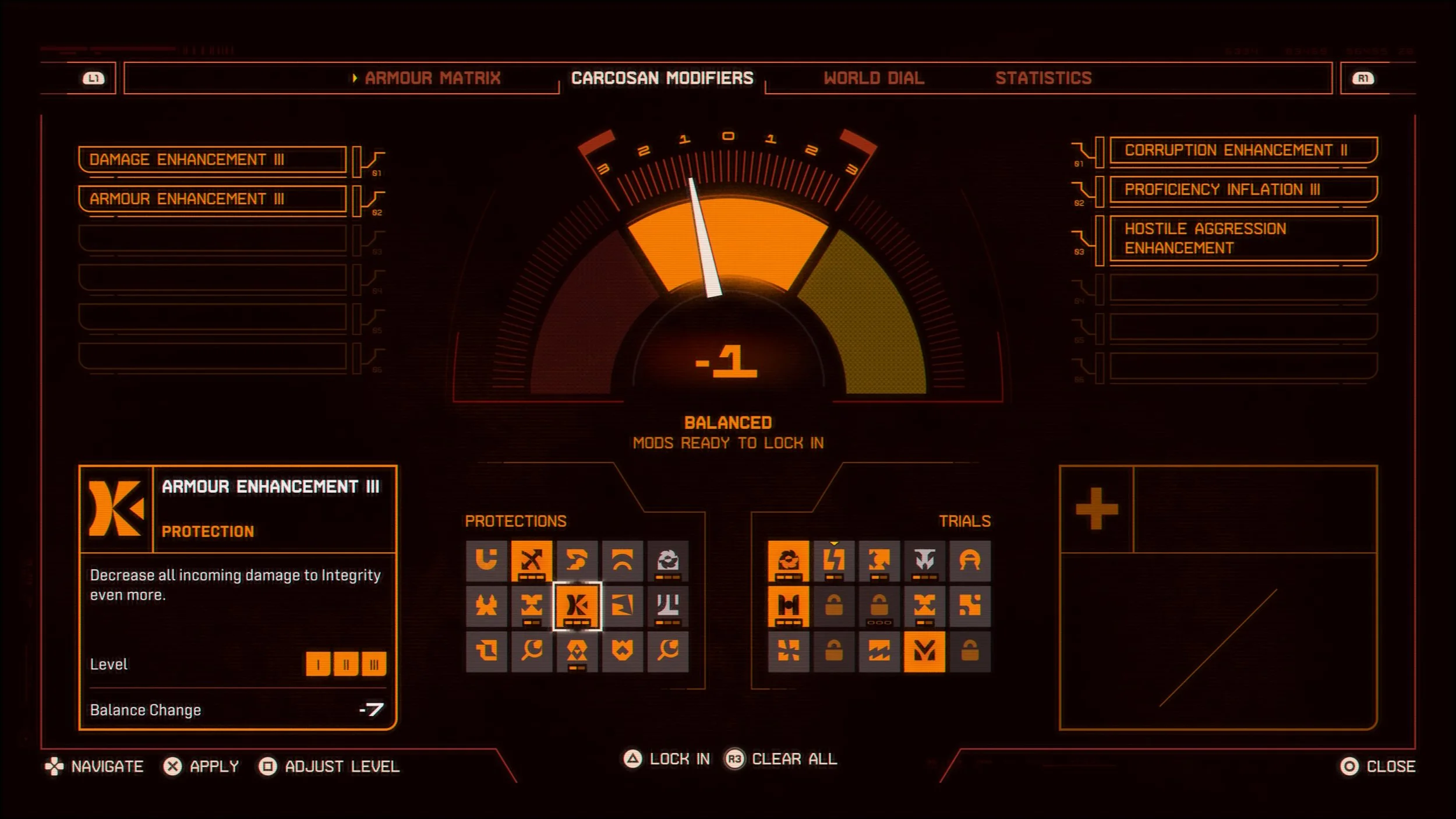
In its basic nature, Saros is challenging and fun, but not punishing when compared to Returnal, as that game only had the dodge being the most effective form of defense. What they did to make Saros more flexible for all types of players is adding a system early on where you can tailor your runs by adding modifiers, giving players the ability to make it easier or harder depending on your preferences.
Whenever you add a modifier that makes it easier, you also need to add a modifier that negatively affects your runs. You need to find a balance, but the system does a good job for those that want a toned-down experience or a run where if you blink, it’s over. It’s a system that felt like something one would unlock after finishing the game the first time, but I appreciate it being open early on, as you don’t need to engage with it if the base state of the game fits you.
There’s a lot I had to adjust before starting the game, as by default aim assist and tracking assist were turned on. There’s a lot I had to adjust to cater to how I play, but it clearly shows that Housemarque wanted the player to be able to tailor their experience based on their preferences, and make the onboarding experience as smooth and inviting as possible. I still don’t know why motion blur is on by default in 2026, though.
Carcosa Engulfed by the Sun

The world of Saros is bleak but bright with floating rocks, mysterious organic life, and locations of past civilizations and modern ones left abandoned to an inevitability that humanity couldn’t comprehend. The mystery persists throughout, as the many statues and structures are a haunting enigma. The moments where you can pause and take in the scenery are rare, but when you do get the chance, all you grasp is how lost this world is, and how it seems there’s no sense of hope for anyone looking for it.
It’s a mostly bright visual spectacle with color palettes hardly straying away from orange, yellow, or brown, so if you’re not keen with that color combination, it’s going to be hard for the eyes for some.
Saros has a level design that gives the impression that I'm exploring a series of locations instead of a series of boxed rooms, which is a big upgrade in terms of presentation and level design. There’s tons of platforming that tests your use of the various mechanics, and secrets that’ll require just a bit of effort to unlock that locked gate for an extra chest. You’ll also see obstacles with a series of projectiles blocking your path that’ll call for a bit of finesse to preserve your limited health pool.
It’s great exploring side sections the first time, but it loses its appeal at the latter half after multiple runs in the same biomes, as again, the artifacts aren't as impactful as I would have hoped in terms of your run’s overall loadout.
Visual detail and technical performance is rock-solid even on a base PS5 (can’t comment on PS5 Pro), with it hitting a consistent 60 fps. I find it unusual to not have the option of higher visual fidelity versus a flat 60 fps, the common visual option most games offer on the PS5. I didn’t experience any issues technically as there was no crash or even any noticeable fps drops, which is impressive for this particular bullet hell game, as I'm not exaggerating as to the amount of simultaneous elements moving all at once.
Housemarque has delivered one of the best-feeling action games of 2026. Saros is an absolute blast to play. The gameplay loop is tight, challenging, and spectacular in all the right moments. It's not the deep roguelite its structure implies, isn’t as hardcore as its previous title, and the story won't stick with you, but when the “bullet ballet” clicks, there’s nothing like it, and you’ll be left hoping other studios deliver similar experiences.
Verdict: 4 / 5 (Fantastic)
PROS
Boss fights are spectacular, and feel like multi-phase puzzles
Bite-sized runs and biome teleportation make it far more accessible and less punishing than Returnal
Robust accessibility options and modifier system available from the start
Tight, responsive controls, enjoyable but challenging gameplay, with the shield mechanic being the star
CONS
Narrative outside of Arjun and Nitya is largely forgettable, leaving most characters as a backdrop
Roguelite elements are too bare-bones to satisfy genre fans as there’s limited build variety and minimal run randomness
Artifacts you pick up rarely change playstyle in any meaningful way
What I’ve Played
Took me 16 hours to finish the game
Spent over 20 hours with most of Arjun’s upgrades unlocked
Beat all bosses and tried every weapon iteration
*This review is based on a PS5 review copy
About the Author - Carlos Hernandez
Carlos Hernandez is the founder and Editor-in-Chief of Too Much Gaming, where he writes about video games, reviews, and industry news. A lifelong gamer, he would do anything to experience Final Fantasy Tactics for the first time again and has a love/hate relationship with games that require hunting for new gear to improve your character.
Our The Blood of the Dawnwalker review explores Rebel Wolves’ dark fantasy RPG, its 30-day time limit, the day and night cycle curveball, excellent side quests, and shortcomings.