
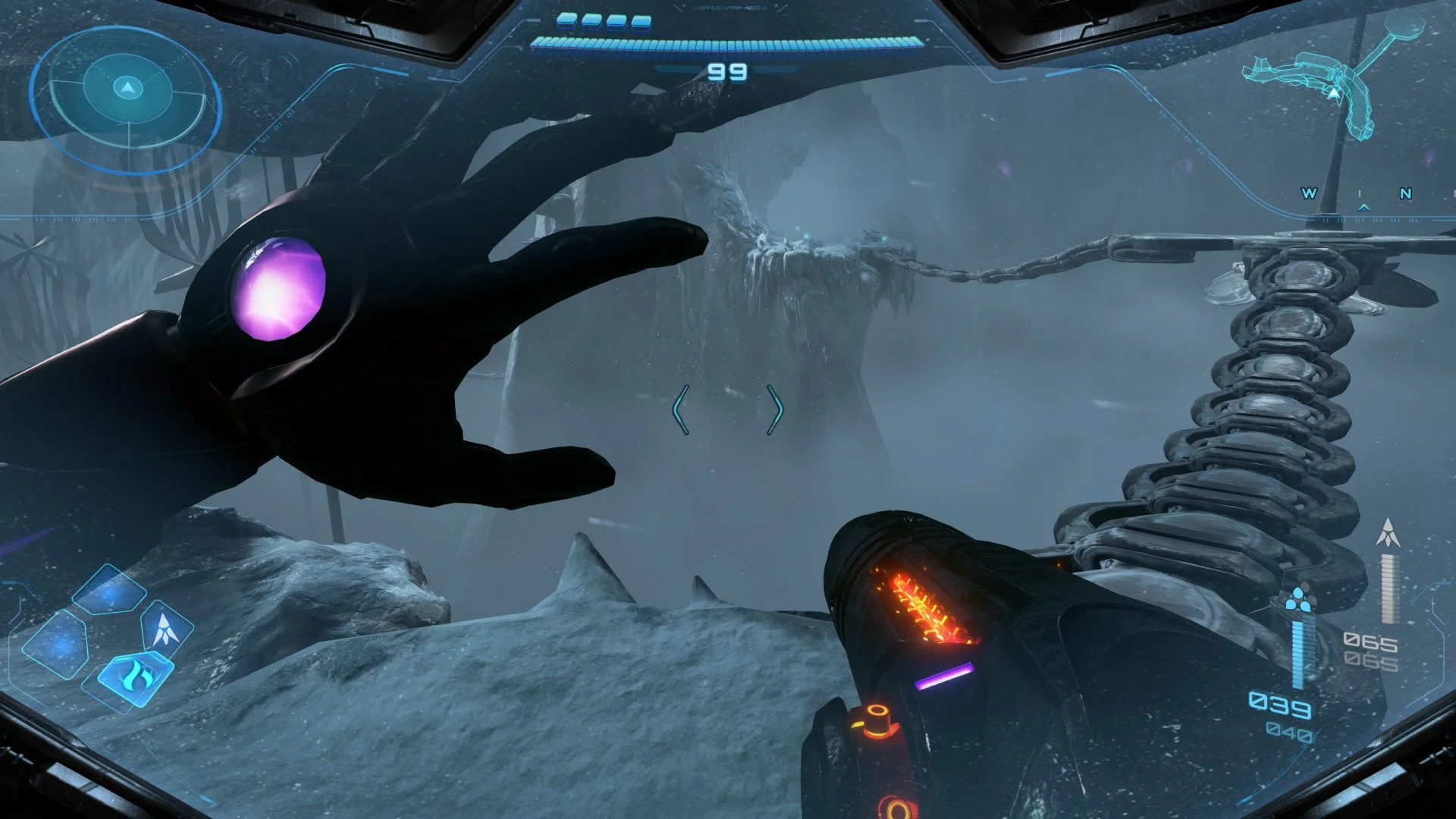
Rarely has a Metroid game come with such baggage and expectation. Eighteen years since Metroid Prime 3: Corruption is long enough to get any fanbase chomping at the bit with anticipation, and in this case, Metroid Prime 4: Beyond is also Nintendo’s big 2025 holiday game and the first major first-party showcase for the graphical capabilities of the Nintendo Switch 2. Personally, Metroid Prime and Metroid Prime 2: Echoes are some of my favorite games ever. I’ve been waiting for this game ever since Corruption ended on a cliffhanger. It’s also hot on the heels of Metroid Dread, one of the Switch’s (and series’) best games. So perhaps there’s no way Metroid Prime 4 could live up to expectations, but nevertheless, there’s a lot to talk about here, for better and for worse.
The Good
As for the good, I’m happy to report that the controls feel smooth, especially once I increased the stick sensitivity a little bit. Combat and movement is not perfect, as far as FPS games go, but it’s far less clunky than the first two Prime games on GameCube. Unfortunately, the gyro and mouse controls did not shine. The Wii Remote still remains the best motion control option for Metroid Prime titles. I instead have been using the Pro Controller for the most part, though I’ve also dabbled in handheld and tabletop modes. Enemy variety is sparse, and the only real fun that I had with the combat was with the bosses and mini-bosses. Some of the main bosses actually pose a challenge, which is more than I can say for the majority of the game experience. Perhaps they should have given whoever designed the bosses more input over the game’s combat encounters in general, because they clearly understood the assignment.
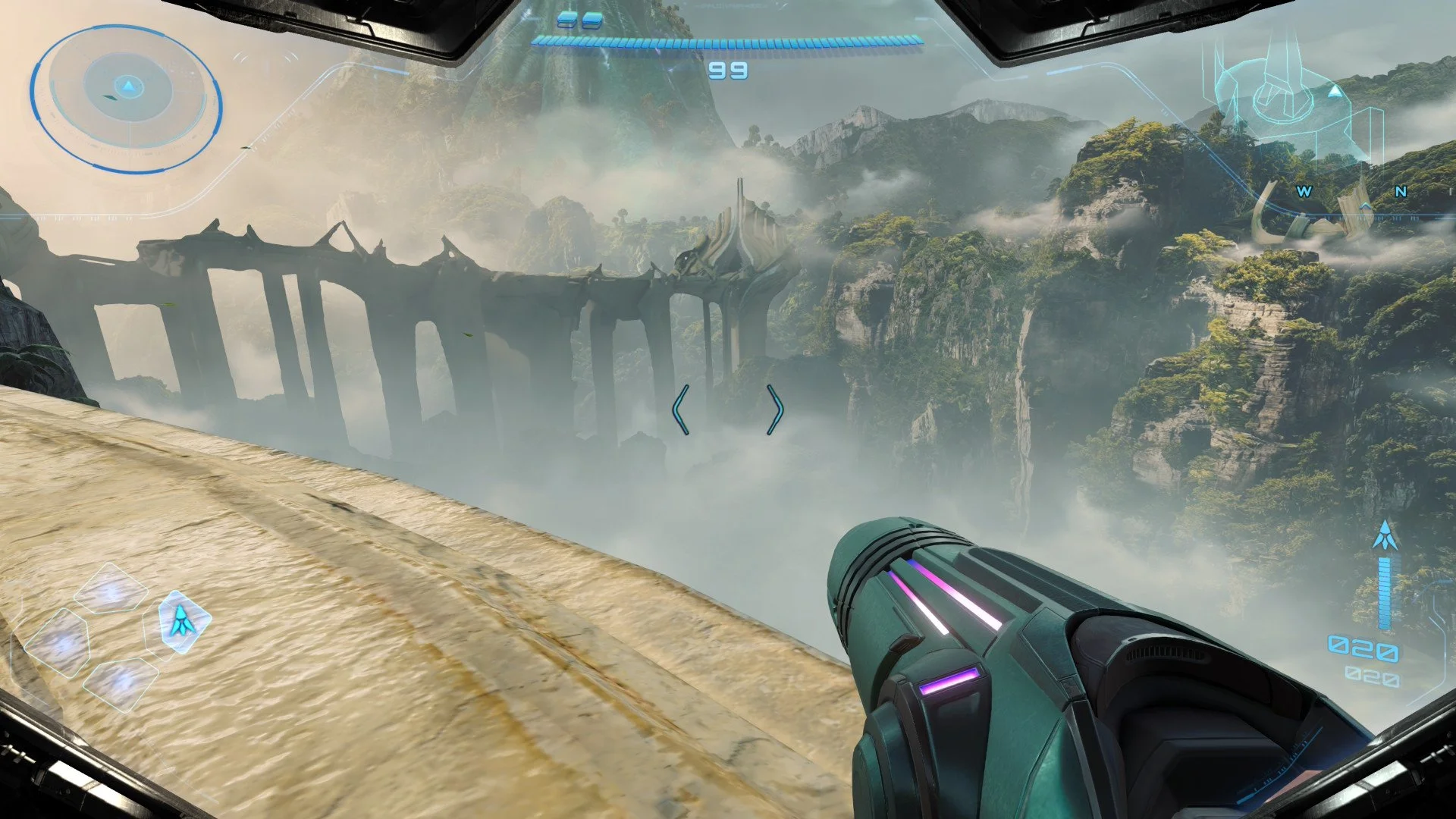
In terms of graphics and performance, Prime 4 shines as one of the best-looking first-party titles Nintendo has ever made. The graphics are shiny and there are some clear ‘wow’ moments when gazing across vast vistas, but sadly, you’ll be spending a lot of time in Sol Valley, an uninspiring desert with garish lighting and no day-night cycle. Sol Valley looks a lot worse than the rest of the game, so it drags down the overall visual experience. The game runs excellently in both quality and performance modes, and I commend Nintendo on achieving 60fps at 4k as advertised. The music is eerie and atmospheric, though at times one-note, especially seeing as you’ll be spending extended periods of time in one area with little variation in the arrangements. The combat feels fine, although dashing by double-tapping a button does not feel great. While you can reassign buttons, you can’t pick a button to dash, which is a huge oversight and makes otherwise excellent combat encounters feel clunky, as I’d try to dash and end up just jumping.
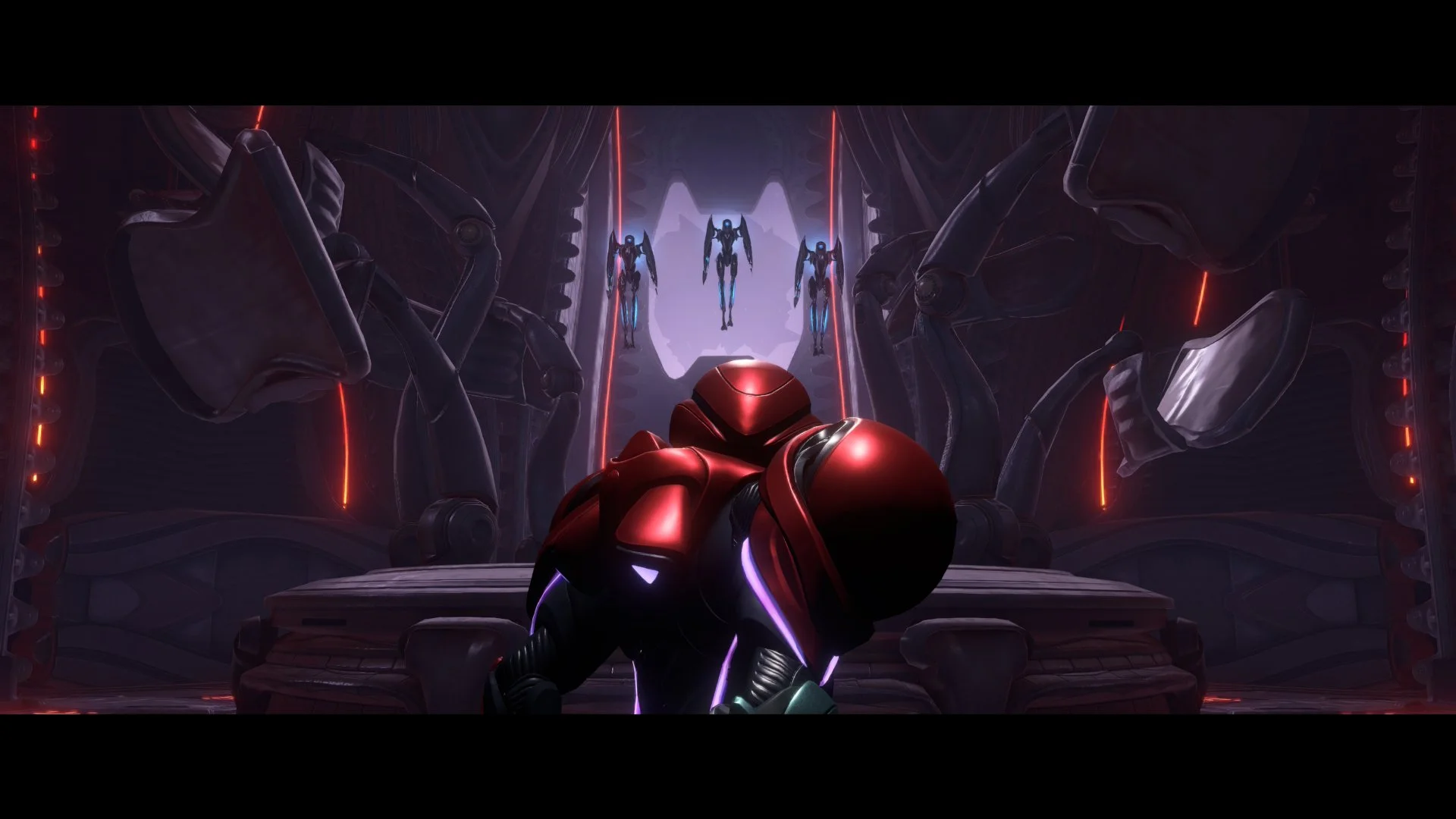
The story this time around involves Samus, frenemy (now foe) Sylux, and a handful of Federation troopers being transported to the planet Viewros, which was home to a now-extinct species called the Lamorn. The game opens with an invasion at a Galactic Federation base with a stilted cinematic style and writing and voice direction that made me feel as if this game dropped out of a wormhole from an alternate 2010. For some, this might make Prime 4 a great throwback. I felt that things were clunky and outdated. Immediately after arriving at Viewros, a spiritual remnant (or hologram?) of a tall Lamorn elder declares that Samus is their Chosen One (wow, what a shocker) and will be tasked with keeping their history alive by uncovering the truth about how they vanished and preserving such for the future. It’s not the most pressing or interesting story, but you’ll gradually learn more about the Lamorn, their love for motorcycles, and their freaky experimental labs as you progress.
The Not So Good
Unfortunately, that’s about where my praise ends. If you’ve been following the online discourse at all, the biggest complaints people have been fielding here are about the long tutorial opening, chatty NPCs, the vast empty open-world desert, music in said desert being locked behind Amiibo functionality, and the game’s linearity as compared to previous titles. All of these are clear problems, and all are emphasized by sometimes baffling game design and progression choices. For one, the game is not designed or structured like a traditional Metroidvania. It is much closer to a pre-Breath of the Wild 3D Zelda title, notably Twilight Princess or Skyward Sword, with five ‘dungeons’ connected by an open world, only with far less to uncover, and something akin to and possibly worse than The Wind Waker’s Triforce pieces quest gating the endgame.
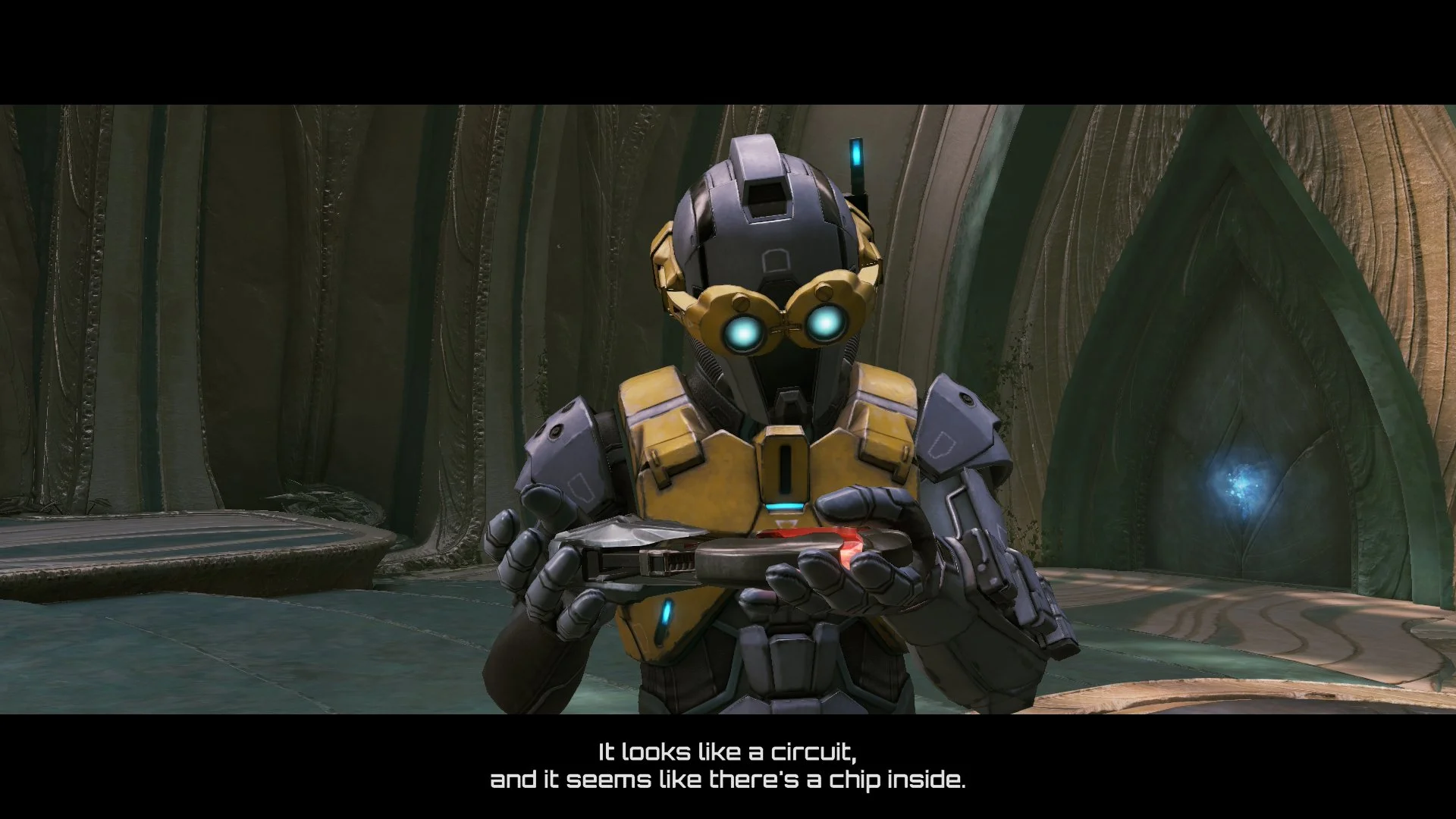
The Galactic Federation troopers feel like an unnecessary addition, particularly early-game companion Myles Mackenzie, who is nevertheless on your radio throughout, and chimes in from time to time. Yes, he is quite annoying, but thankfully, he isn’t ever-present. Instead, you’ll have other companion characters on comms during three of the four ‘Zelda dungeon’ areas of the game. Of course, my preference would be to have no companion characters, but these segments are not overlong, and as much as it feels inappropriate for Metroid Prime and its focus on atmosphere specifically (Corruption notwithstanding), I understand Nintendo wanting to create memorable NPCs to attract a new audience. Voices can be turned off, so you can theoretically rely on subtitles. To me, the most difficult aspect of these Galactic Federation trooper encounters, and perhaps my biggest overall criticism of the game, is the fact that Samus does not speak at all. It actually takes one out of the experience, especially given that it feels like she originally had a voice, only to have her lines later removed, with her visor smoothed over to hide her eyes.
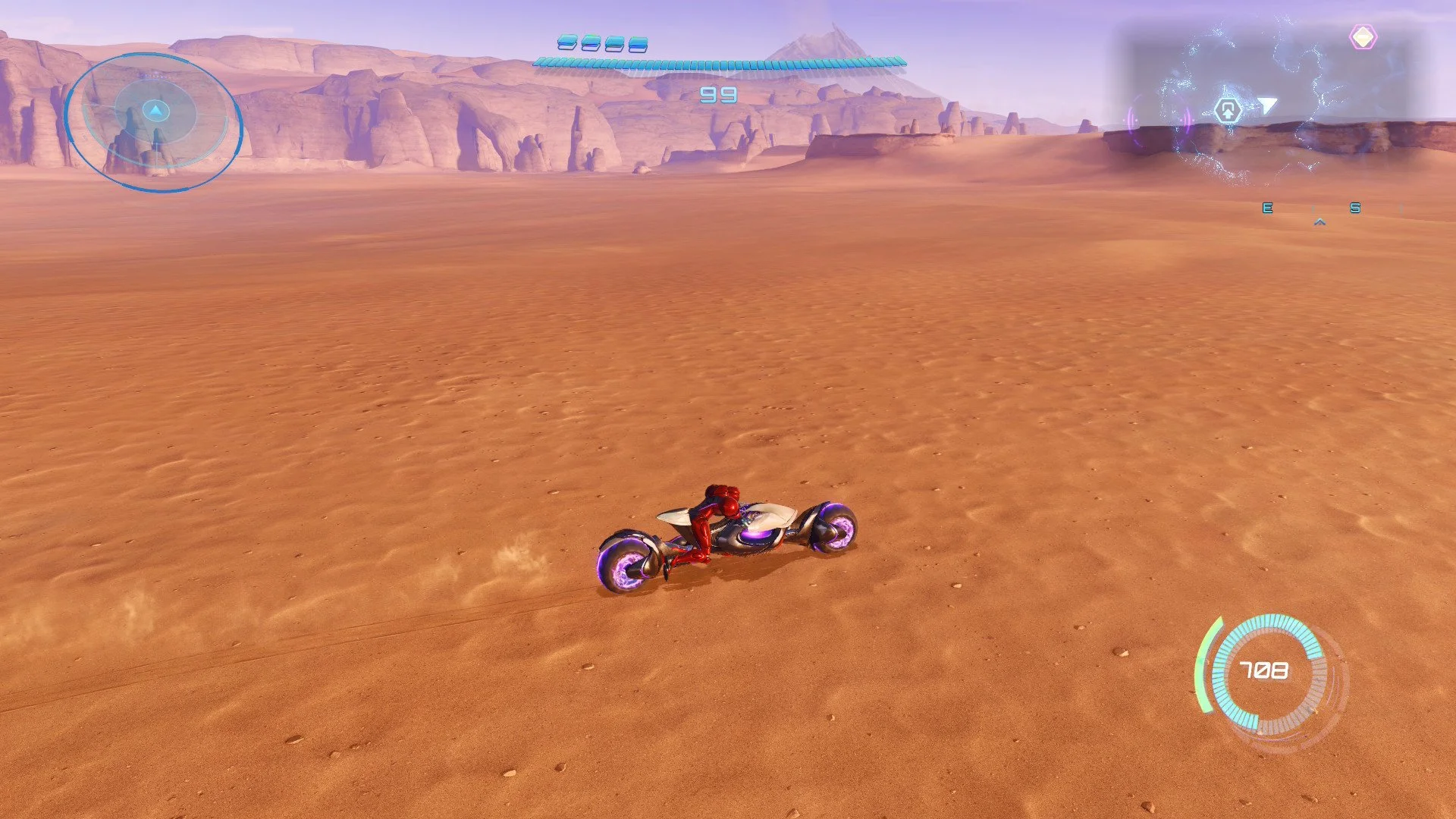
Sol Valley is one of the most baffling design decisions I have ever seen. This vast, empty, ugly desert feels like a totally forced element of the game to have Samus ride around on Vi-O-La from place to place, especially when each of the zones already has about a minute’s worth of transitional screens and unskippable corridors to travel through to begin with before you can get into the area proper. There are a handful of Breath of the Wild-like shrines scattered across the landscape, but tackling each requires that Samus achieves a certain upgrade first. So nothing in this ‘open world’ feels truly ‘open world’. And it’s not as if the desert is optional. The game forces you to cross it many times, and you’ll have to spend well over an hour just doing nothing but gathering green crystals in order to upgrade your beam and reach the endgame.
It’s especially a shame considering how great it feels to drive Vi-O-La, especially when using the Switch 2 Pro Controller. The HD Rumble really shines as you accelerate, pivot, turn, and boost. I can easily see a world where Metroid Prime 4: Beyond was given another layer of refinement and Sol Valley and dedicated Vi-O-La challenges could have been a highlight of the experience, but as it is now, all it represents is a failure of concept.
Something that I haven’t really seen many others discuss is how long it still takes to scan things. On the GameCube, it was understandable that it might take up to 2 seconds to scan something. But here, it feels like absolute padding, especially when you’re scanning boxes or light duty trucks that seem just like others you’ve seen in other corners of Viewros. Also, there’s a section where you’re scanning Lamorn logs. The writing in these logs seems very “human”, as if the text was not gone over with a fine enough comb to make it seem alien enough. This stands out especially since the Lamorn are already bland enough compared to the aliens in prior Prime games. Weak writing in general prevails throughout this game.
I’m glad that for once, I am not alone in signaling my disappointment with a first-party Nintendo game. I feel like Nintendo fans in general are too forgiving of the company’s missteps, so they don’t properly learn their lessons. I have not played Hyrule Warriors: Age of Calamity, but every game they’ve released this year other than Mario Kart World has seemed overpriced and undercooked, with elements heavily geared towards casual audiences versus hardcore gamers.
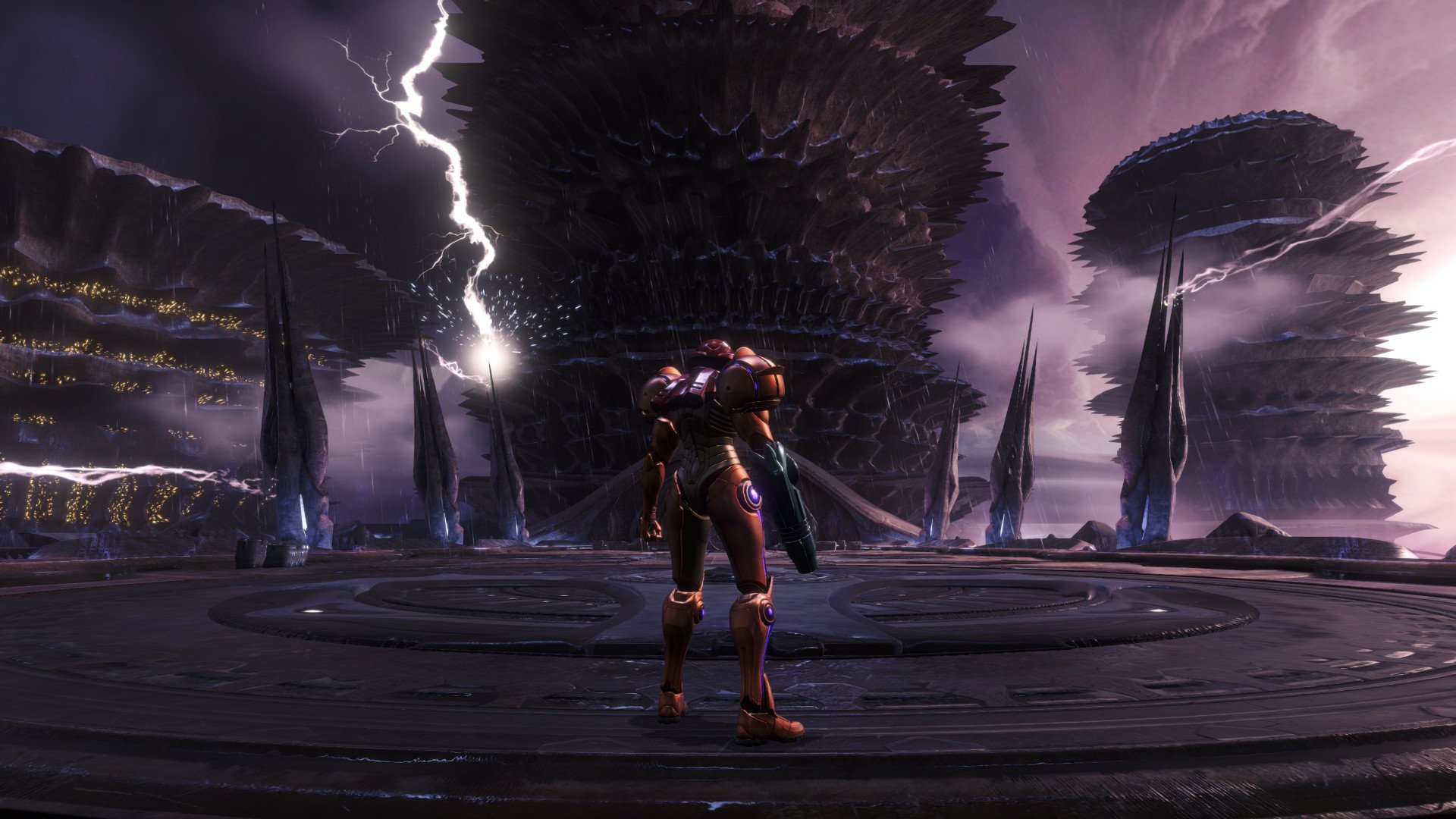
Especially as this is following up on the heels of the incredible Metroid Dread, Metroid Prime 4: Beyond is so disappointing, I think that I will actually sell my copy after I beat the game. This is not a $70 game. I think it provides content worth $40 at the most, maybe $50 if you’re being generous. To upcharge $30 for the ability to pick music while driving through Sol Valley is highway robbery. Spending hour after hour traveling through linear corridors only to end up backtracking through the desert to the next linear corridor has gotten me so disillusioned with Nintendo, Retro Studios, and series producer Kensuke Tanabe that I don’t know if I want them to revisit this franchise again until they can get their priorities straight.
About the Author - Joseph Choi
Filipino-American gamer, professional shepherd and farmer, author, and filmmaker/videographer living in Central California. First consoles were the Game Boy and Sega Genesis, and I've been gaming since then, with a focus on Nintendo and Sony consoles.
Our The Blood of the Dawnwalker review explores Rebel Wolves’ dark fantasy RPG, its 30-day time limit, the day and night cycle curveball, excellent side quests, and shortcomings.