
Octopath Traveler 0 Review – A Journey of Ups and Downs
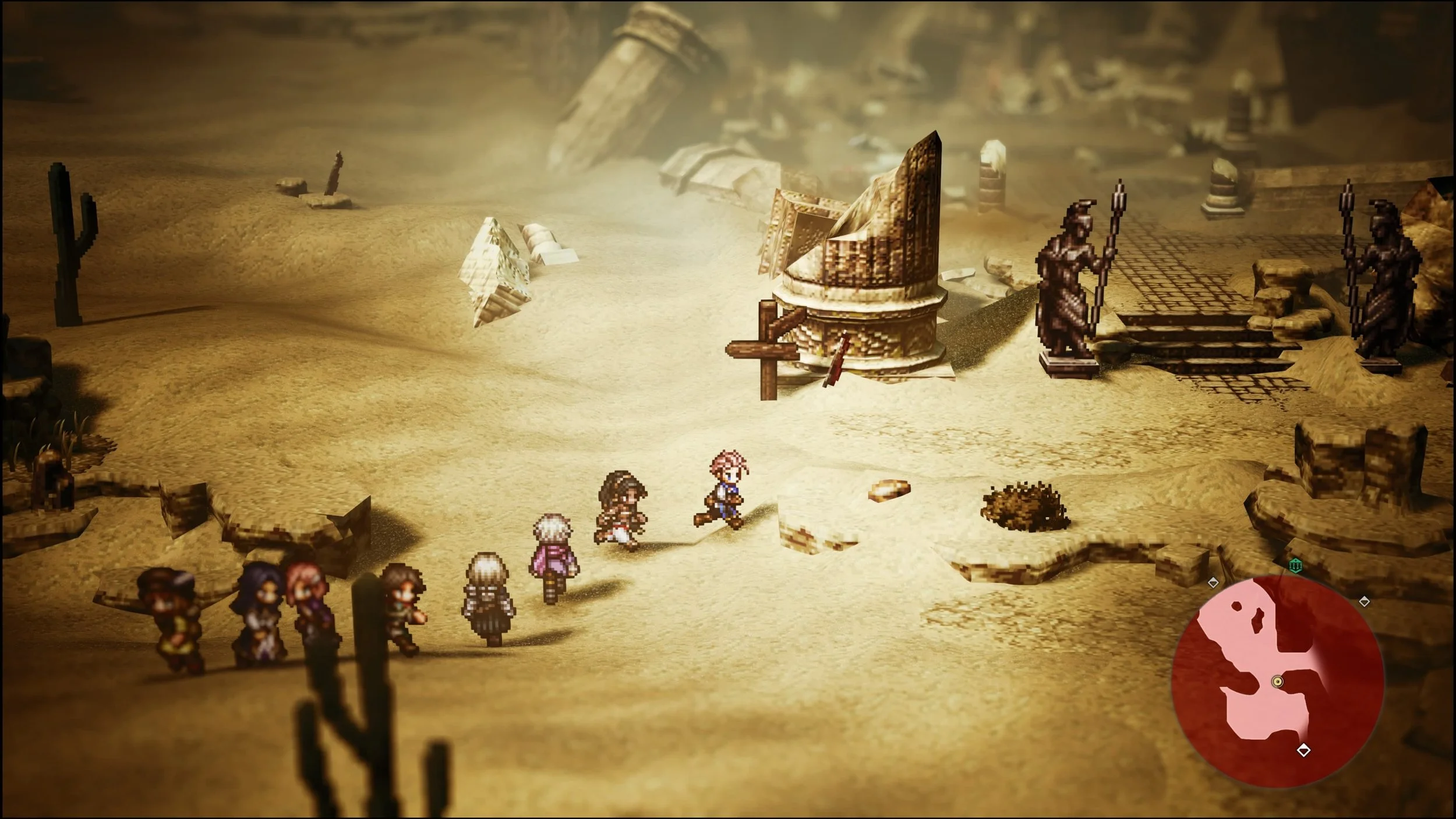
The Octopath Traveler series is a JRPG franchise that I’ve struggled to get into for years, and it’s not due to anything wrong with the titles, but it’s more like I kept jumping in at the wrong time, as life and other commitments just get in the way.
I played Octopath Traveler 0 through a similar path, as I took it on during the holiday season, but a single change pushed me over the hump, as I’ve spent over 100 hours on the game, despite a busy, family-focused month. It was a bumpy journey as it was a mixed bag, with some genuinely likeable characters and engaging story arcs, alongside others that fall flat. You then have a final act that had me banging my head against the wall. But overall, it’s a thoroughly enjoyable JRPG with a satisfying combat system, a variety of character synergy, and a visual design that I hope we get more of in the years to come.
The multiple paths ahead
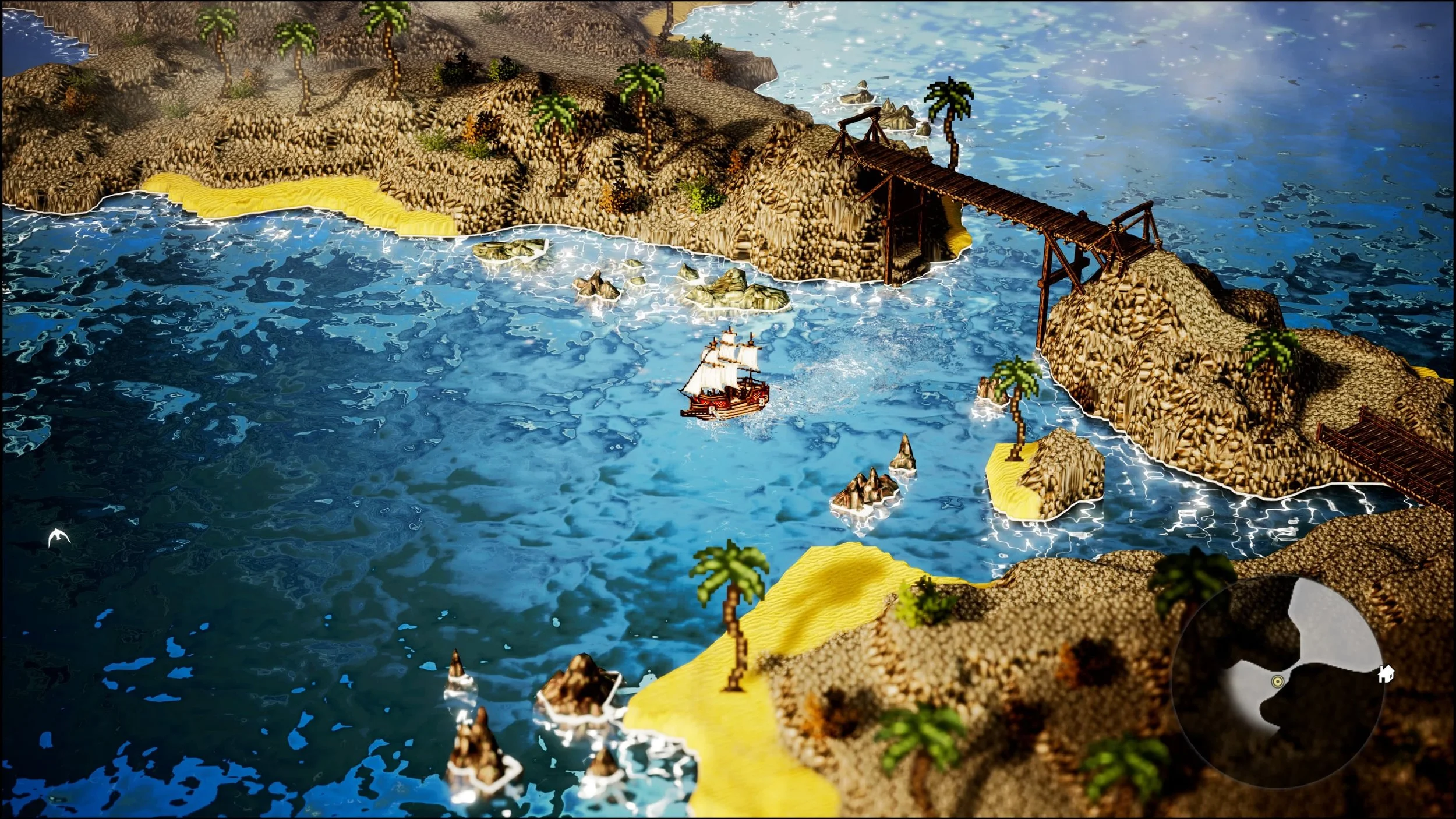
Octopath Traveler 0’s JRPG DNA is undeniable, and its unique graphical art style brings life to the retro 16-bit character and environmental sprites that have become the series’ signature standout look. Another unique element to Octopath Traveler is the multiple stories that eventually converge into one big story beat to conclude the game. Octopath Traveler 0 follows that same approach in storytelling, as you play as “The Chosen One”, a player-created character who tragically lost their village, and ventures off to rebuild what he/she lost while uncovering the truth behind these mysterious rings that triggered the assault on their village.
For those new to the series, Octopath Traveler 0 is a restructured version of the free-to-play game Octopath Traveler: Champions of the Continent, as Square Enix converted that title into a complete JRPG title by removing the gacha mechanics entirely and adding more content while fleshing out more of the core story.
The main overall story can easily take 90 hours to complete just the main storylines. You first start by hunting down the three key characters responsible for your town’s destruction. This consists of three complete story arcs with different themes and motivations that I felt were the game’s strongest point in terms of storytelling. Auguste the Playwright was menacing, as he would do anything to gain inspiration for his next play. Herminia the Witch is all about attaining wealth, and the hero Tytos was just a power-hungry tyrant. The developers didn’t mince words as to how they created these characters, as they are pure villainy at play. There’s nothing redeeming about them, and it’s completely fine to have a straight arrow to play the role of antagonist.
This JRPG had a lot of colorful playable characters, but most of them soon became part of the background. It’s understandable, as there are 36 playable characters. Only a handful of them get fleshed out, and most of those that grow only become part of your party later on. There is no central core cast from beginning to end. The only constant is The Chosen One, a silent protagonist that naturally has no personality, as Square doesn’t try to deliver any form of unique traits that would make him at least interesting during heartfelt or dark moments.
Characters picked up through side quests are given a short but sweet introduction quest that, upon completion, gives you the option to recruit them to your cause. Soon after this, most of them don’t contribute to any form of storytelling growth. You do have the occasional not-voiced cutscene with specific characters, but that’s the extent of the game’s attempts to flesh them out.
A final act that didn’t stick the landing at all
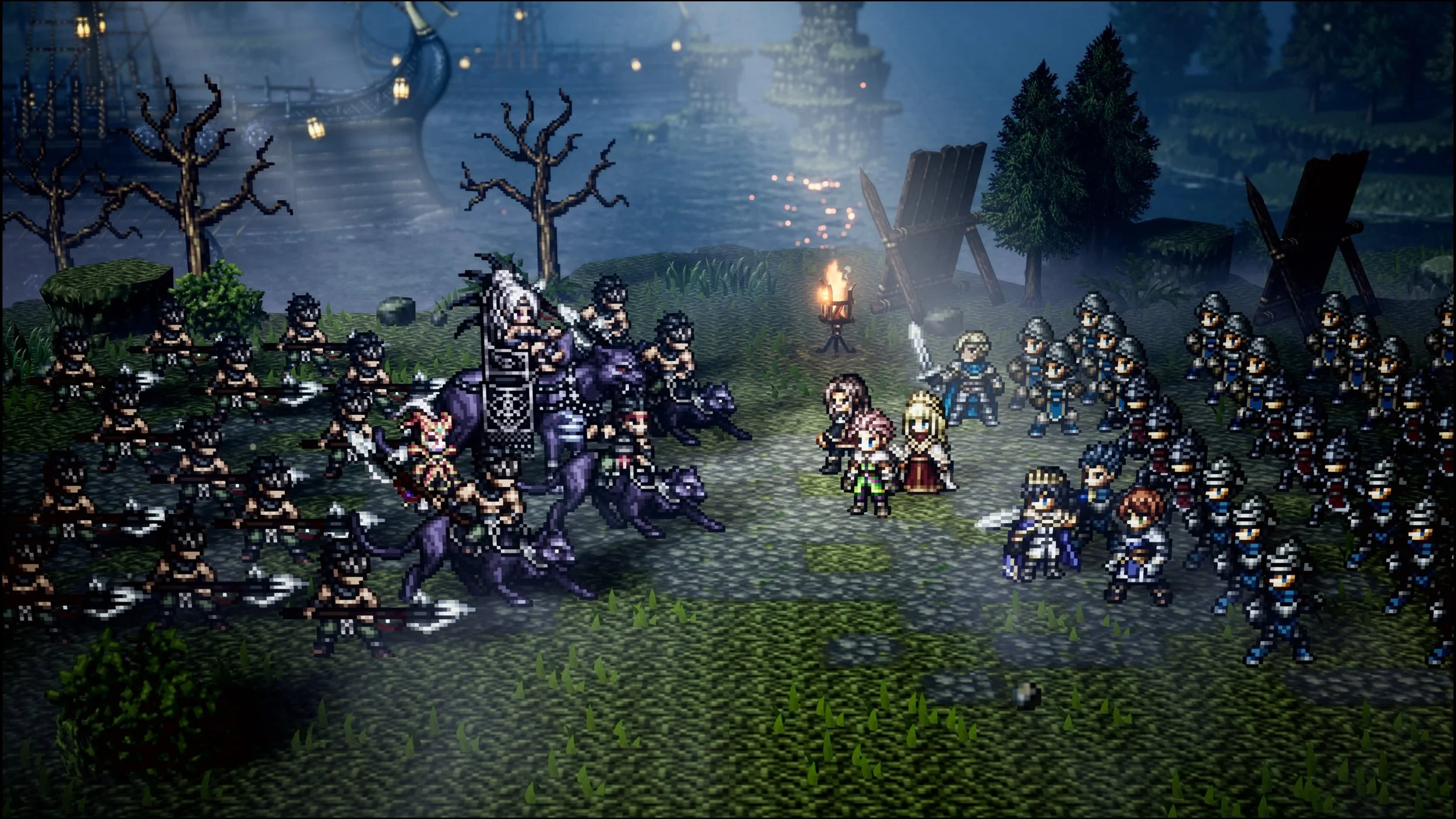
As you progress, more stories emerge that will eventually lead to more conflict and twists due to the effects of the previous arcs. Each one felt like an actual anime story arc, as the stakes and scope of the game’s story go from a razed village to events that could affect the whole world. Typical JRPG things, really. Despite following traditional JRPG tropes, the growth of these storylines was a solid start, but that last arc that puts everything together felt like a forced twist that didn’t pay off.
The main conflict in its second half didn’t feel natural, as it came from left field. Maybe I missed the signs, but when the big reveal occurred, the game dragged on, as it took too much of the player’s time to add more context through flashbacks and explanations.
This greatly affected my time with the game’s final hours. One revelation after another didn’t lead to excitement or surprise. I just wanted it to be over, as the context given didn’t convince me to feel any form of emotion towards these revelations. Some sections felt silly, and the reasoning didn’t justify the time spent on overly long exposition.
Ultimately, Octopath Traveler 0 is a huge game. While I didn’t enjoy some of the story arcs available, the disparity didn’t completely ruin my enjoyment. The game simply has a deeply horrible landing, one dangerously close to crashing and burning.
Build your own JRPG town
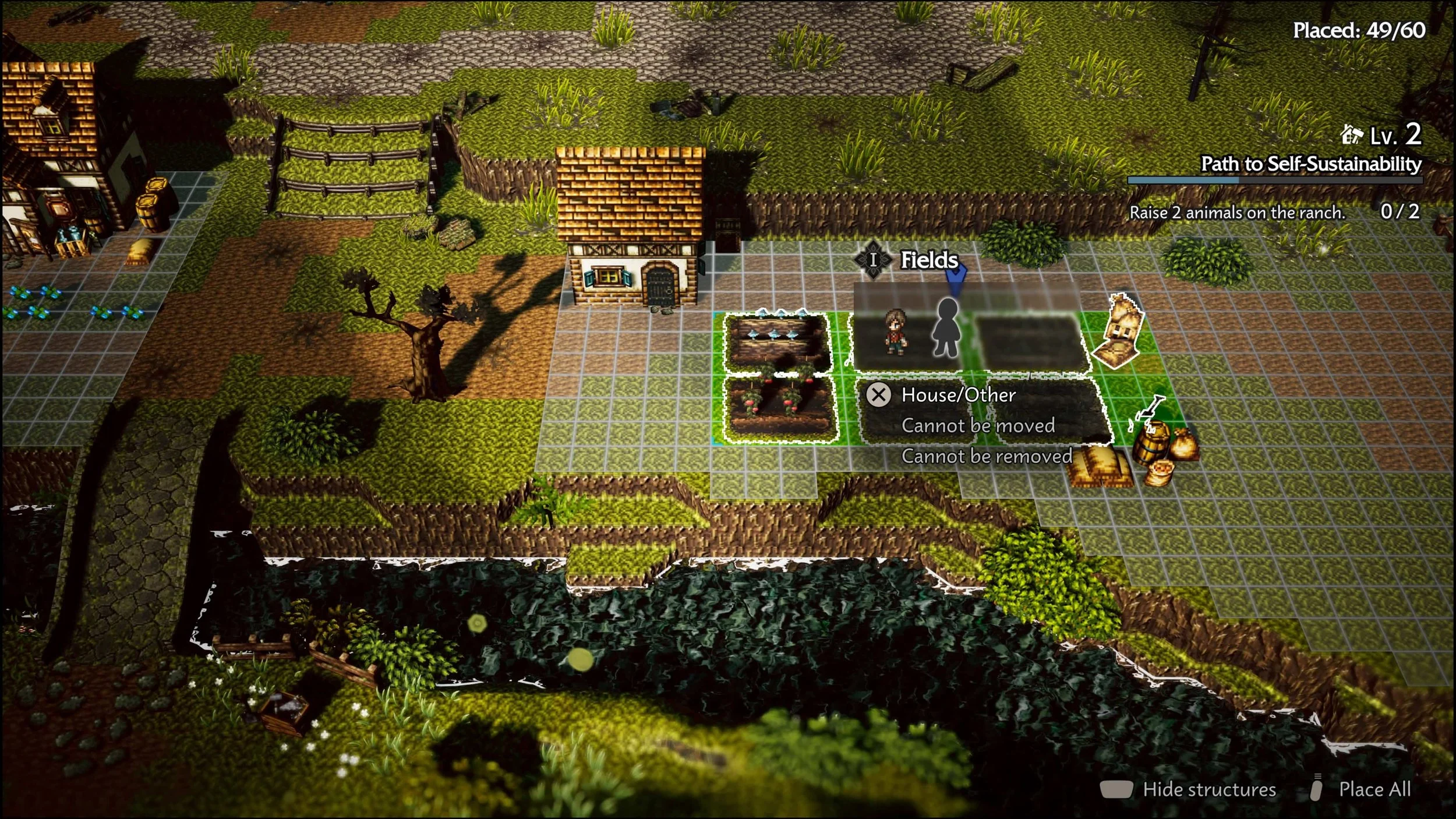
A major addition to this version of the game was Wishvale, your character’s hometown that you lose at the beginning of the game. The starting motivation is not only finding who is responsible, but also rebuilding what was lost. The town-building system doesn’t feel like filler of sorts, as it’s simply you building your very own JRPG town, complete with a farm to gather resources to make meals that give your party unique buffs in combat, a shop to buy items and gear only found in towns you’ve visited, to an arena where you can go against challenging monsters for unique rewards.
You have full control over how to design your town, even the people you invite, as the people that join your village can be placed in specific buildings to give buffs such as more experience to characters assigned in the training area, or a faster growth rate to your crops. It’s a meaningful downtime for the player between story beats, and a nice addition overall to give the game more variety beyond combat.
A party of 8 adds so much value for the combat system
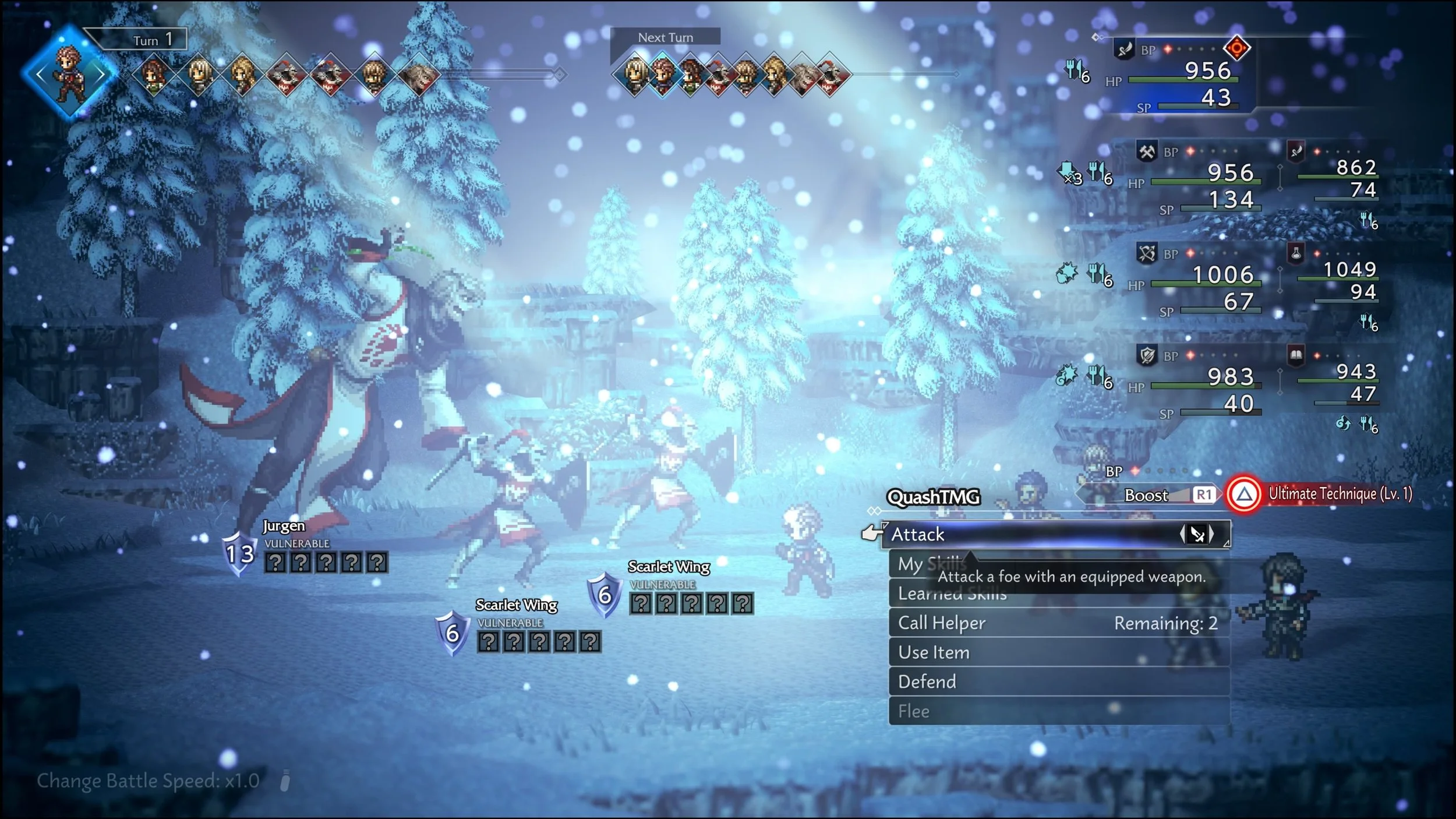
Turn–based combat in Octopath Traveler 0 remains the same as in previous entries. The only main difference with this title compared to the others is that you now have a party of 8 with a front and back row feature. The JRPG still features a BP system where each BP point equates to multiple hits and more potent skills, and each enemy has multiple weaknesses that, if exploited, can leave them in a broken state where they take more damage.
It’s all about breaking the enemy's shield through weaknesses, which left me fine-tuning my party to be capable of handling anything, and making sure that I have all the weapon types and elements to deal as much damage as possible. What surprised me is that every new character enticed me to change things up. Whenever I entered a new story beat, I’d approach it with a new team composition.
It’s a decent grind, as each character has unique abilities that give them specific roles for your party. You’ll find multiple characters filling the role of the ranger, for example, but each of them provides something unique. One provides a unique passive skill that allows them to attack while in the back row at the end of turn, and another can deal extra damage depending on how low their health goes. You have characters that have unique skills that do multiple attacks, to passives that cut the cost to cast skills by half. The best part of this system is that once a character unlocks all of their skills, they can spend points towards mastering them, allowing you to create an equippable version of that skill for other characters to use. There are limitations to make each character unique, as not all skills and passives can be given to other characters, but this makes each new character that can be recruited an opportunity to expand the possibilities of team synergy.
Mixing and matching the different skills from all the characters you have was part of the fun as I grinded away. It’s a good sign when you’re doing random battles after 50 hours and still feeling excitement over each fight. Finishing a normal fight without giving the enemy a single turn hits differently, even during the later stages of the game, as I always found new ways to create unique party compositions. When fighting weaker enemies, the game has a 2x speed option to get through mindless encounters quicker, respecting the player’s time whenever the game requires you to backtrack to older content.
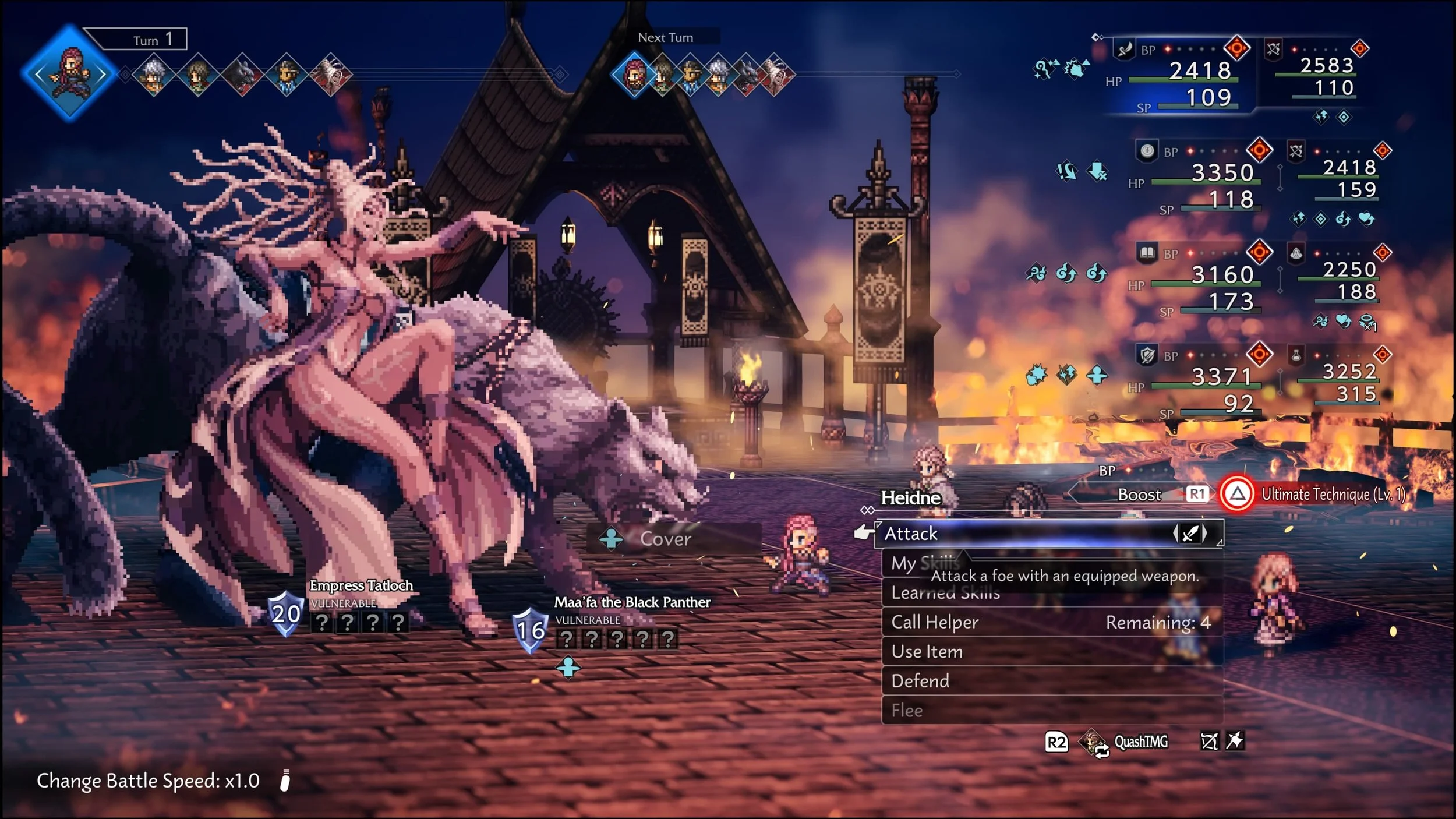
Bosses are where the game’s combat shines, as they are quite challenging, and they try to keep you on your toes at all times. We have enemies that bend the rules a bit by canceling out their specific weaknesses or even changing them every other turn. Multiple conditions can thwart your plan of attack, and if you don’t break the boss in time, they will trigger a painful skill as punishment for not doing so. The boss designs during battles are expertly crafted and even overblown. It’s a masterful choice, as each design is detailed to convey their menacing nature. Breaking enemy shields also never gets old, especially when the party starts to click as intended.
The soundtrack to this game also elevates the combat experience, as it has a classic JRPG tone that made me think I was playing classic RPGs from the 90s. Every track available in 0 gave me chills, especially the ones used in boss battles. It was a treat for the ears, as there’s only a handful of games in recent years where I simply took a minute to stop and listen to the tracks. Ever since I heard the theme song of the first Octopath Traveler a year ago, I knew there was something special here, and 0 delivers that same feeling, which is hard to do considering the length of the game. It knows when to be mellow, and it knows what the player needs to ramp up the excitement.
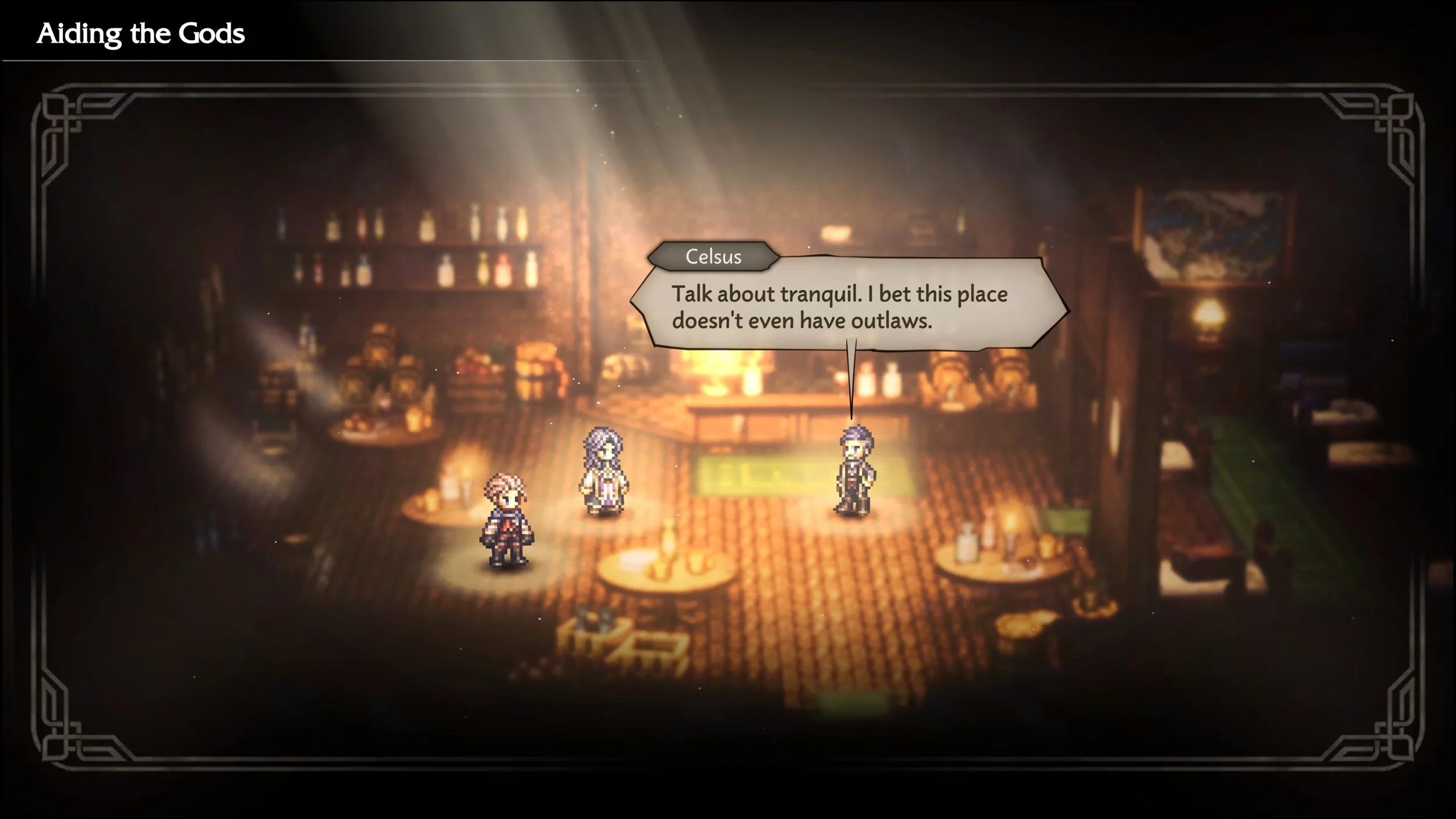
Visually, Octopath Traveler 0 delivers that signature 2D-3D HD art style, though discussions can be made about how Octopath Traveler 2 looks compared to 0. I can lean more towards Octopath Traveler 2’s look, because the lighting feels more defined and purposeful, as some areas of 0 have locations that are overshadowed or blown out by the game’s lighting, which can be distracting. Performance-wise, there are no real issues on the PlayStation 5, though in the second half of the game, I did experience a 1-second pause each time I entered a new area, as if the game took a breather to load assets. It was consistent, though, and thankfully didn’t get any worse as I reached the game’s end-point. No crashes to speak of.
Octopath Traveler 0 is a solid JRPG despite the flaws mentioned. It would have been a different story if the last hours transpired differently, as these really stopped me in my tracks. It’s a shame, as combat and character progression didn’t miss their mark, as I always felt obliged to enter combat. This game felt easier to swallow than its forebears, as I naturally don’t take to the Saga Frontier approach of having multiple stories where you experience the origins of each main character, starting from level 1 each time, as it ruins momentum for me and takes hours until everything comes together. At least in Octopath Traveler 0, as you explore each story, your growing party remains constant.
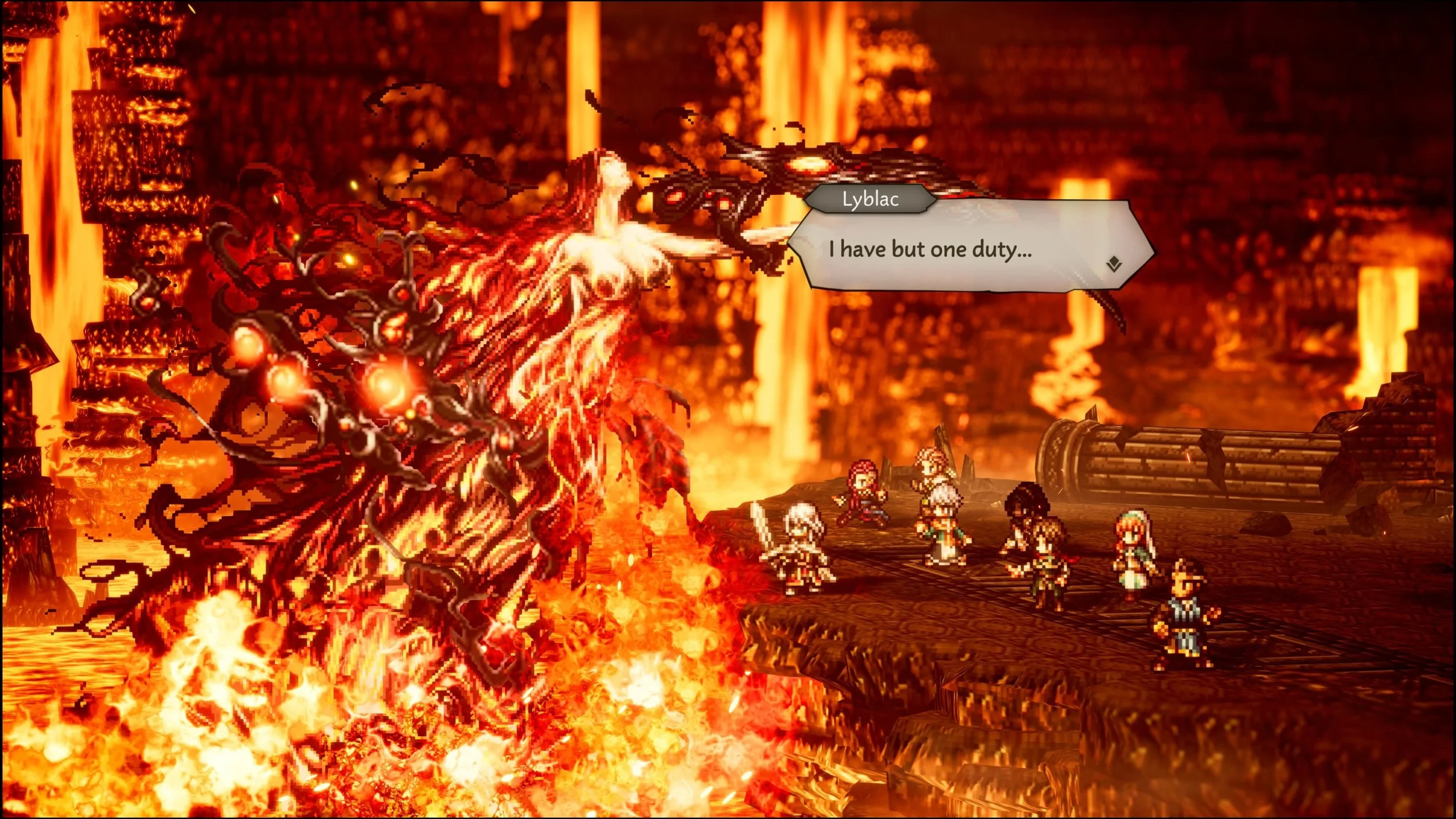
I appreciate that JRPGs like these are available in today’s market. This series is an example as to how not everything has to be created in realistic graphical fidelity for the genre to be appreciated. Sprites still bring a charm, and traditional turn-based systems can still give you joy and satisfaction. Octopath Traveler 0 retains the series’ staples with enough changes to make it stand apart, and while I don’t recommend this to be your first entry to the series, I highly recommend you give this a go after experiencing the others.
Verdict: 3.5 / 5 (Great)
PROS
The signature Octopath Traveler style is retained, both for visuals and combat
A party of 8 adds more depth and experimentation, thanks to the many playable characters
Wishvale town-building nicely serves as a break from the gameplay and story loops
Rule-bending boss battles keep players on their toes
Fantastic soundtrack that could be a timeless classic years from now
CONS
Terrible final act that even dragged towards the final hours of the game
Lack of a central cast to allow character growth from start to finish
Some story arcs don’t land as effectively as the game’s strongest storylines
Some visual overexposure in some areas and brief loading pauses break immersion slightly
What I’ve Played
Completed the game with a total time of 106 hours
Recruited almost all playable characters
Maxed out Wishvale’s Town level
Did a handful of side quests
*This review is based on a PS5 review copy
About the Author - Carlos Hernandez
Carlos Hernandez is the founder and Editor-in-Chief of Too Much Gaming, where he writes about video games, reviews, and industry news. A lifelong gamer, he would do anything to experience Final Fantasy Tactics for the first time again and has a love/hate relationship with games that require hunting for new gear to improve your character.
The amount of effort seen here gives me hope for Capcom’s future attempts at reviving classic titles, as Onimusha: Way of the Sword, the latest title of the once dormant classic franchise, comes back in the best way possible as it very well might be my game of the year contender.